


Reduced thymus activity and infection prematurely age the immune system
- PMID: 19770512
- PMCID: PMC2752092
- DOI: 10.1172/JCI40855
Reduced thymus activity and infection prematurely age the immune system
Abstract
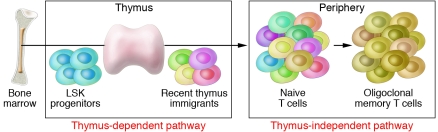
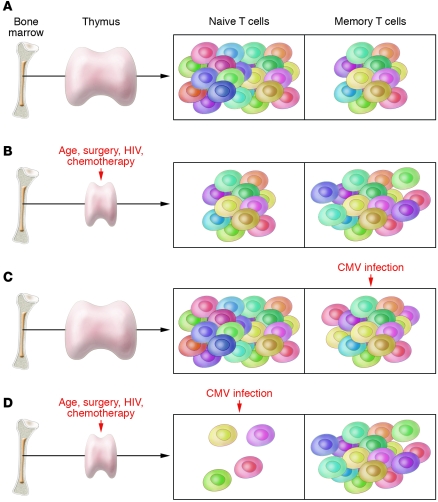
The aging process affects all aspects of the immune system, particularly the T cells. The immune system in older individuals is often characterized by lower T cell numbers, lower naive/memory T cell ratios, and lower T cell diversity. Most measures of inflammation increase with age. Why this happens, and why there is so much person-to-person variability in these changes, is not known. In this issue of the JCI, Sauce and colleagues show that removal of the thymus during infancy results in premature onset of many of these age-associated changes to the immune system (see the related article beginning on page 3070). The effect of thymectomy was particularly notable in those individuals who acquired CMV infection. Data from this study, as well as data from other observational settings, suggest that reduced thymic function and persistent viral infections combine to accelerate a decline in immunologic function.
Figures
Comment on
-
Evidence of premature immune aging in patients thymectomized during early childhood.J Clin Invest. 2009 Oct;119(10):3070-8. doi: 10.1172/JCI39269. Epub 2009 Sep 21. J Clin Invest. 2009. PMID: 19770514 Free PMC article.
References
-
- Hadrup S.R., et al. Longitudinal studies of clonally expanded CD8 T cells reveal a repertoire shrinkage predicting mortality and an increased number of dysfunctional cytomegalovirus-specific T cells in the very elderly. J. Immunol. 2006;176:2645–2653. - PubMed
Publication types
MeSH terms
LinkOut - more resources
Full Text Sources
Other Literature Sources
Medical
