


Complete genome sequence of the sugarcane nitrogen-fixing endophyte Gluconacetobacter diazotrophicus Pal5
- PMID: 19775431
- PMCID: PMC2765452
- DOI: 10.1186/1471-2164-10-450
Complete genome sequence of the sugarcane nitrogen-fixing endophyte Gluconacetobacter diazotrophicus Pal5
Abstract
Background: Gluconacetobacter diazotrophicus Pal5 is an endophytic diazotrophic bacterium that lives in association with sugarcane plants. It has important biotechnological features such as nitrogen fixation, plant growth promotion, sugar metabolism pathways, secretion of organic acids, synthesis of auxin and the occurrence of bacteriocins.
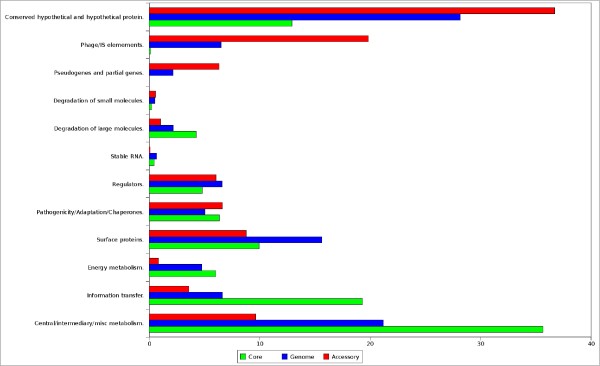
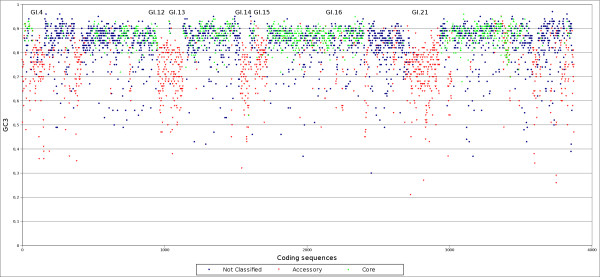
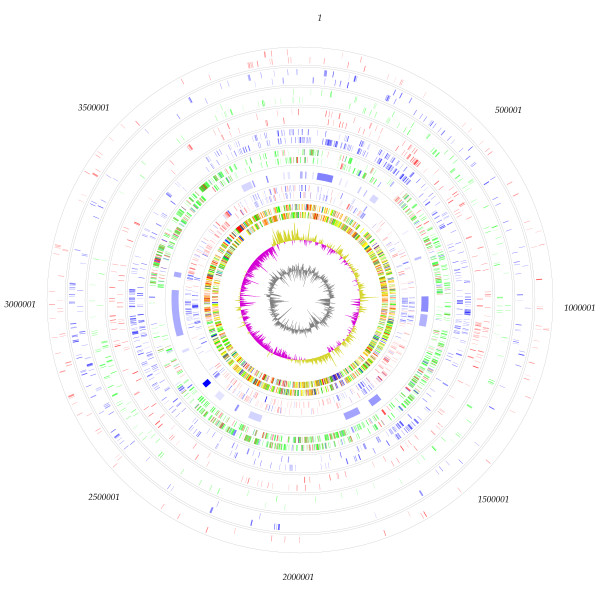
Results: Gluconacetobacter diazotrophicus Pal5 is the third diazotrophic endophytic bacterium to be completely sequenced. Its genome is composed of a 3.9 Mb chromosome and 2 plasmids of 16.6 and 38.8 kb, respectively. We annotated 3,938 coding sequences which reveal several characteristics related to the endophytic lifestyle such as nitrogen fixation, plant growth promotion, sugar metabolism, transport systems, synthesis of auxin and the occurrence of bacteriocins. Genomic analysis identified a core component of 894 genes shared with phylogenetically related bacteria. Gene clusters for gum-like polysaccharide biosynthesis, tad pilus, quorum sensing, for modulation of plant growth by indole acetic acid and mechanisms involved in tolerance to acidic conditions were identified and may be related to the sugarcane endophytic and plant-growth promoting traits of G. diazotrophicus. An accessory component of at least 851 genes distributed in genome islands was identified, and was most likely acquired by horizontal gene transfer. This portion of the genome has likely contributed to adaptation to the plant habitat.
Conclusion: The genome data offer an important resource of information that can be used to manipulate plant/bacterium interactions with the aim of improving sugarcane crop production and other biotechnological applications.
Figures
References
-
- Boddey RM, Döbereiner J. Nitrogen fixation associated with grasses and cereals: recent progress and perspectives for the future. Fertilizer Res. 1995;42:241–250. doi: 10.1007/BF00750518. - DOI
-
- Cavalcante VA, Dobereiner J. A new acid-tolerant nitrogen-fixing bacterium associated with sugarcane. Plant Soil. 1988;1008:23–31. doi: 10.1007/BF02370096. - DOI
-
- James EK, Reis VM, Olivares FL, Baldani JI, Döbereiner J. Infection of sugarcane by the nitrogen-fixing bacterium Acetobacter diazotrophicus. J Exp Bot. 1994;45:757–766. doi: 10.1093/jxb/45.6.757. - DOI
-
- Muthukumarasamy R, Cleenwerck I, Revathi G, Vadivelu M, Janssens D, Hoste B, Gum KU, Park KD, Son CY, Sa T, Caballero-Mellado Natural association of Gluconacetobacter diazotrophicus and diazotrophic Acetobacter peroxydans with wetland rice. J Syst Appl Microbiol. 2005;283:277–286. doi: 10.1016/j.syapm.2005.01.006. - DOI - PubMed
-
- Boddey RM, Urquiaga S, Reis VM, Döbereiner J. Biological nitrogen fixation associated with sugarcane. Plant Soil. 1991;137:111–117. doi: 10.1007/BF02187441. - DOI
Publication types
MeSH terms
Substances
Associated data
- Actions
- Actions
- Actions
LinkOut - more resources
Full Text Sources
Other Literature Sources
Molecular Biology Databases
Miscellaneous
