


Gene-targeted-metagenomics reveals extensive diversity of aromatic dioxygenase genes in the environment
- PMID: 19776767
- PMCID: PMC2808446
- DOI: 10.1038/ismej.2009.104
Gene-targeted-metagenomics reveals extensive diversity of aromatic dioxygenase genes in the environment
Abstract
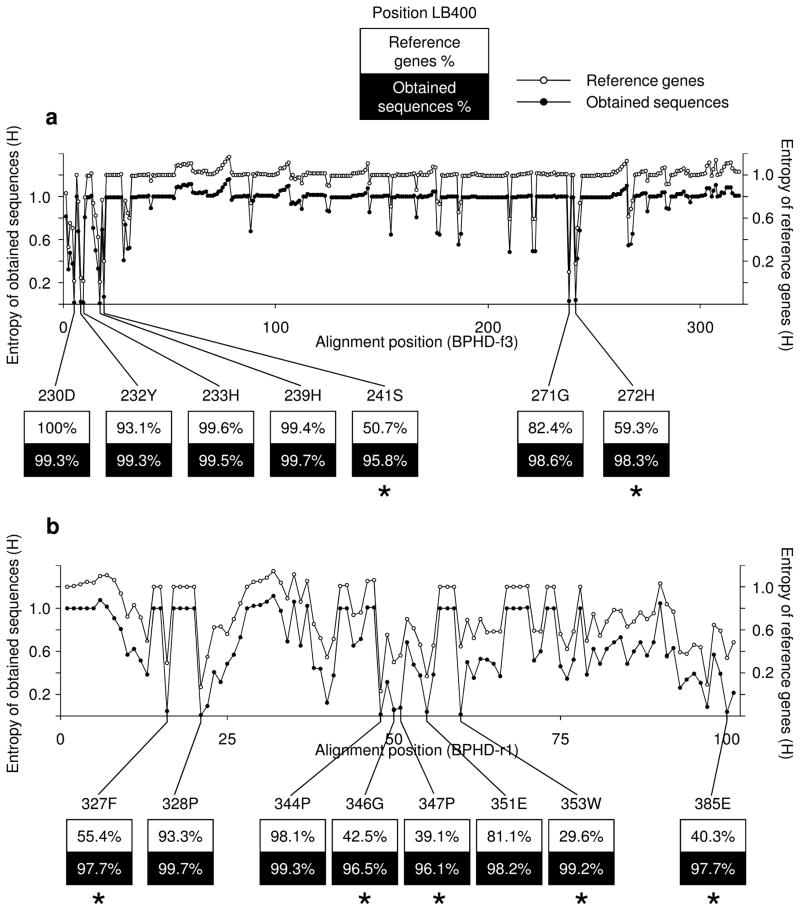
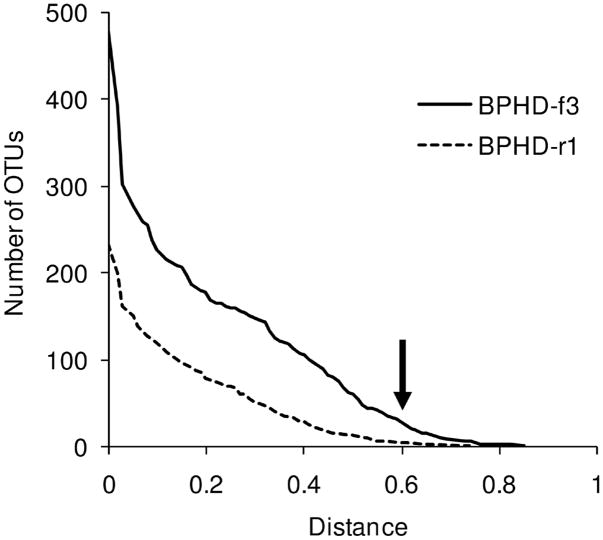
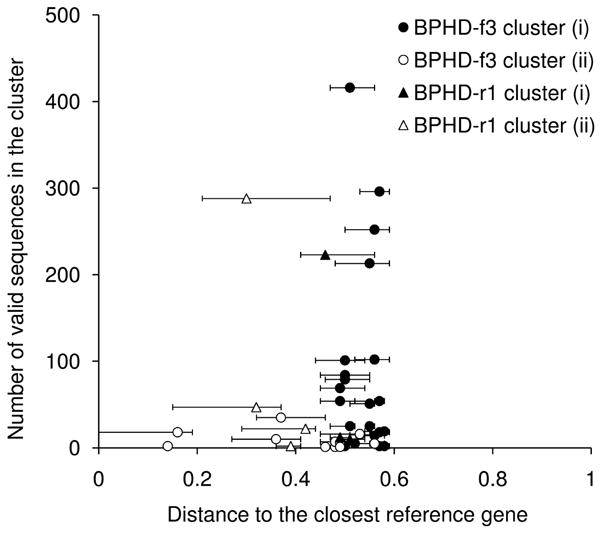
Understanding the relationship between gene diversity and function for important environmental processes is a major ecological research goal. We applied gene-targeted metagenomics and pyrosequencing to aromatic dioxygenase genes to obtain greater sequence depth than possible by other methods. A polymerase chain reaction (PCR) primer set designed to target a 524-bp region that confers substrate specificity of biphenyl dioxygenases yielded 2000 and 604 sequences from the 5' and 3' ends of PCR products, respectively, which passed our validity criteria. Sequence alignment showed three known conserved residues, as well as another seven conserved residues not reported earlier. Of the valid sequences, 95% and 41% were assigned to 22 and 3 novel clusters in that they did not include any earlier reported sequences at 0.6 distance by complete linkage clustering for sequenced regions. The greater diversity revealed by this gene-targeted approach provides deeper insights into genes potentially important in environmental processes to better understand their ecology, functional differences and evolutionary origins. We also provide criteria for primer design for this approach, as well as guidance for data processing of diverse functional genes, as gene databases for most genes of environmental relevance are limited.
Figures
References
-
- Durbin R, Eddy S, Krogh A, Mitchison G. Biological sequence analysis: probabilistic models of proteins and nucleic acids. Cambridge University Press; 1998.
Publication types
MeSH terms
Substances
Grants and funding
LinkOut - more resources
Full Text Sources
Other Literature Sources
