


Molecular dissection of reactive astrogliosis and glial scar formation
- PMID: 19782411
- PMCID: PMC2787735
- DOI: 10.1016/j.tins.2009.08.002
Molecular dissection of reactive astrogliosis and glial scar formation
Abstract
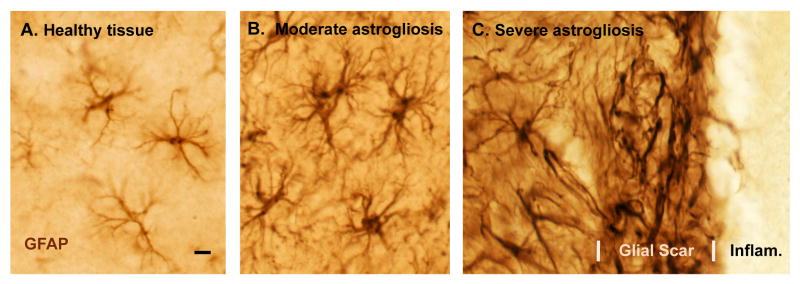
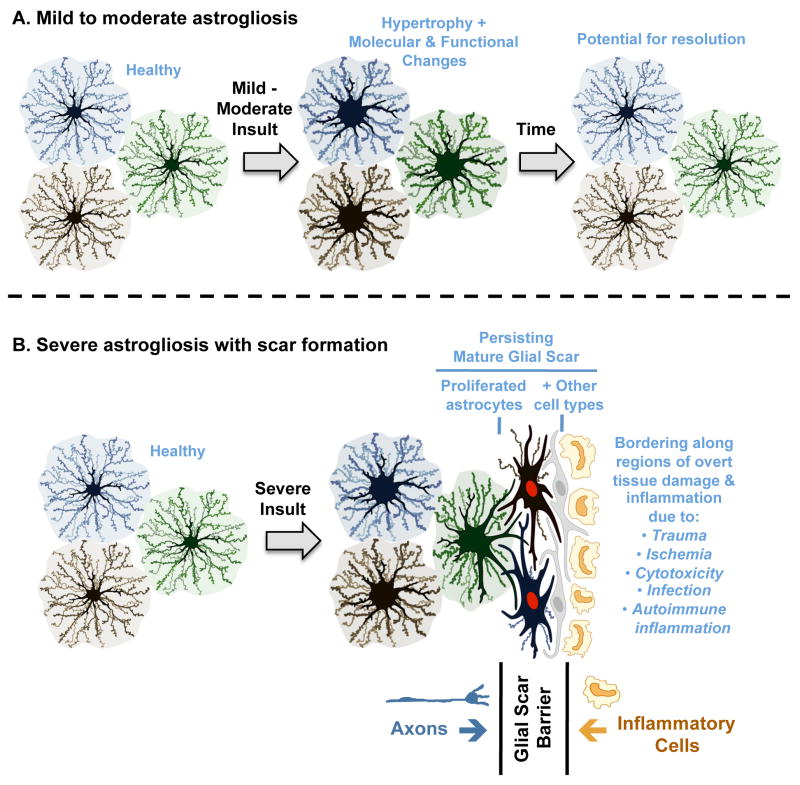
Reactive astrogliosis, whereby astrocytes undergo varying molecular and morphological changes, is a ubiquitous but poorly understood hallmark of all central nervous system pathologies. Genetic tools are now enabling the molecular dissection of the functions and mechanisms of reactive astrogliosis in vivo. Recent studies provide compelling evidence that reactive astrogliosis can exert both beneficial and detrimental effects in a context-dependent manner determined by specific molecular signaling cascades. Reactive astrocytes can have both loss of normal functions and gain of abnormal effects that could feature prominently in a variety of disease processes. This article reviews developments in the signaling mechanisms that regulate specific aspects of reactive astrogliosis and highlights the potential to identify novel therapeutic molecular targets for diverse neurological disorders.
Figures
References
-
- Barres BA. The mystery and magic of glia: a perspective on their roles in health and disease. Neuron. 2008;60:430–440. - PubMed
-
- Nedergaard M, et al. New roles for astrocytes: redefining the functional architecture of the brain. Trends Neurosci. 2003;26:523–530. - PubMed
-
- Pellerin L, et al. Activity-dependent regulation of energy metabolism by astrocytes: an update. Glia. 2007;55:1251–1262. - PubMed
-
- Seifert G, et al. Astrocyte dysfunction in neurological disorders: a molecular perspective. Nat Rev Neurosci. 2006;7:194–206. - PubMed
Publication types
MeSH terms
Substances
Grants and funding
LinkOut - more resources
Full Text Sources
Other Literature Sources
Medical
