


Heat shock proteins contribute to mosquito dehydration tolerance
- PMID: 19782687
- PMCID: PMC2861860
- DOI: 10.1016/j.jinsphys.2009.09.012
Heat shock proteins contribute to mosquito dehydration tolerance
Abstract
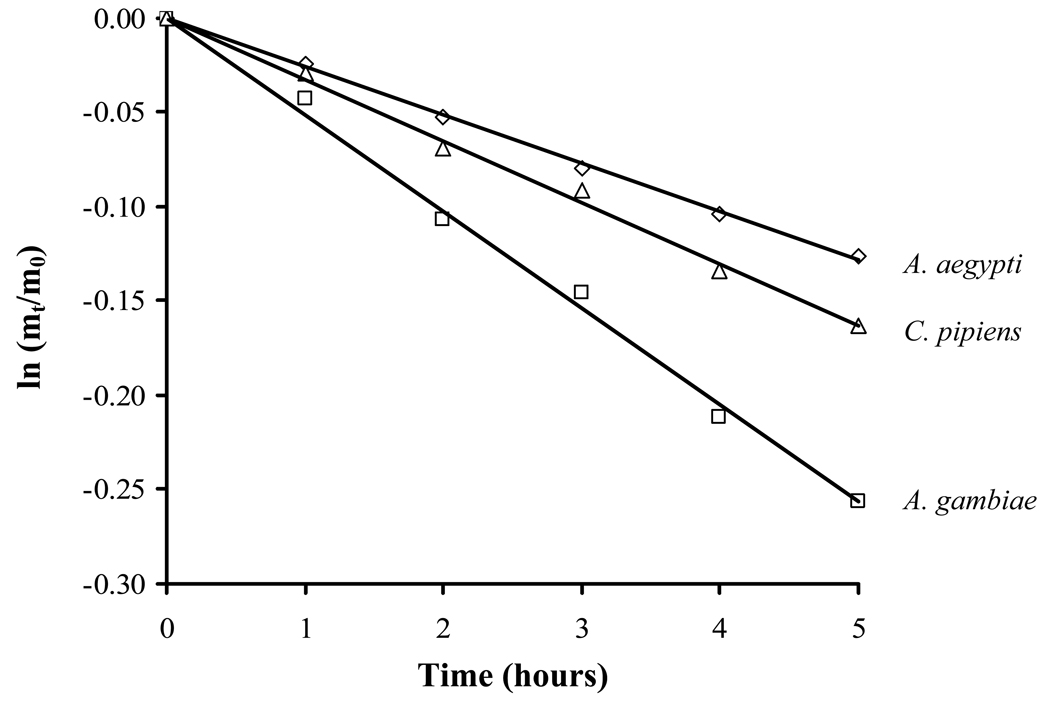
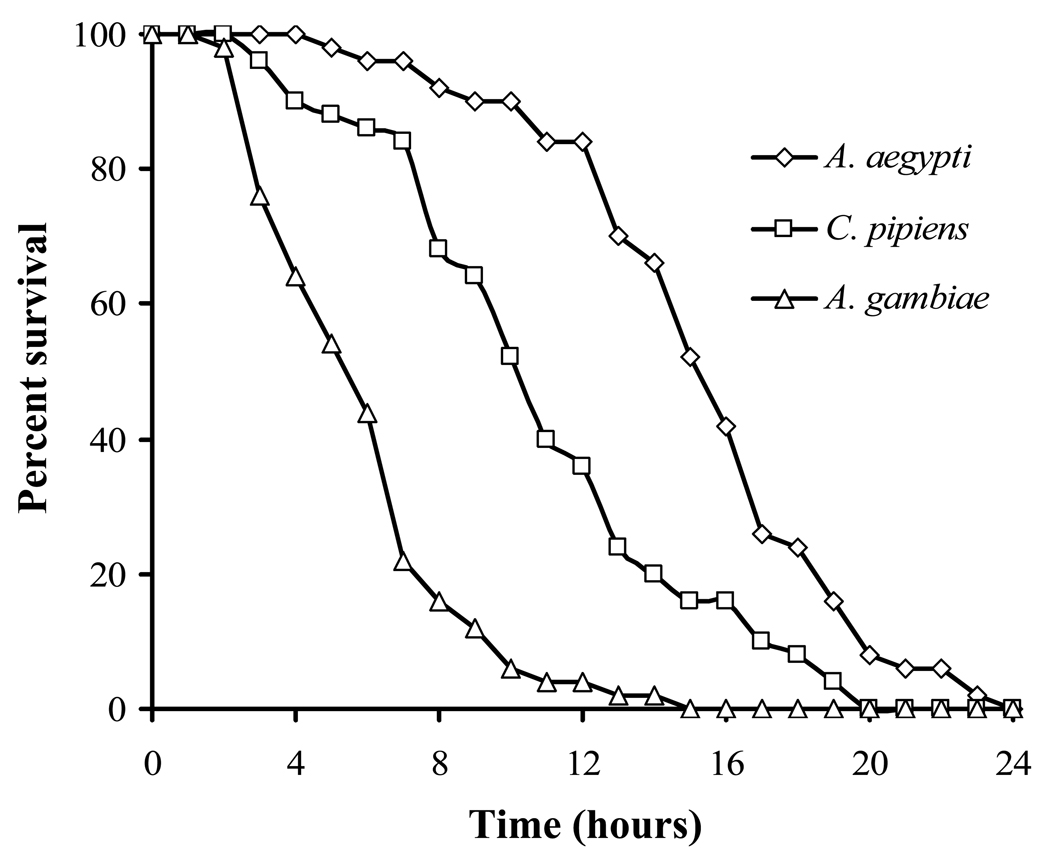
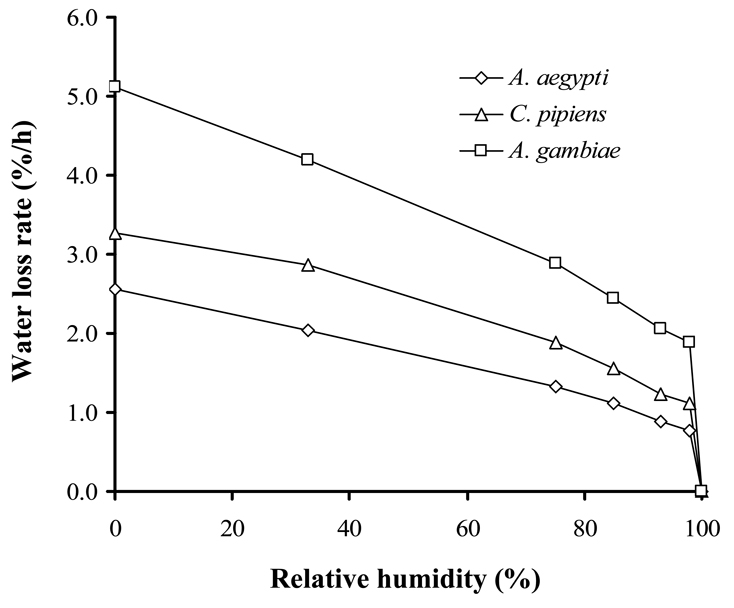
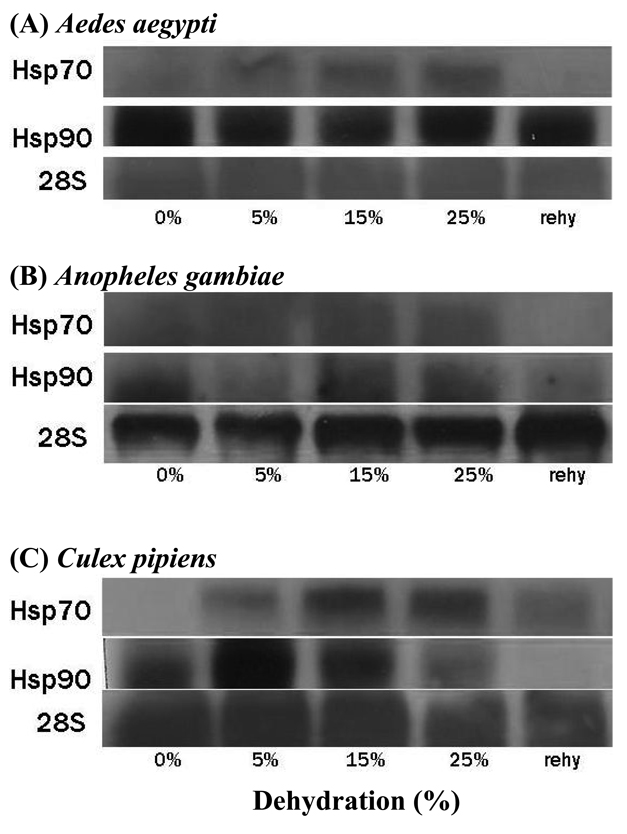
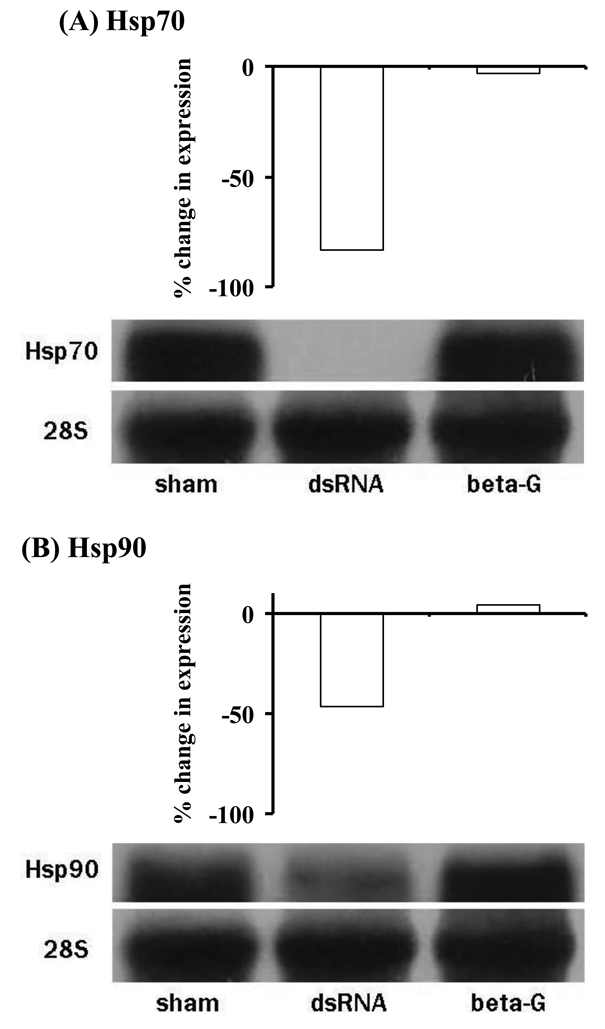
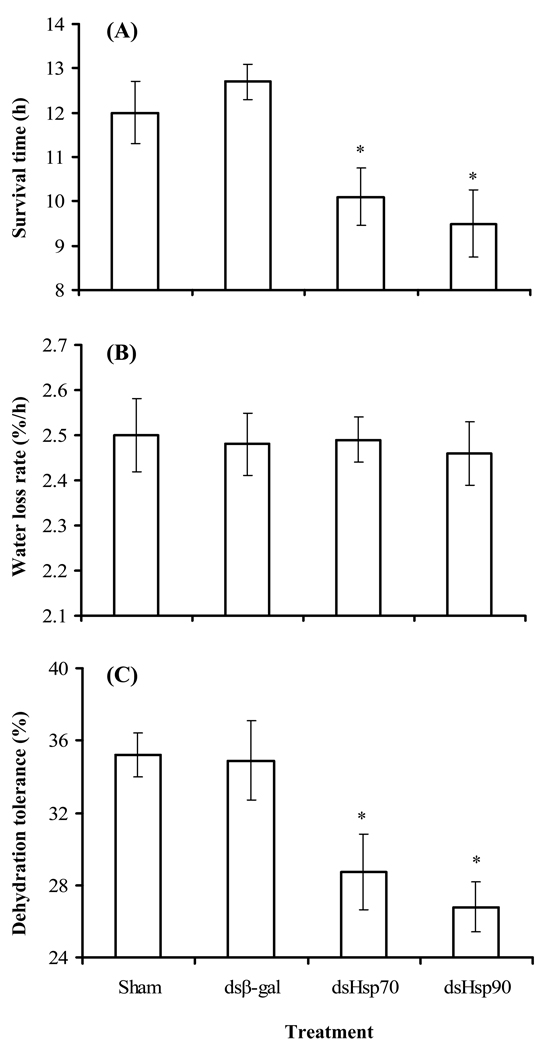
This study examines the responses of heat shock protein transcripts, Hsp70 and Hsp90, to dehydration stress in three mosquito species, Aedes aegypti, Anopheles gambiae and Culex pipiens. We first defined the water balance attributes of adult females of each species, monitored expression of the hsp transcripts in response to dehydration, and then knocked down expression of the transcripts using RNA interference (RNAi) to evaluate potential functions of the Hsps in maintenance of water balance. Fully hydrated females of all three species contained nearly the same amount of water (66-68%), but water loss rates differed among the species, with A. aegypti having the lowest water loss rate (2.6%/h), followed by C. pipiens (3.3%/h), and A. gambiae (5.1%/h). In all three species water could be replaced only by drinking water (or blood). Both A. aegypti and C. pipiens tolerated a loss of 36% of their body water, but A. gambiae was more vulnerable to water loss, tolerating a loss of only 29% of its body water. Dehydration elicited expression of hsp70 in all three species, but only C. pipiens continued to express this transcript during rehydration. Hsp90 was constitutively expressed and expression levels remained fairly constant during dehydration and rehydration, except expression was not noted during rehydration of C. pipiens. Injection of dsRNA to knock down expression of hsp70 (83% reduction) and hsp90 (46% reduction) in A. aegypti did not alter water content or water loss rates, but the dehydration tolerance was lower. Instead of surviving a 36% water loss, females were able to survive only a 28% water loss in response to RNAi directed against hsp70 and a 26% water loss when RNAi was directed against hsp90. These results indicate a critical function for these Hsps in mosquito dehydration tolerance.
Copyright 2009 Elsevier Ltd. All rights reserved.
Figures
References
-
- Benoit JB. Water management by dormant insects: comparisons between dehydration resistance during estivation and winter diapause. In: Navas C, Eduardo J, editors. Progress in Molecular and Subcellular Biology. Vol. Estivation. Berlin: Springer; 2009. In press. - PubMed
-
- Benoit JB, Denlinger DL. Suppression of water loss during adult diapause in the northern house mosquito, Culex pipiens. Journal of Experimental Biology. 2007;210:217–226. - PubMed
-
- Benoit JB, Lopez-Martinez G, Teets NM, Phillips SA, Denlinger DL. Responses of the bed bug, Cimex lectularius, to temperature extremes and dehydration: levels of tolerance, rapid cold hardening, and expression of transcript encoding heat shock proteins. Medical and Veterinary Entomology. 2009 (submitted) - PubMed
-
- Chown SL, Nicolson SW. Insect Physiological Ecology. Oxford: Oxford University Press; 2004. pp. 87–114.
-
- Crooks E, Randolph SE. Walking by Ixodes ricinus ticks: intrinsic and extrinsic factors determine attraction of moisture and host odour. Journal of Experimental Biology. 2006;209:2138–2142. - PubMed
Publication types
MeSH terms
Substances
Grants and funding
LinkOut - more resources
Full Text Sources
Medical
