


N-terminal pro-brain natriuretic peptide and exercise capacity in chronic heart failure: data from the Heart Failure and a Controlled Trial Investigating Outcomes of Exercise Training (HF-ACTION) study
- PMID: 19782787
- PMCID: PMC3748954
- DOI: 10.1016/j.ahj.2009.07.011
N-terminal pro-brain natriuretic peptide and exercise capacity in chronic heart failure: data from the Heart Failure and a Controlled Trial Investigating Outcomes of Exercise Training (HF-ACTION) study
Abstract
Objectives: To examine the relationship between N-terminal pro-brain natriuretic peptide (NT-proBNP) and exercise capacity in a large contemporary cohort of patients with chronic heart failure.
Background: Natriuretic peptides such as NT-proBNP are important biomarkers in heart failure. The relationship between NT-proBNP and exercise capacity has not been well studied.
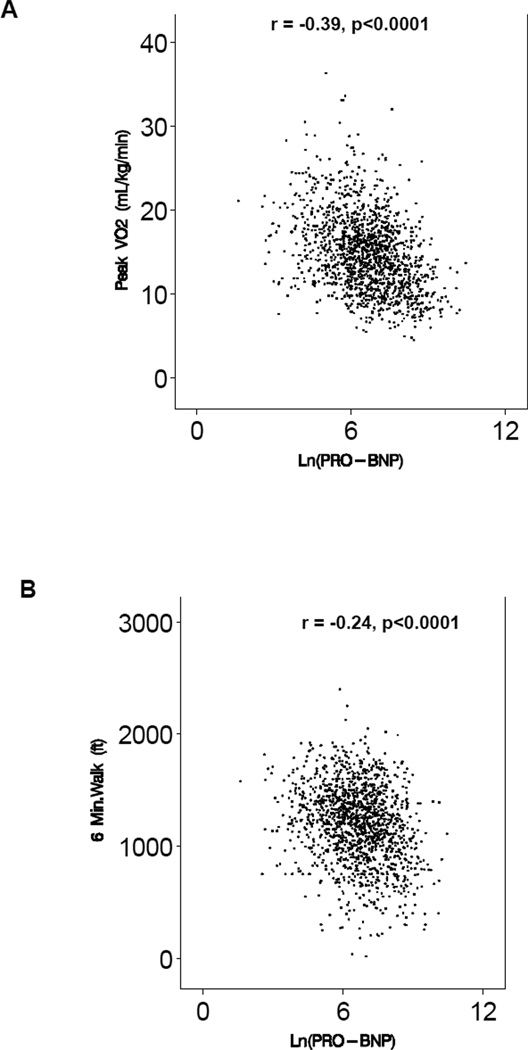
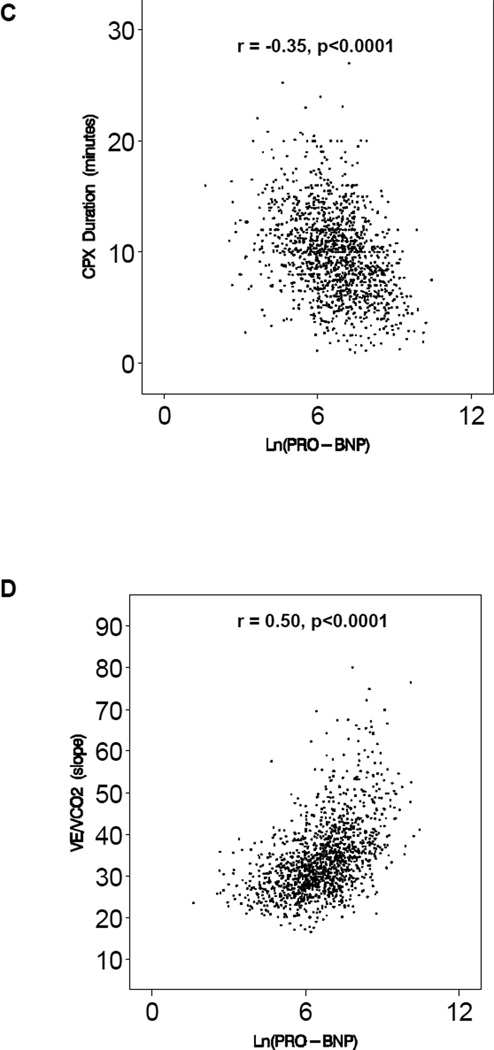
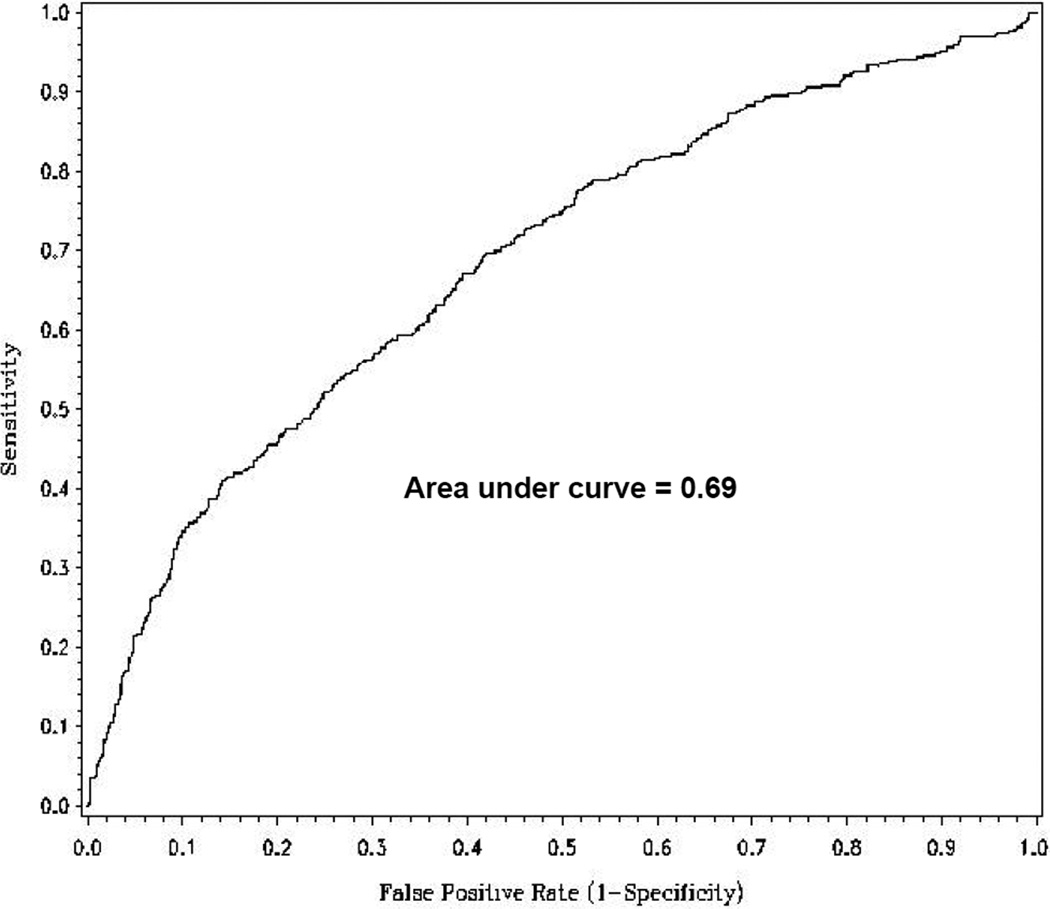
Methods: We analyzed the relationship between baseline NT-proBNP and peak oxygen uptake (peak VO(2)) or distance in the 6-minute walk test in 1383 subjects enrolled in the HF-ACTION study. Linear regression models were used to analyze the relationship between NT-proBNP and peak Vo(2) or distance in the 6-minute walk test in the context of other clinical variables. Receiver operator curve analysis was used to evaluate the ability of NT-proBNP to accurately predict a peak VO(2) <12 mL/kg per minute.
Results: NT-proBNP was the most powerful predictor of peak VO(2) (partial R(2) = 0.13, P < .0001) of 35 candidate variables. Although NT-proBNP was also a predictor of distance in the 6-minute walk test, this relationship was weaker than that for peak VO(2) (partial R(2) = 0.02, P < .0001). For both peak VO(2) and distance in the 6-minute walk test, much of the variability in exercise capacity remained unexplained by the variables tested. Receiver operator curve analysis suggested NT-proBNP had moderate ability to identify patients with peak VO(2) <12 mL/kg per minute (c-index, 0.69).
Conclusions: In this analysis of baseline data from HF-ACTION, NT-proBNP was the strongest predictor of peak VO(2) and a significant predictor of distance in the 6-minute walk test. Despite these associations, NT-proBNP demonstrated only modest performance in identifying patients with a low peak VO(2) who might be considered for cardiac transplantation. These data suggest that, although hemodynamic factors are important determinants of exercise capacity, much of the variability in exercise performance in heart failure remains unexplained by traditional clinical and demographic variables.
Trial registration: ClinicalTrials.gov NCT00047437.
Figures
References
-
- Braunwald E. Biomarkers in heart failure. New England Journal of Medicine. 2008;358(20):2148–2159. - PubMed
-
- Aaronson KD, Schwartz JS, Chen TM, Wong KL, Goin JE, Mancini DM. Development and prospective validation of a clinical index to predict survival in ambulatory patients referred for cardiac transplant evaluation. Circulation. 1997;95(12):2660–2667. - PubMed
-
- Mancini DM, Eisen H, Kussmaul W, Mull R, Edmunds LH, Wilson JR. Value of peak exercise oxygen consumption for optimal timing of cardiac transplantation in ambulatory patients with heart failure. Circulation. 1991;83:778–786. - PubMed
-
- Bittner V, Weiner DH, Yusuf S, Rogers WJ, McIntyre KM, Bangdiwala SI, et al. Prediction of mortality and morbidity with a 6-minute walk test in patients with left ventricular dysfunction SOLVD Investigators. Journal of the American Medical Association. 1993;270(14):1702–1707. - PubMed
Publication types
MeSH terms
Substances
Associated data
Grants and funding
- U01 HL064257/HL/NHLBI NIH HHS/United States
- 5U01HL066461/HL/NHLBI NIH HHS/United States
- 5U01HL064264/HL/NHLBI NIH HHS/United States
- U01 HL064250/HL/NHLBI NIH HHS/United States
- P60AG10484/AG/NIA NIH HHS/United States
- U01 HL064265/HL/NHLBI NIH HHS/United States
- U01 HL066497/HL/NHLBI NIH HHS/United States
- U01 HL064264/HL/NHLBI NIH HHS/United States
- 5U01HL066482/HL/NHLBI NIH HHS/United States
- 5U01HL066497/HL/NHLBI NIH HHS/United States
- U01 HL068980/HL/NHLBI NIH HHS/United States
- 5U01HL064250/HL/NHLBI NIH HHS/United States
- 5U01HL064265/HL/NHLBI NIH HHS/United States
- U01 HL066491/HL/NHLBI NIH HHS/United States
- 5U01HL068973/HL/NHLBI NIH HHS/United States
- 5U01HL064257/HL/NHLBI NIH HHS/United States
- U01 HL066482/HL/NHLBI NIH HHS/United States
- 5U01HL063747/HL/NHLBI NIH HHS/United States
- 5U01HL066491/HL/NHLBI NIH HHS/United States
- R37AG18915/AG/NIA NIH HHS/United States
- R37 AG018915/AG/NIA NIH HHS/United States
- U01 HL066494/HL/NHLBI NIH HHS/United States
- 5U01HL066501/HL/NHLBI NIH HHS/United States
- U01 HL066461/HL/NHLBI NIH HHS/United States
- U01 HL068973/HL/NHLBI NIH HHS/United States
- 5U01HL068980/HL/NHLBI NIH HHS/United States
- U01 HL063747/HL/NHLBI NIH HHS/United States
- 5U01HL066494/HL/NHLBI NIH HHS/United States
- U01 HL066501/HL/NHLBI NIH HHS/United States
LinkOut - more resources
Full Text Sources
Medical
Research Materials
Miscellaneous
