


Beliefs and barriers to follow-up after an emergency department asthma visit: a randomized trial
- PMID: 19786448
- PMCID: PMC2803082
- DOI: 10.1542/peds.2008-3352
Beliefs and barriers to follow-up after an emergency department asthma visit: a randomized trial
Abstract
Background: Studies in urban emergency departments (EDs) have found poor quality of chronic asthma care and identified beliefs and barriers associated with low rates of follow-up with a primary care provider (PCP).
Objectives: To develop an ED-based intervention including asthma symptom screening, a video addressing beliefs and a mailed reminder; and measure the effect on PCP follow-up and asthma-related outcomes.
Methods: This randomized, controlled trial enrolled children aged 1 to 18 years who were discharged after asthma treatment in an urban pediatric ED. Control subjects received instructions to follow-up with a PCP within 3 to 5 days. In addition, intervention subjects (1) received a letter to take to their PCP if they screened positive for persistent asthma symptoms, (2) viewed a video featuring families and providers discussing the importance of asthma control, and (3) received a mailed reminder to follow-up with a PCP. All subjects were contacted by telephone 1, 3, and 6 months after the ED visit, and follow-up was confirmed by PCP record review. Asthma-related quality of life (AQoL), symptoms, and beliefs about asthma care were assessed by using validated surveys.
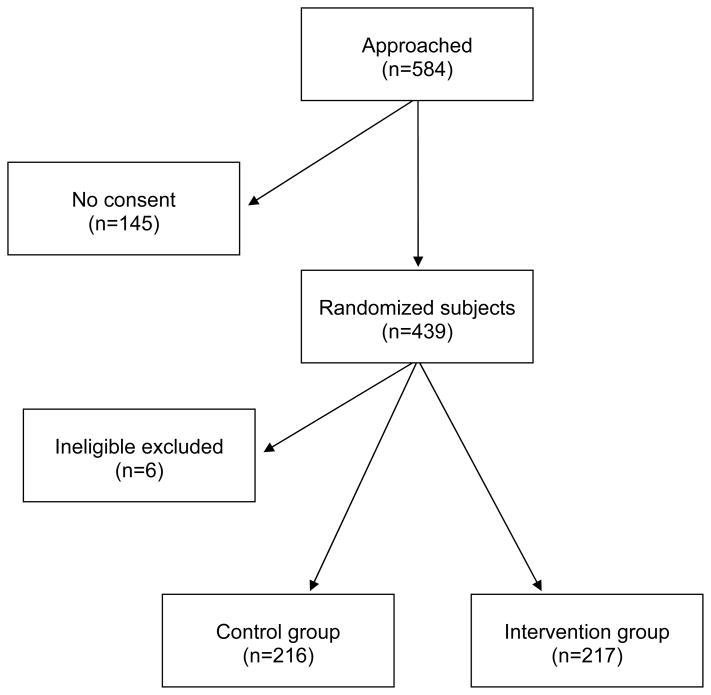
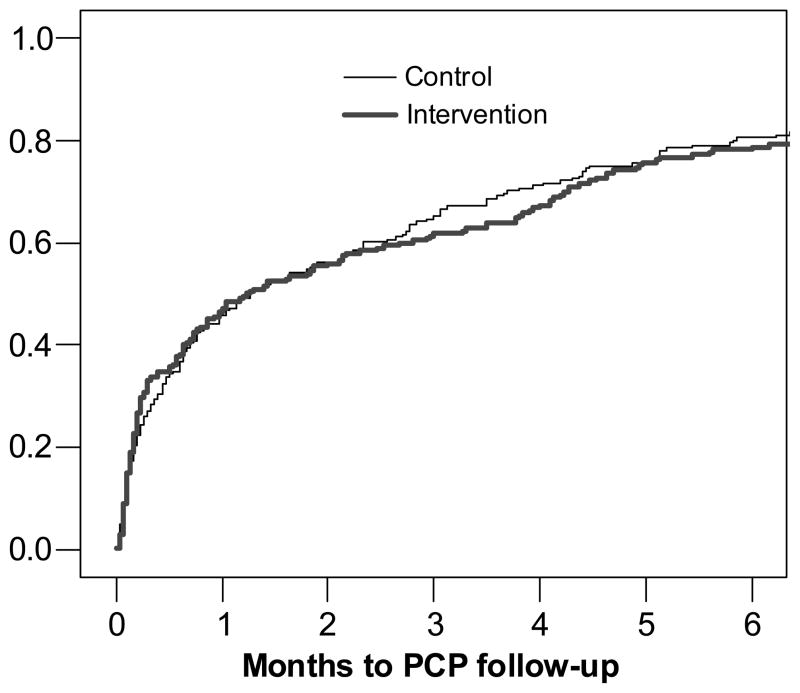
Results: A total of 433 subjects were randomly assigned, and baseline measures were similar between study groups. After the intervention and before ED discharge, intervention subjects were more likely to endorse beliefs about the benefits of follow-up than controls. However, rates of PCP follow-up during the month after the ED visit (44.5%) were similar to control subjects (43.8%) as were AQoL, medication use, and ED visits.
Conclusions: An ED-based intervention influenced beliefs but did not increase PCP follow-up or asthma-related outcomes.
Trial registration: ClinicalTrials.gov NCT00113633.
Figures
Comment in
-
How do we support follow-up with the primary care provider after an emergency department visit for asthma?Pediatrics. 2009 Oct;124(4):1206-7. doi: 10.1542/peds.2009-1284. Epub 2009 Sep 21. Pediatrics. 2009. PMID: 19770174 Review. No abstract available.
References
-
- Akinbami LJ. The state of childhood asthma, United States, 1980–2005. CDC Advance Data No 381. From Vital and Health Statistics. 2006 - PubMed
-
- Expert panel report 3: Guidelines for the Diagnosis and Management of Asthma. National Institutes of Health Pub. # 08-5846; Bethesda, MD: 2007. National Asthma Education and Prevention Program. Available at http://www.nhlbi.nih.gov/guidelines/asthma/asthmafullrpt.pdf.
-
- Lieu TA, Quesenberry CP, Capra AM, et al. Outpatient management practices associated with reduced risk of pediatric asthma hospitalization and emergency department visits. Pediatrics. 1997;100:334–341. - PubMed
-
- Donahue JG, Weiss ST, Livingston JM, et al. Inhaled steroids and the risk of hospitalization for asthma. JAMA. 1997;277:887–891. - PubMed
-
- The Childhood Asthma Management Program Research Group. Long-term effects of budesonide or nedocromil in children with asthma. N Engl J Med. 2000;343:1054–1063. - PubMed
