


An update on the self-care of heart failure index
- PMID: 19786884
- PMCID: PMC2877913
- DOI: 10.1097/JCN.0b013e3181b4baa0
An update on the self-care of heart failure index
Abstract
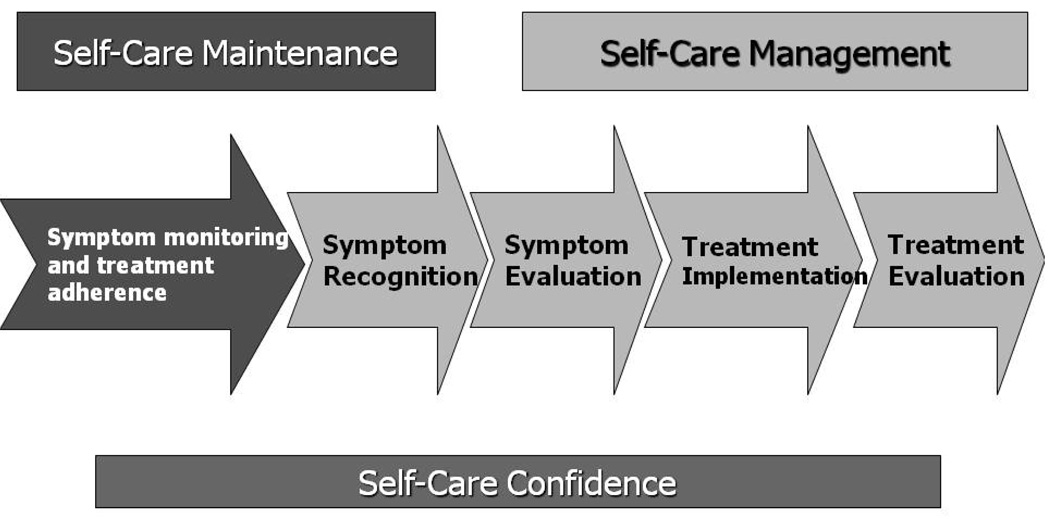
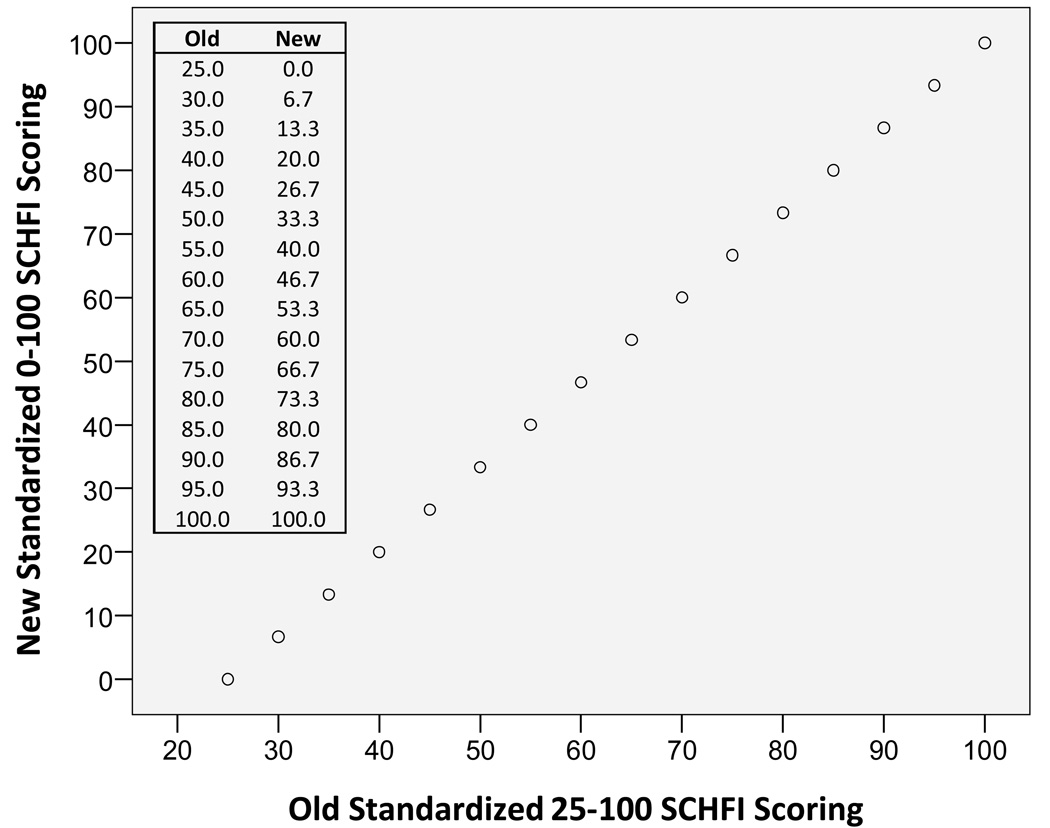
Background: The Self-care of Heart Failure Index (SCHFI) is a measure of self-care defined as a naturalistic decision-making process involving the choice of behaviors that maintain physiological stability (maintenance) and the response to symptoms when they occur (management). In the 5 years since the SCHFI was published, we have added items, refined the response format of the maintenance scale and the SCHFI scoring procedure, and modified our advice about how to use the scores.
Objective: The objective of this article was to update users on these changes.
Methods: In this article, we address 8 specific questions about reliability, item difficulty, frequency of administration, learning effects, social desirability, validity, judgments of self-care adequacy, clinically relevant change, and comparability of the various versions.
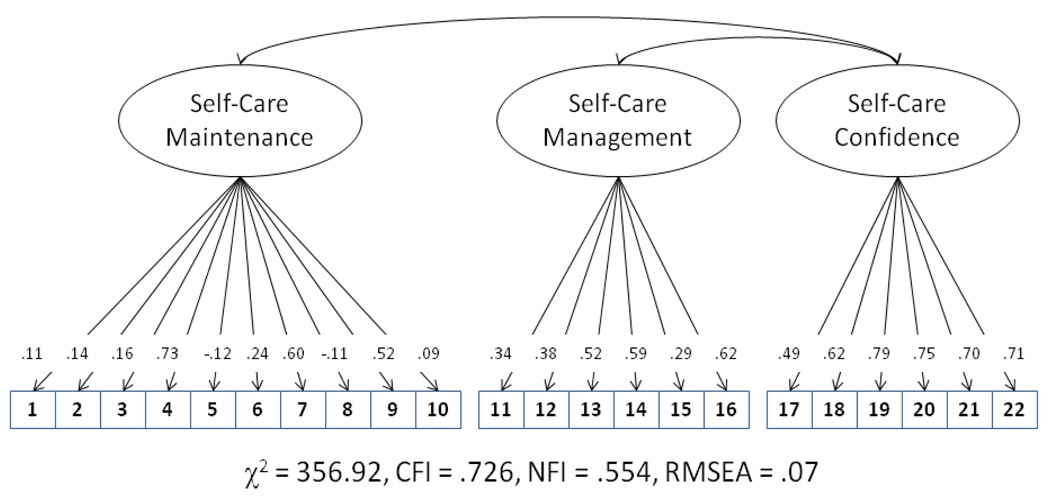
Results: The addition of items to the self-care maintenance scale did not significantly change the coefficient alpha, providing evidence that the structure of the instrument is more powerful than the individual items. No learning effect is associated with repeated administration. Social desirability is minimal. More evidence is provided of the validity of the SCHFI. A score of 70 or greater can be used as the cut-point to judge self-care adequacy, although evidence is provided that benefit occurs at even lower levels of self-care. A change in a scale score more than one-half of an SD is considered clinically relevant. Because of the standardized scores, results obtained with prior versions can be compared with those from later versions.
Conclusion: The SCHFI v.6 is ready to be used by investigators. By publication in this format, we are putting the instrument in the public domain; permission is not required to use the SCHFI.
Figures
Comment in
-
Commentary: developing knowledge and improving care using the self-care of heart failure index.J Cardiovasc Nurs. 2009 Nov-Dec;24(6):498-9. doi: 10.1097/JCN.0b013e3181b4baca. J Cardiovasc Nurs. 2009. PMID: 19858958 No abstract available.
References
-
- Riegel B, Carlson B, Moser DK, Sebern M, Hicks FD, Roland V. Psychometric testing of the self-care of heart failure index. J Card Fail. 2004 Aug;10(4):350–360. - PubMed
-
- Albert NM, Buchsbaum R, Li J. Randomized study of the effect of video education on heart failure healthcare utilization, symptoms, and self-care behaviors. Patient Educ Couns. 2007 Dec;69(1–3):129–139. - PubMed
-
- Driscoll A, Worrall-Carter L, Stewart S. Rationale and design of the National Benchmarking and Evidence-based National Clinical Guidelines for Chronic Heart Failure Management Programs Study. J Cardiovasc Nurs. 2006 Jul–Aug;21(4):276–282. - PubMed
-
- Gary R. Self-care practices in women with diastolic heart failure. Heart Lung. 2006 Jan–Feb;35(1):9–19. - PubMed
-
- Macabasco-O'Connell A, Crawford MH, Stotts N, Stewart A, Froelicher ES. Self-care behaviors in indigent patients with heart failure. J Cardiovasc Nurs. 2008 May–Jun;23(3):223–230. - PubMed
Publication types
MeSH terms
Grants and funding
LinkOut - more resources
Full Text Sources
Medical
