


Etiology of encephalitis in Australia, 1990-2007
- PMID: 19788802
- PMCID: PMC2819877
- DOI: 10.3201/eid1509.081540
Etiology of encephalitis in Australia, 1990-2007
Abstract
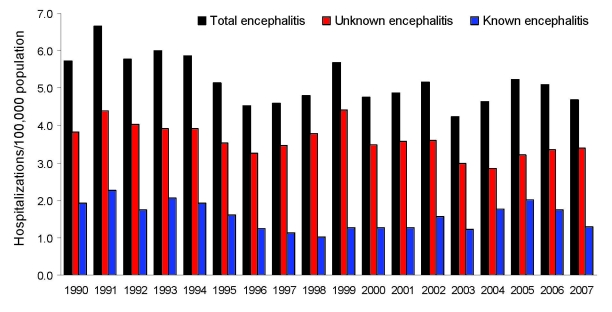
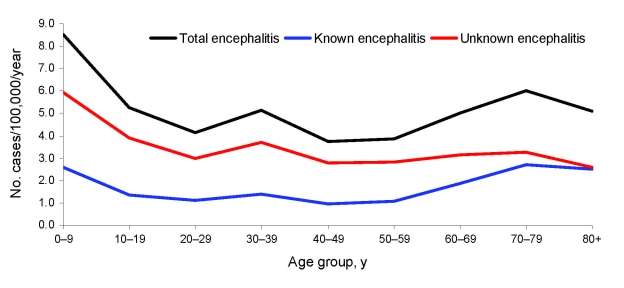
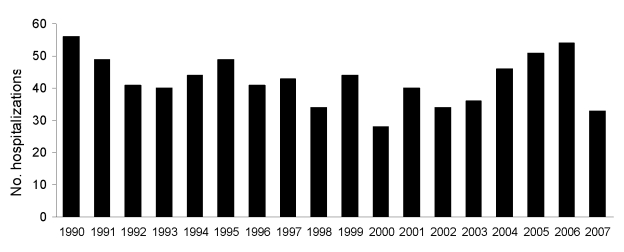
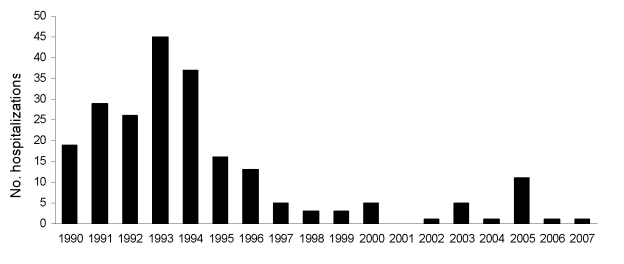
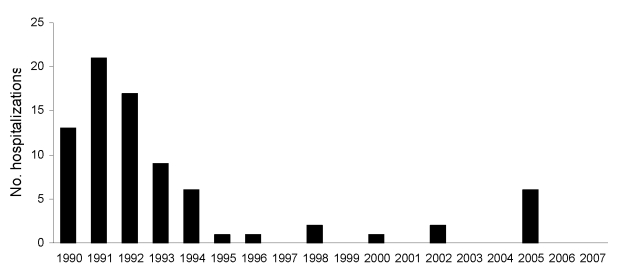
Encephalitis is a clinical syndrome commonly caused by emerging pathogens, which are not under surveillance in Australia. We reviewed rates of hospitalization for patients with encephalitis in Australia's most populous state, New South Wales, from January 1990 through December 2007. Encephalitis was the primary discharge diagnosis for 5,926 hospital admissions; average annual hospitalization rate was 5.2/100,000 population. The most commonly identified pathogen was herpes simplex virus (n = 763, 12.9%). Toxoplasma encephalitis and subacute sclerosing panencephalitis showed notable declines. The average annual encephalitis case-fatality rate (4.6%) and the proportion of patients hospitalized with encephalitis with no identified pathogen (69.8%, range 61.5%-78.7%) were stable during the study period. The nonnotifiable status of encephalitis in Australia and the high proportion of this disease with no known etiology may conceal emergence of novel pathogens. Unexplained encephalitis should be investigated, and encephalitis hospitalizations should be subject to statutory notification in Australia.
Figures
References
-
- McCormack JG, Allworth AM. Emerging viral infections in Australia. Med J Aust. 2002;177:45–9. - PubMed
Publication types
MeSH terms
LinkOut - more resources
Full Text Sources
Medical