


Omega-3 polyunsaturated fatty acids ameliorate the severity of ileitis in the senescence accelerated mice (SAM)P1/Yit mice model
- PMID: 19793338
- PMCID: PMC2792829
- DOI: 10.1111/j.1365-2249.2009.04020.x
Omega-3 polyunsaturated fatty acids ameliorate the severity of ileitis in the senescence accelerated mice (SAM)P1/Yit mice model
Abstract
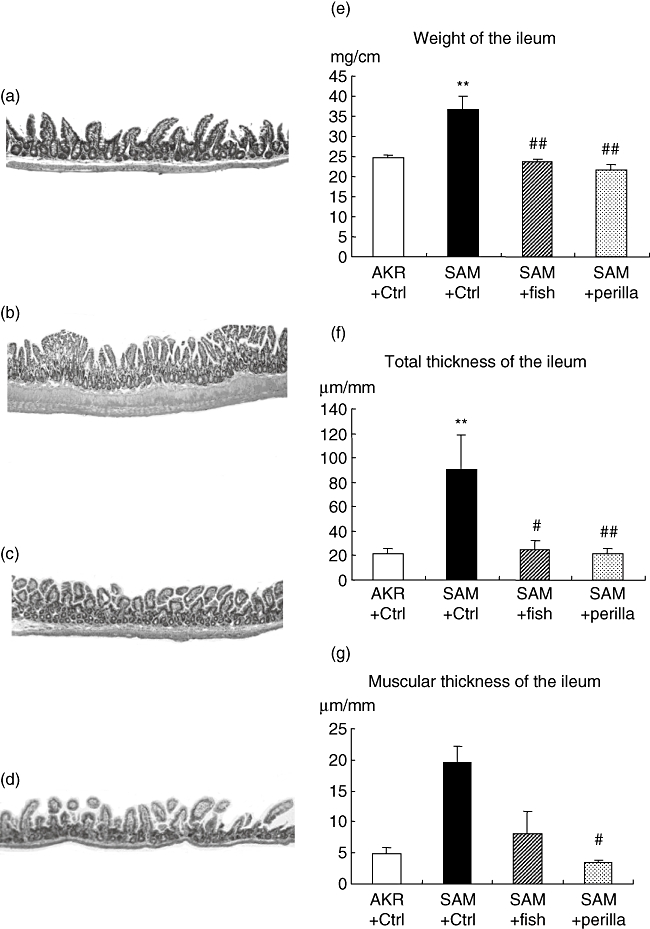
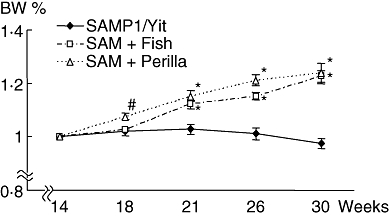
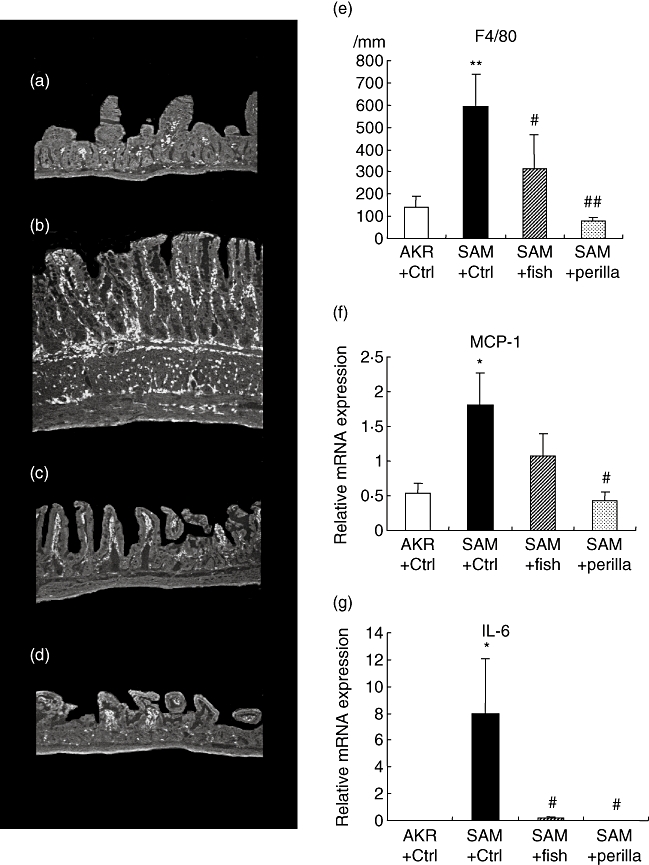
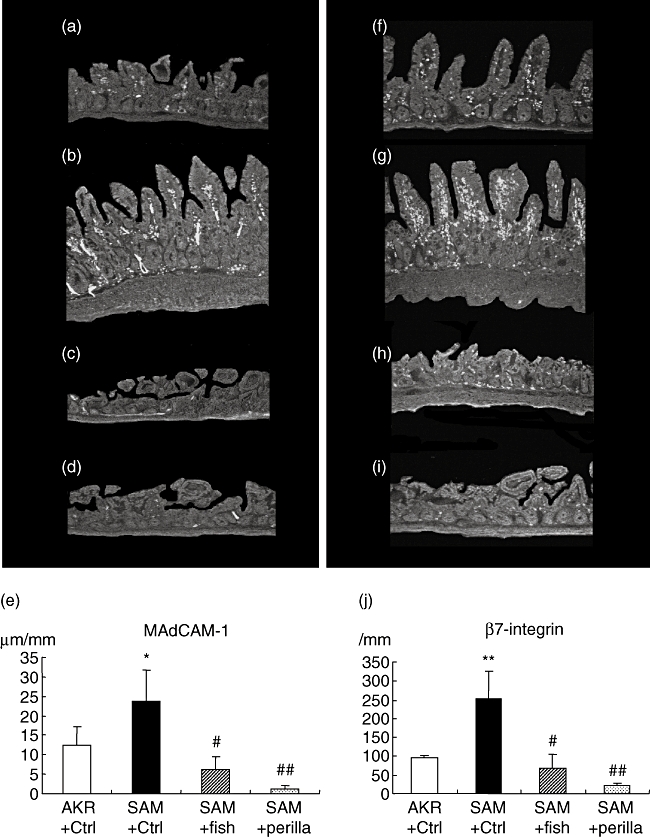
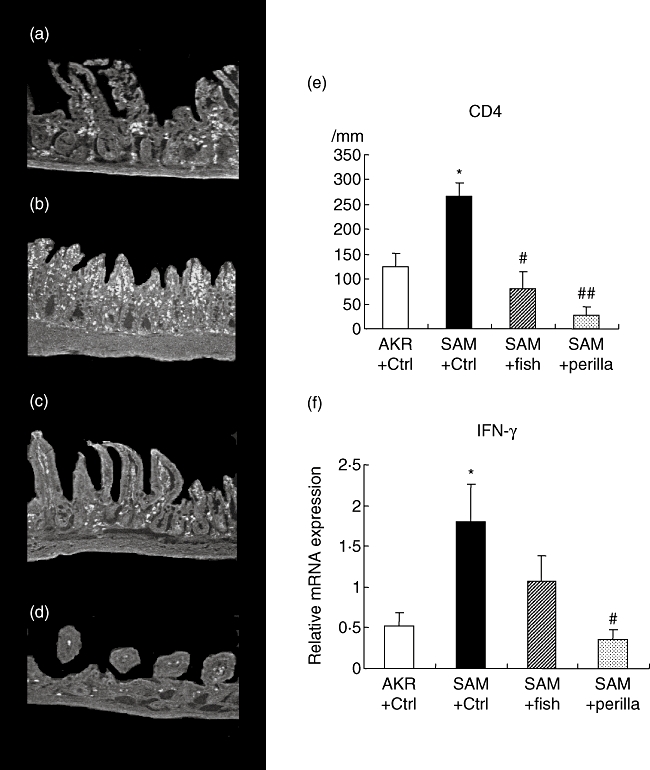
Clinical studies using omega-3 polyunsaturated fatty acids (omega3-PUFA) to Crohn's disease (CD) are conflicting. Beneficial effects of dietary omega3-PUFA intake in various experimental inflammatory bowel disease (IBD) models have been reported. However, animal models of large intestinal inflammation have been used in all previous studies, and the effect of omega3 fat in an animal model of small intestinal inflammation has not been reported. We hypothesized that the effects of omega3 fat are different between large and small intestine. The aim of this study was to determine whether the direct effect of omega3 fat is beneficial for small intestinal inflammation. Senescence accelerated mice (SAM)P1/Yit mice showed remarkable inflammation of the terminal ileum spontaneously. The numbers of F4/80-positive monocyte-macrophage cells as well as beta7-integrin-positive lymphocytes in the intestinal mucosa were increased significantly compared with those in the control mice (AKR-J mice). The area of mucosal addressin cell adhesion molecule-1 (MAdCAM-1)-positive vessels was also increased. The degree of expression levels of monocyte chemoattractant protein-1 (MCP-1), interleukin (IL)-6 and interferon (IFN)-gamma mRNA were increased significantly compared with those in the control mice. The feeding of two different kinds of omega3 fat (fish-oil-rich and perilla-oil-rich diets) for 16 weeks to SAMP1/Yit mice ameliorated inflammation of the terminal ileum significantly. In both the omega3-fat-rich diet groups, enhanced infiltration of F4/80-positive monocytes/macrophages in intestinal mucosa of SAMP1/Yit mice cells and the increased levels of MCP-1, IL-6 and IFN-gamma mRNA expression were ameliorated significantly compared with those in the control diet group. The results suggest that omega3 fat is beneficial for small intestinal inflammation by inhibition of monocyte recruitment to inflamed intestinal mucosa.
Figures
References
-
- Podolsky DK. Inflammatory bowel disease. N Engl J Med. 2002;347:417–29. - PubMed
-
- Podolsky DK. Inflammatory bowel disease (1) N Engl J Med. 1991;325:928–37. - PubMed
-
- Satsangi J, Welsh KI, Bunce M, et al. Contribution of genes of the major histocompatibility complex to susceptibility and disease phenotype in inflammatory bowel disease. Lancet. 1996;347:1212–7. - PubMed
-
- Ogura Y, Bonen DK, Inohara N, et al. A frameshift mutation in NOD2 associated with susceptibility to Crohn's disease. Nature. 2001;411:603–6. - PubMed
-
- Hugot JP, Chamaillard M, Zouali H, et al. Association of NOD2 leucine-rich repeat variants with susceptibility to Crohn's disease. Nature. 2001;411:599–603. - PubMed
MeSH terms
Substances
LinkOut - more resources
Full Text Sources
Research Materials
Miscellaneous
