


Improved outcomes for lap-banding using the Insuflow device compared with heated-only gas
- PMID: 19793466
- PMCID: PMC3015987
Improved outcomes for lap-banding using the Insuflow device compared with heated-only gas
Abstract
Background and objectives: Preconditioning gas by humidification and warming the pneumoperitoneum improves laparoscopic outcomes. This prevents peritoneal desiccation and detrimental events related to traditional cold-dry gas. Few comparisons have been done comparing traditional cold-dry, heated-only, and humidified-warmed carbon dioxide.
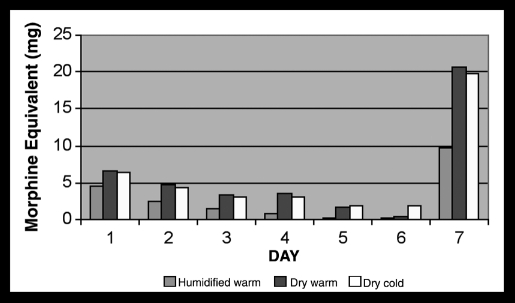
Methods: A prospective, controlled, randomized, double-blind study of laparoscopic gastric banding included 113 patients and compared traditional dry-cold (n=35) versus dry-heated (n=40), versus humidified-warm gas (n=38). Pain medications were standardized for all groups. Endpoints were recovery room length of stay, pain location, pain intensity, and total pain medications used postoperatively for up to 10 days.
Results: The humidified-warmed group had statistically significant differences from the other 2 groups with improvement in all end points. The dry-heated group had significantly more pain medication use and increased shoulder and chest pain than the other 2 groups had.
Conclusion: Using warm-humidified gas for laparoscopic gastric banding reduces shoulder pain, shortens recovery room length of stay, and decreases pain medication requirements for up to 10 days postoperatively. Dry-heated gas may cause additional complications as is indicated by the increase in pain medication use and pain intensity.
Figures
Comment in
-
Re: JSLS(2009)13:302-305. Improved outcomes for lap-banding using the insuflow device compared with heated-only gas.JSLS. 2010 Jul-Sep;14(3):461-2; author reply 462. JSLS. 2010. PMID: 21333213 Free PMC article. No abstract available.
References
-
- Hamza M, Schneider B, White P, et al. Heated and humidified insufflation during laparoscopic gastric bypass surgery: effect on temperature, postoperative pain, and recovery outcomes. J Laparoendosc Adv Surg Tech. 2005;15:6–12 - PubMed
-
- Ren C, Fielding G. Laparoscopic adjustable gastric banding: surgical technique. J Laparoendosc Surg. 2003;13:257–263 - PubMed
-
- Li TC, Saravelos H, Richmond M, Cooke ID. Complications of laparoscopic pelvic surgery: recognition, management and prevention. Hum Reprod Update. 1997;3:505–515 - PubMed
-
- Alexander JI. Pain after laparoscopy. Br J Anaesth. 1997;79:369–378 - PubMed
-
- Dixon JB, Reuben Y, Halket C, O'Brien PE. Shoulder pain is a common problem following laparoscopic adjustable gastric band surgery. Obes Surg. 2005;15:1111–1117 - PubMed
Publication types
MeSH terms
Substances
LinkOut - more resources
Full Text Sources
Medical
Research Materials