


The learning curve with single-port cholecystectomy
- PMID: 19793472
- PMCID: PMC3015986
The learning curve with single-port cholecystectomy
Abstract
Objectives: Single-port surgery is a rapidly advancing technique in laparoscopic surgery. Currently, there is limited evidence on the learning curve and practicality of performing single-port laparoscopic cholecystectomy.
Methods: Single-port cholecystectomy was performed on 20 consecutive patients for biliary dyskinesia, symptomatic cholelithiasis, or acute cholecystitis. The Tri-Port was placed in the umbilicus, and a combination of straight and articulating instruments were utilized. Patient characteristics and outcomes were reviewed, and a comparison was made with the prior 20 consecutive laparoscopic cholecystectomies performed using the 3-port technique.
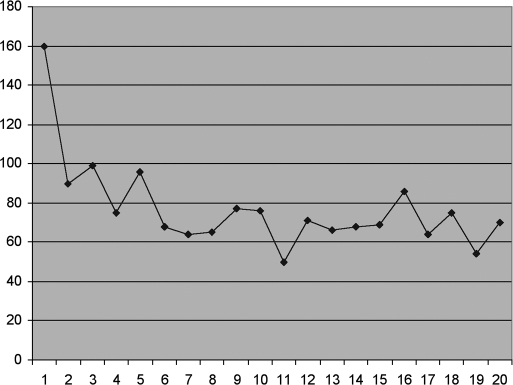
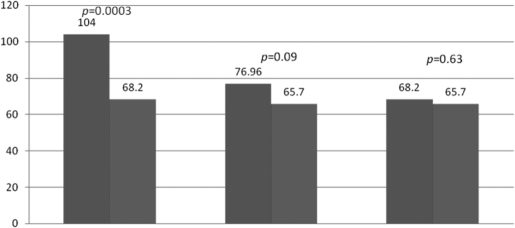
Results: Characteristics were similar in both groups. The 3-port cholecystectomy had a mean time of 65.7 minutes, and patients had an average body mass index of 28.16. The first single-port cholecystectomy took 160 minutes with sequential improvement to the sixth case of 66 minutes with a mean of 68.2 minutes for the last 15 single-port cases. The average patient body mass index was 30.24. No major complications occurred.
Conclusion: The largest series to date of single-port cholecystectomy for multiple degrees of biliary disease is presented. This study validates that this technique can be applied effectively and performed in comparable operative times to traditional 3-port cholecystectomy with a learning curve of approximately 5 cases.
Figures
References
-
- Piskun G, Rajpal S. Transumbilical laparoscopic cholecystectomy utilizes no incisions outside the umbilicus. J Laparoendosc Adv Surg Tech. 1999;9:361–364 - PubMed
-
- Rane A, Rao P, Rao P. Single-port-access nephrectomy and other laparoscopic urologic procedures using a novel laparoscopic port (R-Port). Urology. 2008;72(2):260–264 - PubMed
-
- Desai MM, Rao PP, Aron M, Pascal-Haber G, Desai MR, Mishra S, Kaouk JH, Gill IS. Scarless single port transumbilical nephrectomy and pyeloplasty: first clinical report. BJU Int. 2008;101:83–88 - PubMed
-
- Romanelli JR, Mark L, Omotosho PA. Single port laparoscopic cholecystectomy with the triport system: a case report. Surg Innov. 2008;15:223–228 - PubMed
-
- Access-related complications – an analysis of 6023 consecutive laparoscopic hernia repairs. Minim Invasive Ther Allied Technol. 2001;10:23–29 - PubMed
Publication types
MeSH terms
LinkOut - more resources
Full Text Sources