


Spherical topology in cardiac simulations
- PMID: 19794820
- PMCID: PMC2707797
- DOI: 10.2976/1.3074105
Spherical topology in cardiac simulations
Abstract
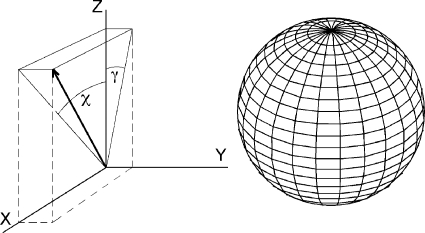
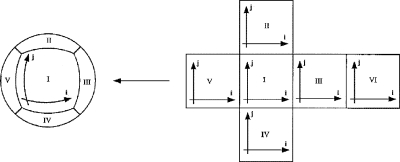
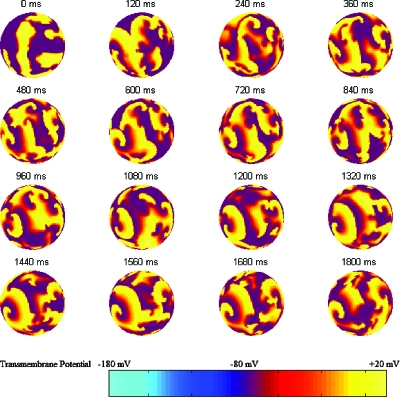
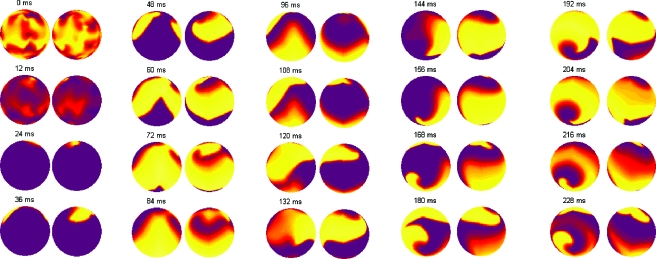
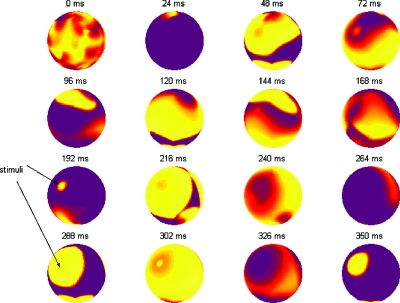
Computational simulations of the electrodynamics of cardiac fibrillation yield a great deal of useful data and provide a framework for theoretical explanations of heart behavior. Extending the application of these mathematical models to defibrillation studies requires that a simulation should sustain fibrillation without defibrillation intervention. In accordance with the critical mass hypothesis, the simulated tissue should be of a large enough size. The choice of biperiodic boundary conditions sustains fibrillation for a longer duration than no-flux boundary conditions for a given area, and so is commonly invoked. Here, we show how this leads to a boundary condition artifact that may complicate the analysis of defibrillation efficacy; we implement an alternative coordinate scheme that utilizes spherical shell topology and mitigates singularities in the Laplacian found with the usual spherical curvilinear coordinate system.
Figures
References
-
- Calhoun, D A, Helzel, C, and LeVeque, R J (2008). “Logically rectangular grids and finite volume methods for PDEs in circular and spherical domains.” SIAM Rev. 10.1137/060664094 50, 723–752. - DOI
-
- Cromwell, P R (1997). Polyhedra: “One of the Most Charming Chapters of Geometry,” Cambridge University Press, Cambridge, UK.
-
- Eriksson, K, Estep, D, Hansbro, P, and Johnson, C (1996). Computational Differential Equations, Studentlitteratur, Sweden.
LinkOut - more resources
Full Text Sources