


Ascorbic Acid in human seminal plasma: determination and its relationship to sperm quality
- PMID: 19794921
- PMCID: PMC2735625
- DOI: 10.3164/jcbn.08-251
Ascorbic Acid in human seminal plasma: determination and its relationship to sperm quality
Abstract
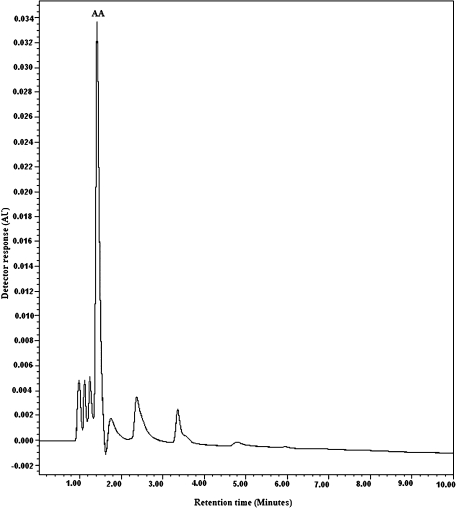
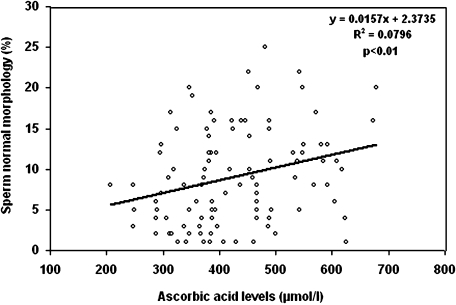
The objective of the present study was to assess the ascorbic acid (AA) levels in seminal plasma of the fertile and infertile men and to investigate its relationship with sperm count, motility and normal morphology. Semen samples were provided by fertile [smoker (n = 25), nonsmoker (n = 21)] and infertile men [smoker (n = 23), nonsmoker (n = 32)]. A simplified method of reverse phase high performance liquid chromatography (RP-HPLC) procedure using UV detection was applied for the determination of seminal AA. Fertile subjects, smoker or not, demonstrated significantly higher seminal AA levels than any infertile group (p<0.01). Nonsmokers had high, but no significant, mean AA levels in their seminal plasma compared with smokers. Seminal AA in fertile and infertile (smokers or nonsmokers) males correlated significantly with the percentage of spermatozoa with normal morphology (p<0.01). Seminal AA decreased significantly in infertile men. Decrease of seminal plasma AA is a risk factor for low normal morphology of spermatozoa and idiopathic male infertility. Measurement of seminal AA in the seminal plasma of males with a history of subfertility or idiopathic infertility is necessary and can be helpful in fertility assessment.
Keywords: RP-HPLC; ascorbic acid; male infertility; seminal plasma; sperm quality.
Figures
References
-
- Sikka S.C. Oxidative stress and role of antioxidants in normal and abnormal sperm function. Front. Biosci. 1996;1:e78–e86. - PubMed
-
- Aiken R.J., Buckingham D.W., Harkiss D. Use of Xanthine oxidase free radical generating system to investigate the cytotoxic effects of reactive oxygen species on human spermatozoa. J. Reprod. Fertil. 1993;97:441–450. - PubMed
-
- Agarwal A. Role of antioxidants in treatment of male infertility. Reprod. Biomed. Online. 2004;8:616–627. - PubMed
-
- Sharma R.K., Agarwal A. Role of reactive oxygen species in male infertility. Urology. 1996;48:835–850. - PubMed
-
- de Lamirande E., Leduc B.E., Iwasaki A., Hassouna M., Gagnon C. Increased reactive oxygen species formation in semen of patients with spinal cord injury. Fertil. Steril. 1995;64:637–642. - PubMed
LinkOut - more resources
Full Text Sources
Other Literature Sources
