


Geometry and force control of cell function
- PMID: 19795385
- PMCID: PMC2803742
- DOI: 10.1002/jcb.22355
Geometry and force control of cell function
Abstract
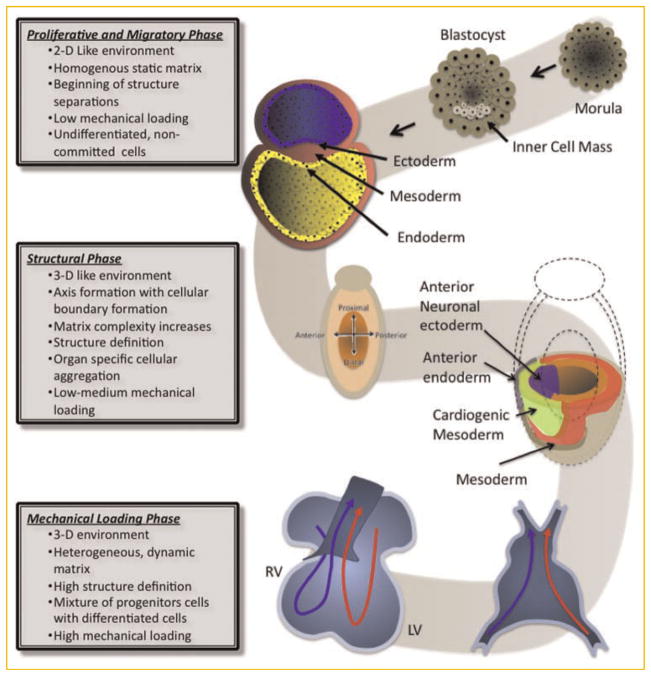
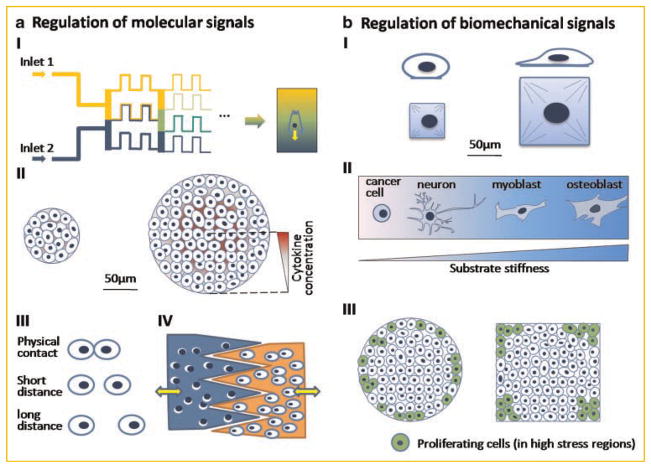
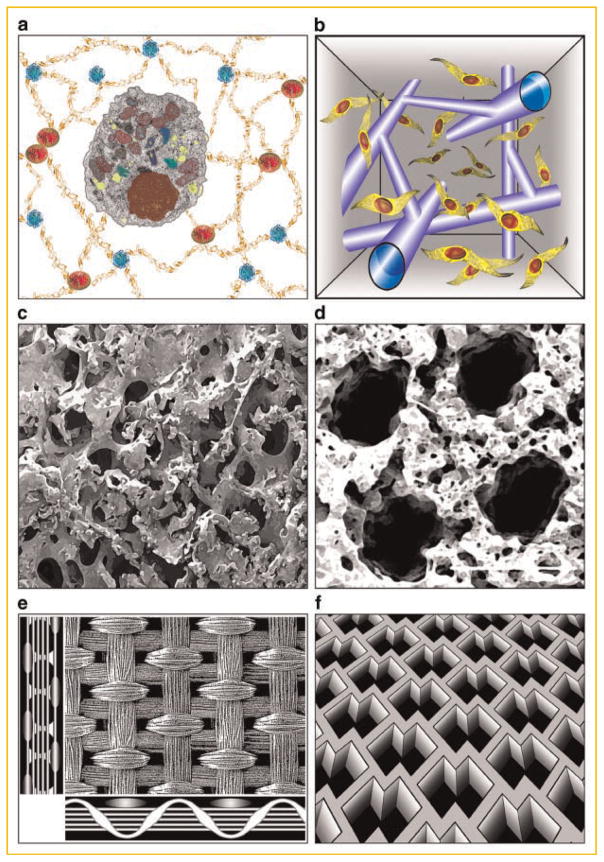
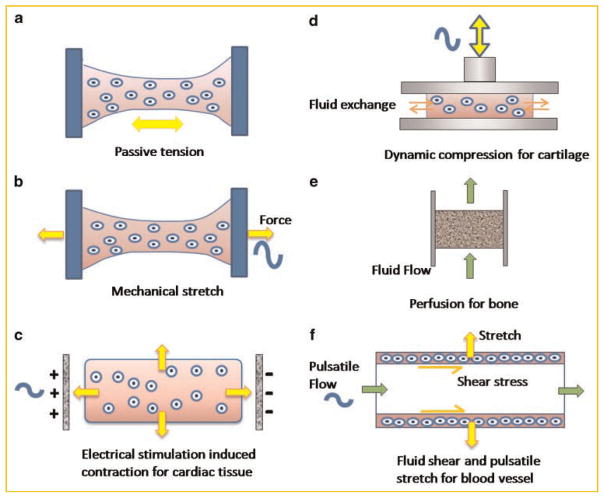
Tissue engineering is becoming increasingly ambitious in its efforts to create functional human tissues, and to provide stem cell scientists with culture systems of high biological fidelity. Novel engineering designs are being guided by biological principles, in an attempt to recapitulate more faithfully the complexities of native cellular milieu. Three-dimensional (3D) scaffolds are being designed to mimic native-like cell environments and thereby elicit native-like cell responses. Also, the traditional focus on molecular regulatory factors is shifting towards the combined application of molecular and physical factors. Finally, methods are becoming available for the coordinated presentation of molecular and physical factors in the form of controllable spatial and temporal gradients. Taken together, these recent developments enable the interrogation of cellular behavior within dynamic culture settings designed to mimic some aspects of native tissue development, disease, or regeneration. We discuss here these advanced cell culture environments, with emphasis on the derivation of design principles from the development (the biomimetic paradigm) and the geometry-force control of cell function (the biophysical regulation paradigm).
Figures
References
-
- Abu-Issa R, Kirby ML. Heart field: From mesoderm to heart tube. Annu Rev Cell Dev Biol. 2007;23:45–68. - PubMed
-
- Altman GH, Horan RL, Martin I, Farhadi J, Stark PR, Volloch V, Richmond JC, Vunjak-Novakovic G, Kaplan DL. Cell differentiation by mechanical stress. FASEB J. 2002;16:270–272. - PubMed
-
- Belousov LV, Ermakov AS. Artificially applied tensions normalize development of relaxed Xenopus Laevis embryos. Ontogenez. 2001;32:288–294. - PubMed
-
- Benya PD, Shaffer JD. Dedifferentiated chondrocytes reexpress the differentiated collagen phenotype when cultured in agarose gels. Cell. 1982;30:215–224. - PubMed
Publication types
MeSH terms
Grants and funding
LinkOut - more resources
Full Text Sources
Other Literature Sources
