


Role of key-regulator genes in melanoma susceptibility and pathogenesis among patients from South Italy
- PMID: 19799798
- PMCID: PMC2763007
- DOI: 10.1186/1471-2407-9-352
Role of key-regulator genes in melanoma susceptibility and pathogenesis among patients from South Italy
Abstract
Background: Several genetic alterations have been demonstrated to contribute to the development and progression of melanoma. In this study, we further investigated the impact of key-regulator genes in susceptibility and pathogenesis of such a disease.
Methods: A large series (N = 846) of sporadic and familial cases originating from South Italy was screened for germline mutations in p16(CDKN2A), BRCA2, and MC1R genes by DHPLC analysis and automated DNA sequencing. Paired primary melanomas and lymph node metastases from same patients (N = 35) as well as melanoma cell lines (N = 18) were analyzed for somatic mutations in NRAS, BRAF, and p16(CDKN2A) genes.
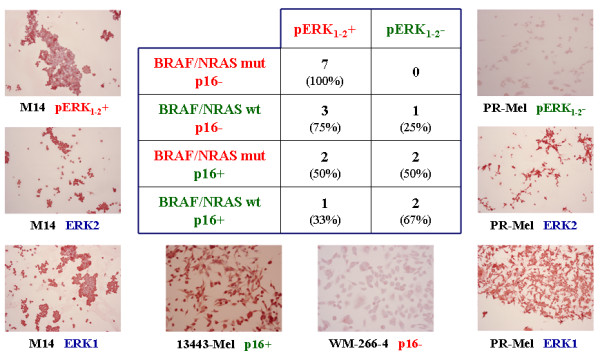
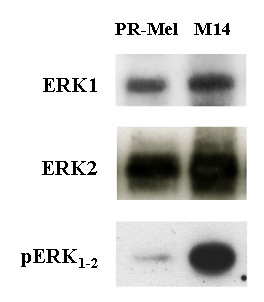
Results: For melanoma susceptibility, investigations at germline level indicated that p16(CDKN2A) was exclusively mutated in 16/545 (2.9%) non-Sardinian patients, whereas BRCA2 germline mutations were observed in 4/91 (4.4%) patients from North Sardinia only. Two MC1R germline variants, Arg151Cys and Asp294His, were significantly associated with melanoma in Sardinia. Regarding genetic events involved in melanoma pathogenesis at somatic level, mutually-exclusive mutations of NRAS and BRAF genes were observed at quite same rate (about two thirds) in cultured and in vivo melanomas (either primary or metastatic lesions). Conversely, p16(CDKN2A) gene alterations were observed at increased rates moving from primary to metastatic melanomas and melanoma cell lines. Activation of the ERK gene product was demonstrated to be consistently induced by a combination of molecular alterations (NRAS/BRAF mutations and p16(CDKN2A) silencing).
Conclusion: Our findings further clarified that: a) mutation prevalence in melanoma susceptibility genes may vary within each specific geographical area; b) multiple molecular events are accumulating during melanomagenesis.
Figures
References
-
- de Vries E, Bray FI, Coebergh JW, Parkin DM. Changing epidemiology of malignant cutaneous melanoma in Europe 1969-1997 rising trends in incidence and mortality, but recent stabilisations in western Europe and decreases in Scandinavia. Int J Cancer. 2003;107:119–126. doi: 10.1002/ijc.11360. - DOI - PubMed
-
- Curado MP, Edwards B, Shin HR, Storm H, Ferlay J, Heanue M, Boyle P, eds. Cancer Incidence in Five Continents. IX. International Agency for Research on Cancer (IARC) Scientific Publications, No. 160 Lyon, IARC; 2007.
Publication types
MeSH terms
Substances
LinkOut - more resources
Full Text Sources
Medical
Molecular Biology Databases
Research Materials
Miscellaneous
