. 2010 Jan;90(1):10-6.
doi: 10.1016/j.exer.2009.09.001. Epub 2009 Sep 30.

Estrogen receptor beta protects against in vivo injury in RPE cells

Affiliations

Estrogen receptor beta protects against in vivo injury in RPE cells

Sharon J Elliot et al. Exp Eye Res. 2010 Jan.

Abstract

Epidemiological data suggest that estrogen deficiency in postmenopausal women may contribute to the severity of AMD. We discovered that 17beta-estradiol (E2) was a crucial regulator of the severity of extracellular matrix turnover (ECM) dysregulation both in vivo and in vitro. We also found in vitro that the presence of estrogen receptor (ER)beta regulates MMP-2 activity. Therefore in an attempt to delineate the role of the ER subtypes, female estrogen receptor knockout (ERKO) mice were fed a high-fat diet, and the eyes were exposed to seven 5-second doses of nonphototoxic levels of blue-green light over 2 weeks. Three months after cessation of blue light treatment, transmission electron microscopy was performed to assess severity of deposits, Bruchs membrane changes, and choriocapillaris endothelial morphology. We found that changes in the trimolecular complex of pro-MMP-2, MMP-14 and TIMP-2 correlated with increased Bruch's membrane thickening or sub-retinal deposit formation (basal laminar deposits) in ERKObeta mice. In addition RPE isolated from ERKObeta mice had an increase in expression of total collagen and a decrease in MMP-2 activity. Finally we found that ERK an intermediate signaling molecule in the MMP pathway was activated in RPE isolated from ERKObeta mice. These data suggest that mice which lack ERbeta are more susceptible to in vivo injury associated with environmental light and high fat diet.


Figures
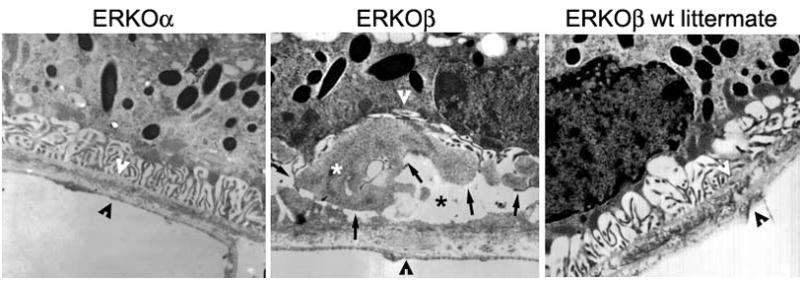
Figure 1
Figure 1. Ultrastructure comparison of subRPE deposits in ERKOα, ERKOβ and littermate control female mice fed a high fat diet and exposed to blue light
(A) Outer retina and choroid of an ERKOα mouse showed a normal RPE, BrM, and choriocapillaris with preserved basal membranous infolds (B) ERKOβ mouse outer retina and choroid of a mouse revealed sub-RPE deposits characterized by accumulation of moderately severe BLD with dense granular material between the RPE and its basement membrane (black arrows), compatible with a high mean severity score (5.75 ± 2.1). These subRPE deposits contained banded structures consistent with basal laminar deposits (white *) and caused extensive destruction of membranous infolds (black *). BrM was thickened (please see space between arrowheads; compared to space delineated in A and C) and the choriocapillaris was probably normal. (C) Outer retina and choroid of an ERKOβ wt littermate mouse also showed a normal RPE, BrM, and choriocapillaris very similar to the ERKOα mouse (please refer to the severity score table 1). Magnification: (A through C) ×25,000.
Figure 2
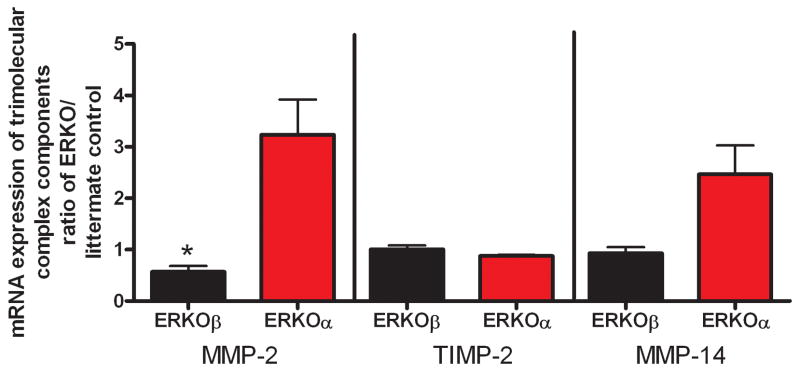
Figure 2. Components of the trimolecular complex are altered in RPE cells isolated from ERKOβ mice
mRNA expression was measured as described in methods. Data are mean of 3 experiments and calculated as fold difference from littermate ERKOβ controls for ERKOβ mice and fold difference from littermate ERKOα controls for ERKOα mice. MMP-2 mRNA expression * p<0.05 compared to ERKOα. All values were calculated based on ratios of target molecule/18s.
Figure 3
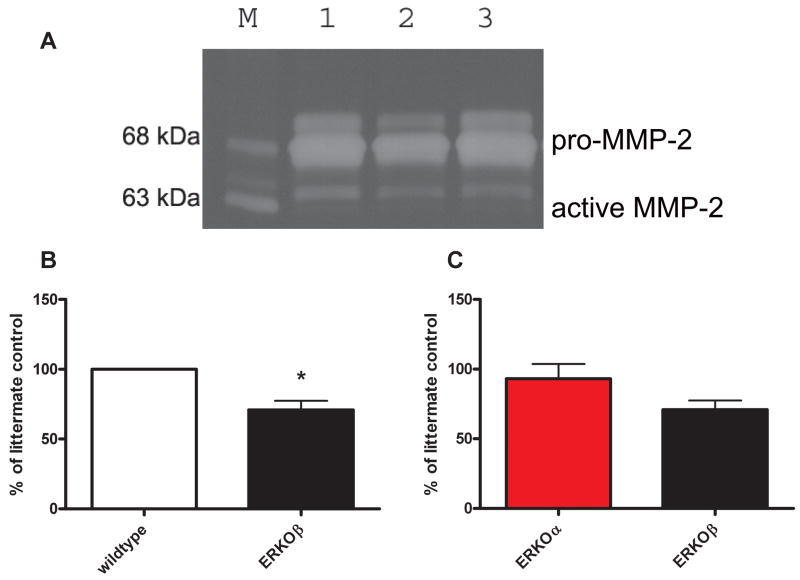
Figure 3. RPE cells isolated from ERKOβ mice have decreased pro and active MMP-2 compared to either littermate controls (B) or ERKOα (C)
(A) Representative zymogragm of cell supernatants collected from RPE cells isolated from littermate controls (wt, lane 1), ERKOβ (lane 2) or ERKOα (lane 3) mice exposed to in vivo oxidant injury, as detailed in the methods section. Three bands are present in the zymography; the largest band is the pro band, the lower band is the active band, and the band above the pro band is the slightly glycosylated form unique to murine cells and tissues. Data are graphed as the mean ± SEM of the active band (lower band, 63kDa). N=3 individual experiments. *p<0.05
Figure 4
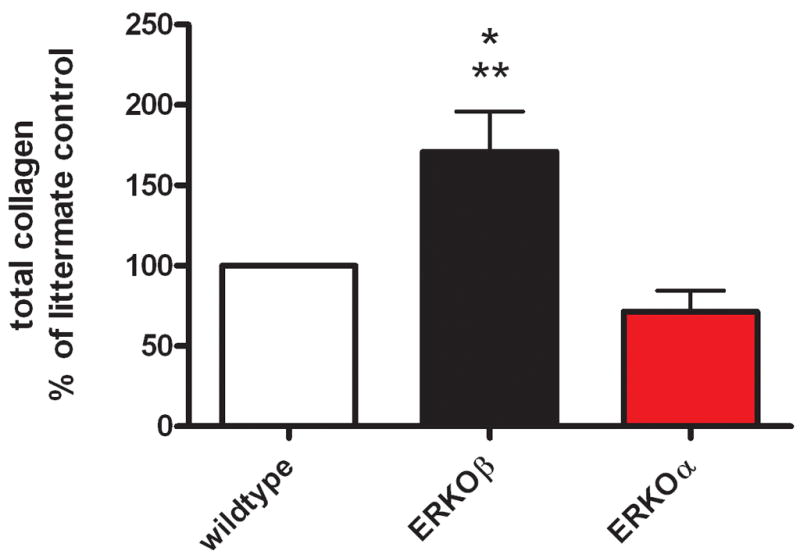
Figure 4. Collagen production of RPE cells isolated from ERKOβ mice is increased
Cell supernatants were assayed for total collagen production as described in methods. N=3 * p<0.05 compared to littermate control cells, ** p<0.005 compared to ERKOα cells.
Figure 5
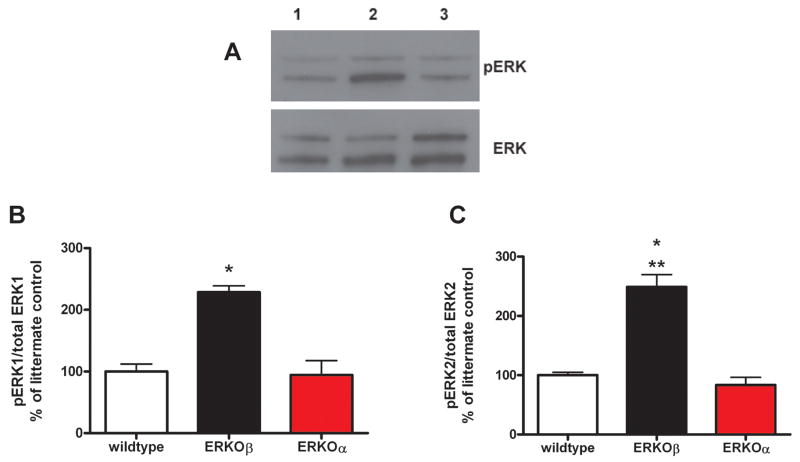
Figure 5. ERβ knockout induces ERK activation
Cell lysates were collected in duplicate from littermate controls (lane 1), ERKOβ (lane 2) and ERKOα (lane 3) RPE cell lines as described in methods. A. Representative western blots of pERK and total ERK. Data are graphed as % of littermate control cell pERK/ERK expression. B. ratio of pERK1/ERK, C. ratio of pERK2/ERK expression. N= 2 experiments using duplicate wells/treatment. * p<0.05 compared to littermate control (graph B and C) and ERKOα cells (graph B), **p < 0.005 compared to ERKO (graph C).

References

    1. Age-Related Macular Degeneration. National Eye Institute; 2009.
    1. Adminstration on Aging. Older Women. 2005. www.aoa.gov.
    1. Bjornstrom L, Sjoberg M. Mechanisms of estrogen receptor signaling: convergence of genomic and nongenomic actions on target genes. Mol Endocrinol. 2005;19:833–42. - PubMed
    1. Catanuto P, Espinosa-Heidmann D, Pereira-Simon S, Sanchez P, Salas P, Hernandez EP, Cousins SW, Elliot SJ. Mouse Retinal Pigmented Epithelial Cell Lines retain their phenotypic characteristics after transfection with Human Papilloma Virus: A new tool to further the study of RPE biology. Exp Eye Res. 2009;88:99–105. - PMC - PubMed
    1. Couse JF, Lindzey J, Grandien K, Gustafsson JA, Korach KS. Tissue distribution and quantitative analysis of estrogen receptor-α (ERα) and estrogen receptor-β (ERβ) messenger ribonucleic acid in the wild-type and ERα-knockout mouse. Endocrinology. 1997;138:4613–21. - PubMed

Publication types

MeSH terms