Differential symptom expression and somatization in Thai versus U.S. children
- PMID: 19803578
- PMCID: PMC3798036
- DOI: 10.1037/a0016779
Differential symptom expression and somatization in Thai versus U.S. children
Abstract
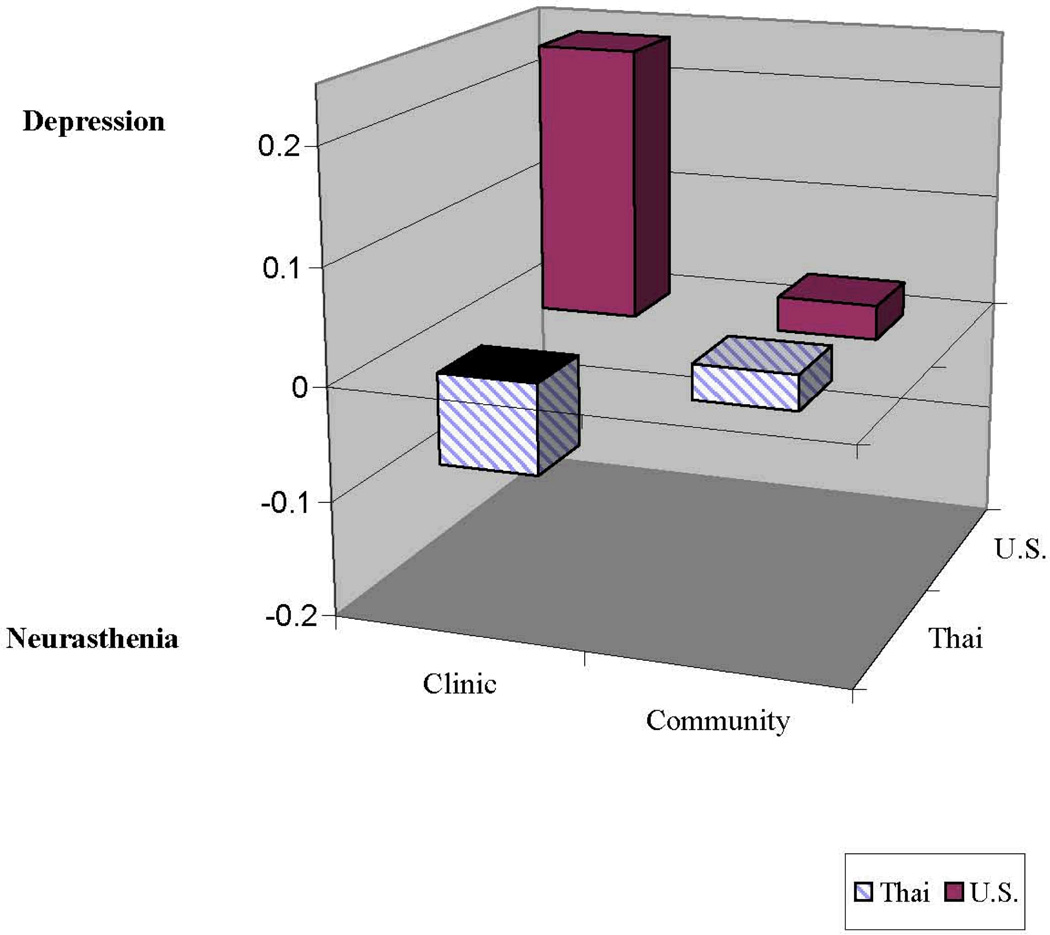
Individuals react in a variety of ways when experiencing environmental challenges exceeding their capacity to cope adaptively. Some researchers have suggested that Asian populations tend to react to excessive stress with somatic symptoms, whereas Western populations tend to respond more with affective or depressive symptoms. Other researchers, however, have suggested that such differences may represent different approaches to help seeking rather than actual variations in prevalence. The present study compared somatic versus affective symptoms in U.S. and Thai children from community and mental health clinic samples. In the clinic-referred sample, Thai children were reported to have higher levels of somatic versus depressive symptoms relative to U.S. children, whereas in the community sample, both groups were reported to have slightly higher levels of depressive than somatic symptoms. Because a primary difference between clinic-referred and community samples is that the former have been through the clinical referral process (i.e., were seeking help), these results suggest that differences in somatic versus depressive symptom presentation may be related to help-seeking behavior, at least for the samples involved in this study.
(c) 2009 APA, all rights reserved.
Figures
References
-
- Achenbach TM. Manual for the Child Behavior Checklist/4–18 and 1991 Profile. Burlington, VT: University of Vermont, Department of Psychiatry; 1991.
-
- Arnett JJ. The Neglected 95%: Why American psychology needs to become less American. American Psychologist. 2008;63:602–614. - PubMed
-
- Cohen J. Statistical power analysis for the behavioral sciences. 2nd ed. Hillsdale, NJ: Erlbaum Associates; 1988.
-
- Klausner WJ. Reflections on Thai Culture. Bangkok: Siam Society; 2000.
-
- Kleinman A. Depression, somatization, and the"new cross-cultural psychiatry". Social Sciences and Medicine. 1977;11:3–10. - PubMed