


A CREB-C/EBPbeta cascade induces M2 macrophage-specific gene expression and promotes muscle injury repair
- PMID: 19805133
- PMCID: PMC2762675
- DOI: 10.1073/pnas.0908641106
A CREB-C/EBPbeta cascade induces M2 macrophage-specific gene expression and promotes muscle injury repair
Abstract
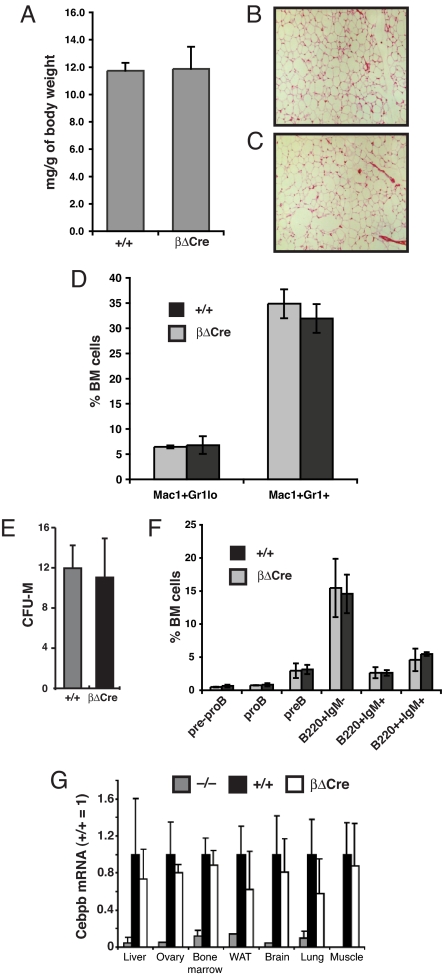
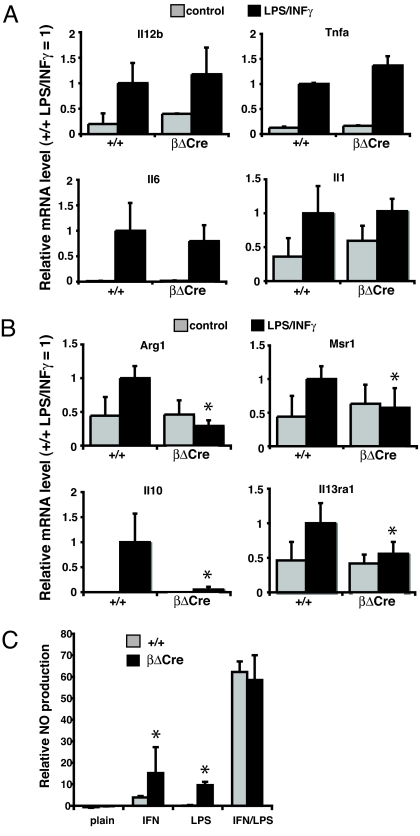
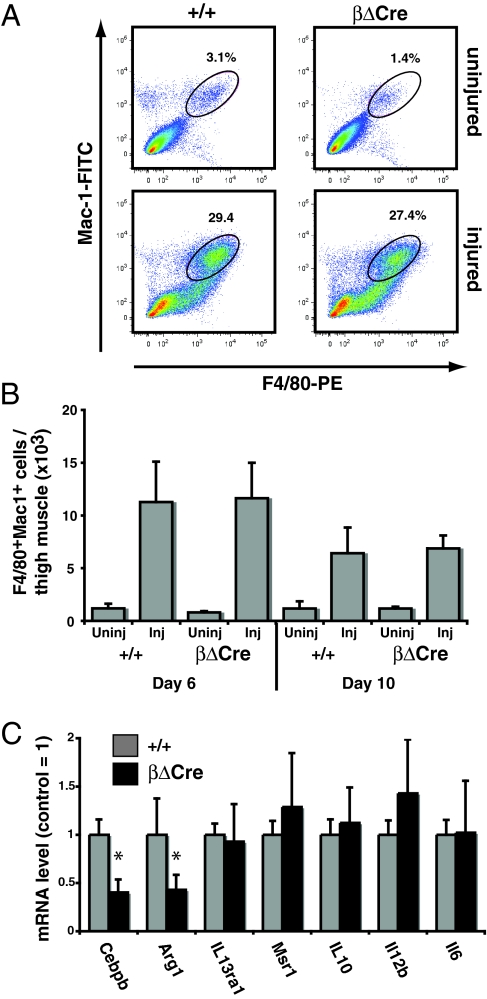
Macrophages play an essential role in the resolution of tissue damage through removal of necrotic cells, thus paving the way for tissue regeneration. Macrophages also directly support the formation of new tissue to replace the injury, through their acquisition of an anti-inflammatory, or M2, phenotype, characterized by a gene expression program that includes IL-10, the IL-13 receptor, and arginase 1. We report that deletion of two CREB-binding sites from the Cebpb promoter abrogates Cebpb induction upon macrophage activation. This blocks the downstream induction of M2-specific Msr1, Il10, II13ra, and Arg-1 genes, whereas the inflammatory (M1) genes Il1, Il6, Tnfa, and Il12 are not affected. Mice carrying the mutated Cebpb promoter (betaDeltaCre) remove necrotic tissue from injured muscle, but exhibit severe defects in muscle fiber regeneration. Conditional deletion of the Cebpb gene in muscle cells does not affect regeneration, showing that the C/EBPbeta cascade leading to muscle repair is muscle-extrinsic. While betaDeltaCre macrophages efficiently infiltrate injured muscle they fail to upregulate Cebpb, leading to decreased Arg-1 expression. CREB-mediated induction of Cebpb expression is therefore required in infiltrating macrophages for upregulation of M2-specific genes and muscle regeneration, providing a direct genetic link between these two processes.
Conflict of interest statement
The authors declare no conflict of interest.
Figures



References
-
- Lescaudron L, et al. Blood borne macrophages are essential for the triggering of muscle regeneration following muscle transplant. Neuromuscul Disord. 1999;9:72–80. - PubMed
-
- Mantovani A, Sica A, Sozzani S, Allavena P, Vecchi A, Locati M. The chemokine system in diverse forms of macrophage activation and polarization. Trends Immunol. 2004;25:677–686. - PubMed
-
- Rauh MJ, et al. SHIP represses the generation of alternatively activated macrophages. Immunity. 2005;23:361–374. - PubMed
-
- Biswas SK, et al. A distinct and unique transcriptional program expressed by tumor-associated macrophages (defective NF-kappaB and enhanced IRF-3/STAT1 activation) Blood. 2006;107:2112–2122. - PubMed
Publication types
MeSH terms
Substances
Grants and funding
LinkOut - more resources
Full Text Sources
Other Literature Sources
Molecular Biology Databases
Research Materials
Miscellaneous
