


Human papillomavirus 16 E7 inactivator of retinoblastoma family proteins complements human cytomegalovirus lacking UL97 protein kinase
- PMID: 19805380
- PMCID: PMC2757844
- DOI: 10.1073/pnas.0901521106
Human papillomavirus 16 E7 inactivator of retinoblastoma family proteins complements human cytomegalovirus lacking UL97 protein kinase
Abstract
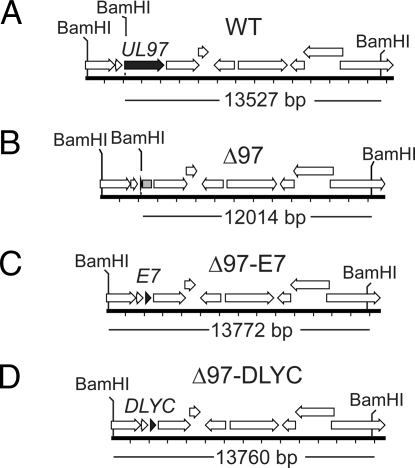
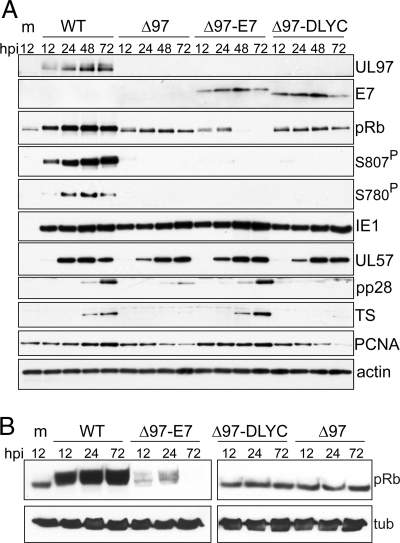
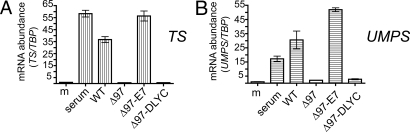
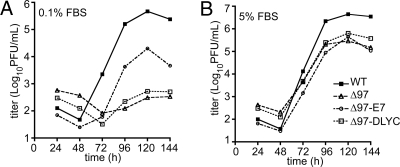
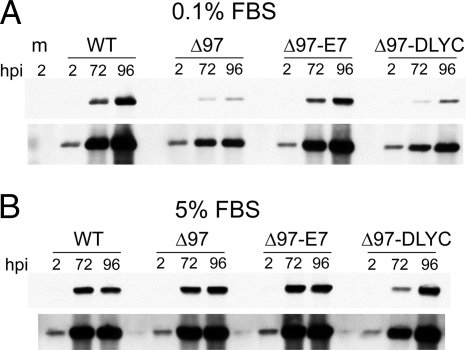
Several different families of DNA viruses encode proteins that inactivate the cellular retinoblastoma tumor suppressor protein (pRb), which normally functions to bind E2F transcription factors and restrict expression of genes necessary for cellular processes including DNA replication. Human cytomegalovirus (HCMV) UL97, a protein kinase functionally orthologous to cellular cyclin-dependent kinases, phosphorylates pRb on inactivating residues during HCMV infection. To assess if such phosphorylation is biologically relevant, we tested whether the human papillomavirus type 16 E7 protein, which inactivates pRb family proteins by direct binding and destabilization, could substitute for UL97 during HCMV infection. In the absence of UL97, expression of wild-type E7 protein, but not a mutant E7 unable to bind pRb family proteins, restored E2F-responsive cellular gene expression, late viral gene expression, and viral DNA synthesis to levels normally observed during wild-type virus infection of quiescent cells. UL97-null mutants exhibited more pronounced defects in virus production and DNA synthesis in quiescent cells as compared to serum-fed, cycling cells. E7 expression substantially enhanced infectious virus production in quiescent cells, but did not complement the defects observed during UL97-null virus infection of cycling cells. Thus, a primary role of UL97 is to inactivate pRb family proteins during infection of quiescent cells, and this inactivation likely abets virus replication by induction of cellular E2F-responsive genes. Our findings have implications for human cytomegalovirus disease and for drugs that target UL97.
Conflict of interest statement
The authors declare no conflict of interest.
Figures
References
-
- Nevins JR. The Rb/E2F pathway and cancer. Hum Mol Genet. 2001;10:699–703. - PubMed
-
- Helt AM, Galloway DA. Mechanisms by which DNA tumor virus oncoproteins target the Rb family of pocket proteins. Carcinogenesis. 2003;24:159–169. - PubMed
-
- Boyer SN, Wazer DE, Band V. E7 protein of human papilloma virus-16 induces degradation of retinoblastoma protein through the ubiquitin-proteasome pathway. Cancer Res. 1996;56:4620–4624. - PubMed
-
- Dyson N, Howley PM, Munger K, Harlow E. The human papilloma virus-16 E7 oncoprotein is able to bind to the retinoblastoma gene product. Science. 1989;243:934–937. - PubMed
Publication types
MeSH terms
Substances
Grants and funding
- T32 GM007215/GM/NIGMS NIH HHS/United States
- R01-CA 066980/CA/NCI NIH HHS/United States
- F32 AI075766/AI/NIAID NIH HHS/United States
- T32 AI007245/AI/NIAID NIH HHS/United States
- F32-AI 075766/AI/NIAID NIH HHS/United States
- T32-GM 007215/GM/NIGMS NIH HHS/United States
- T32 CA009135/CA/NCI NIH HHS/United States
- R01 CA066980/CA/NCI NIH HHS/United States
- T32-AI 07245/AI/NIAID NIH HHS/United States
- R01-AI 26077/AI/NIAID NIH HHS/United States
- T32-CA 009135-31/CA/NCI NIH HHS/United States
- R56-AI 64703/AI/NIAID NIH HHS/United States
- R56 AI064703/AI/NIAID NIH HHS/United States
- R01 AI026077/AI/NIAID NIH HHS/United States
LinkOut - more resources
Full Text Sources
