


Resilience of coral-associated bacterial communities exposed to fish farm effluent
- PMID: 19806190
- PMCID: PMC2751826
- DOI: 10.1371/journal.pone.0007319
Resilience of coral-associated bacterial communities exposed to fish farm effluent
Abstract
Background: The coral holobiont includes the coral animal, algal symbionts, and associated microbial community. These microbes help maintain the holobiont homeostasis; thus, sustaining robust mutualistic microbial communities is a fundamental part of long-term coral reef survival. Coastal pollution is one major threat to reefs, and intensive fish farming is a rapidly growing source of this pollution.
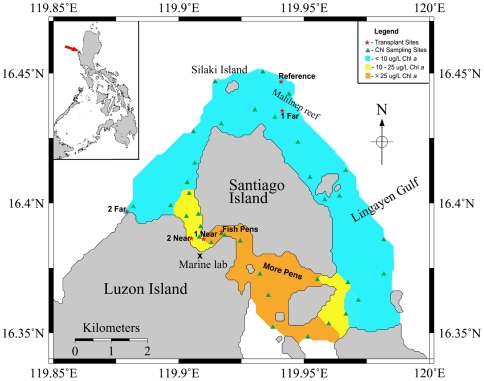
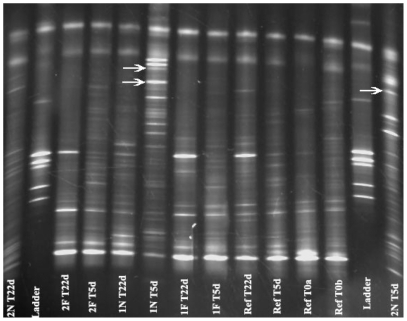
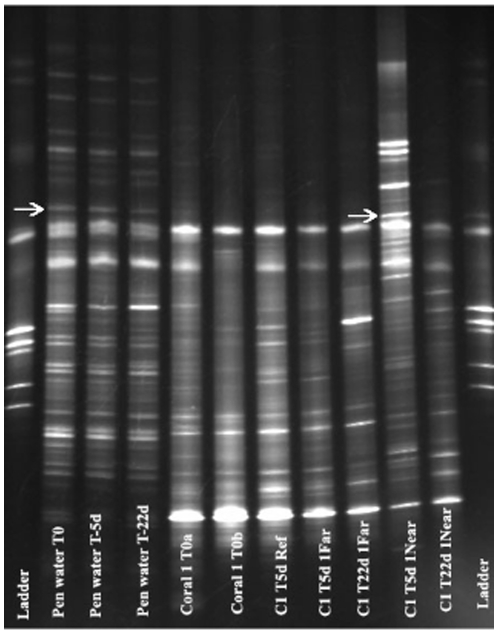
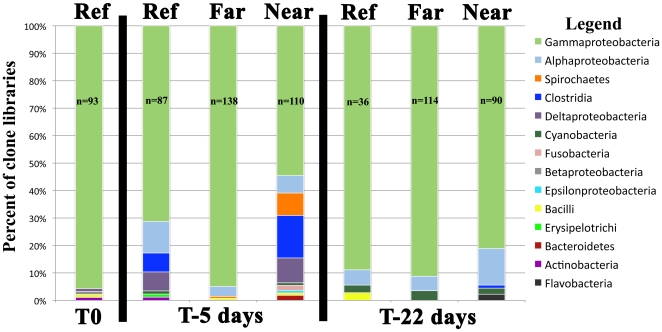
Methodology & principal findings: We investigated the susceptibility and resilience of the bacterial communities associated with a common reef-building coral, Porites cylindrica, to coastal pollution by performing a clonally replicated transplantation experiment in Bolinao, Philippines adjacent to intensive fish farming. Ten fragments from each of four colonies (total of 40 fragments) were followed for 22 days across five sites: a well-flushed reference site (the original fragment source); two sites with low exposure to milkfish (Chanos chanos) aquaculture effluent; and two sites with high exposure. Elevated levels of dissolved organic carbon (DOC), chlorophyll a, total heterotrophic and autotrophic bacteria abundance, virus like particle (VLP) abundances, and culturable Vibrio abundance characterized the high effluent sites. Based on 16S rRNA clone libraries and denaturing gradient gel electrophoresis (DGGE) analysis, we observed rapid, dramatic changes in the coral-associated bacterial communities within five days of high effluent exposure. The community composition on fragments at these high effluent sites shifted towards known human and coral pathogens (i.e. Arcobacter, Fusobacterium, and Desulfovibrio) without the host corals showing signs of disease. The communities shifted back towards their original composition by day 22 without reduction in effluent levels.
Significance: This study reveals fish farms as a likely source of pathogens with the potential to proliferate on corals and an unexpected short-term resilience of coral-associated bacterial communities to eutrophication pressure. These data highlight a need for improved aquaculture practices that can achieve both sustainable industry goals and long-term coral reef survival.
Conflict of interest statement
Figures
References
-
- Rohwer F, Seguritan V, Azam F, Knowlton N. Diversity and distribution of coral-associated bacteria. Marine Ecology-Progress Series. 2002;243:1–10.
-
- Rohwer F, Breitbart M, Jara J, Azam F, Knowlton N. Diversity of bacteria associated with the Caribbean coral Montastraea franksi. Coral Reefs. 2001;20:85–91.
-
- Pantos O, Cooney RP, Le Tissier MDA, Barer MR, O'Donnell AG, et al. The bacterial ecology of a plague-like disease affecting the Caribbean coral Montastrea annularis. Environmental Microbiology. 2003;5:370–382. - PubMed
-
- Ritchie KB, Smith GW. Preferential carbon utilization by surface bacterial communities from water mass, normal, and white-band diseased Acropora cervicornis. Molecular Marine Biology and Biotechnology. 1995;4:345–352.
Publication types
MeSH terms
Substances
LinkOut - more resources
Full Text Sources
Molecular Biology Databases
