


Comparison of fasting glucose with post-load glucose values and glycated hemoglobin for prediction of type 2 diabetes: the Isfahan diabetes prevention study
- PMID: 19806241
- PMCID: PMC2779014
- DOI: 10.1900/RDS.2009.6.117
Comparison of fasting glucose with post-load glucose values and glycated hemoglobin for prediction of type 2 diabetes: the Isfahan diabetes prevention study
Abstract
Objectives: The aim of this study was to compare the ability of fasting plasma glucose (FPG), post-load plasma glucose values and glycated hemoglobin (HbA1c) to predict progression to diabetes in non-diabetic first-degree relatives (FDR) of patients with type 2 diabetes.
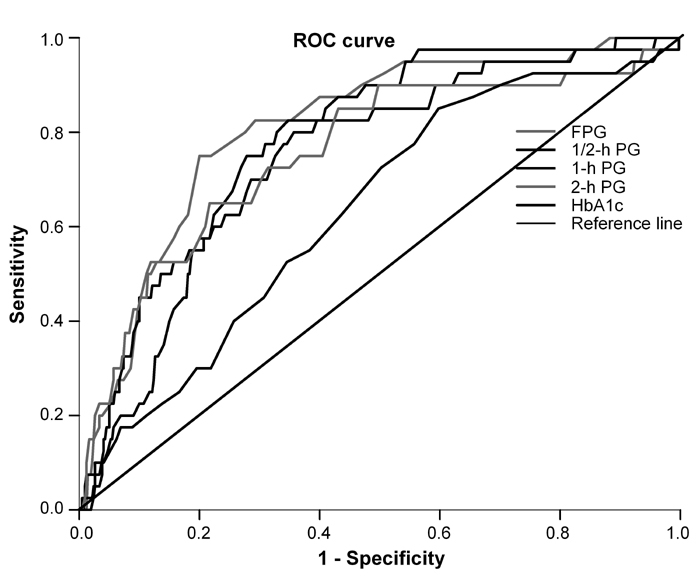
Methods: A total of 701 non-diabetic FDR of diabetic patients aged 20-70 years surveyed in 2003 to 2005 were followed until 2008 for the onset of type 2 diabetes mellitus. At baseline and at follow-ups, participants underwent a standard 75 g 2-hour oral glucose tolerance test (OGTT). Prediction of progression to type 2 diabetes was assessed by using area under the receiver-operating characteristic (ROC) curves based upon measurement of FPG, post-load glucose values and HbA1c.
Results: The incidence of type 2 diabetes was 33.9 per 1000 person-years in men and 48.6 in women. The incidence rates were 4.6, 50.7, and 99.7 per 1000 person-years in FDR with normal glucose tolerance, impaired fasting glucose and impaired glucose tolerance respectively. FPG value was a better predictor of progression to diabetes than any post-load glucose values or HbA1c. The areas under the ROC curves were 0.811 for fasting, 0.752 for 1/2-hour, 0.782 for 1-hour and 0.756 for 2-hour glucose vs. 0.634 for HbA1c (p < 0.001).
Conclusions: FPG had more discriminatory power to distinguish between individuals at risk for diabetes and those who were not at risk than post-load glucose values during OGTT or HbA1c. Our findings support the American Diabetes Association recommendation of using FPG concentration to diagnose diabetes.
Figures
References
-
- Expert Committee on the Diagnosis and Classification of Diabetes Mellitus. Report of the expert committee on the diagnosis and classification of diabetes mellitus. Diabetes Care. 2003;26(Suppl 1):S5–S20. - PubMed
-
- Unwin N, Shaw J, Zimmet P, Alberti KG. Impaired glucose tolerance and impaired fasting glycaemia: the current status on definition and intervention. Diabet Med. 2002;19(9):708–723. - PubMed
-
- Larsson H, Berglund G, Lindgärde F, Ahren B. Comparison of ADA and WHO criteria for diagnosis of diabetes and glucose intolerance. Diabetologia. 1998;41(9):1124–1125. - PubMed
-
- de Vegt F, Dekker JM, Jager A, Hienkens E, Kostense PJ, Stehouwer CD, Nijpels G, Bouter LM, Heine RJ. Relation of impaired fasting and postload glucose with incident type 2 diabetes in a Dutch population: The Hoorn Study. JAMA. 2001;285(16):2109–2113. - PubMed
-
- Shaw JE, Zimmet PZ, de Courten M, Dowse GK, Chitson P, Gareeboo H, Hemraj F, Fareed D, Tuomilehto J, Alberti KG. Impaired fasting glucose or impaired glucose tolerance. What best predicts future diabetes in Mauritius? Diabetes Care. 1999;22(3):399–402. - PubMed
LinkOut - more resources
Full Text Sources