. 2009 Nov 1;200(9):1434-42.
doi: 10.1086/606014.

Chronic exercise reduces illness severity, decreases viral load, and results in greater anti-inflammatory effects than acute exercise during influenza infection

Affiliations

Chronic exercise reduces illness severity, decreases viral load, and results in greater anti-inflammatory effects than acute exercise during influenza infection

Young-Je Sim et al. J Infect Dis. .

Erratum in

  • J Infect Dis. 2009 Dec 15;200(12):1949. Yoon, Kyoungjin J [corrected to Yoon, Kyoung-Jin]

Abstract

Background: It is assumed that moderate exercise may improve resistance to infection and reduce inflammation, but there are limited data to support this assumption in an infection model.

Methods: BALB/cJ mice were assigned to the following groups: no exercise (NON-EX), 1 session of acute exercise (A-EX), or chronic exercise for approximately 3.5 months (C-EX). Mice were infected with influenza (C-EX mice infected at rest; A-EX mice infected 15 min after exercise).

Results: C-EX mice demonstrated the lowest severity of infection, assessed by body weight loss and food intake. There was less virus in the lungs at day 5 after infection in C-EX and A-EX mice compared with NON-EX mice (P = .02) and less virus at day 2 after infection only in C-EX mice (P = .07). Soon after infection (day 2), interleukin 6 (IL-6), monocyte chemoattractant protein 1 (MCP-1), macrophage inflammatory protein 1beta, and tumor necrosis factor alpha in the bronchoalveolar lavage (BAL) fluid were lower in C-EX and A-EX than in NON-EX mice. At day 5 after infection, the BAL fluid from C-EX (but not A-EX) mice had less IL-6, interleukin 12p40, granulocyte colony-stimulating factor, keratinococyte-derived chemokine, and MCP-1 than that from NON-EX mice. A trend toward reduced immunopathologic response was found in C-EX mice.

Conclusions: Chronic exercise resulted in reduced symptoms, virus load, and levels of inflammatory cytokine and chemokines. Acute exercise also showed some benefit, which was limited to the early phase of infection.


Conflict of interest statement

Potential conflicts of interest: none reported.

Figures
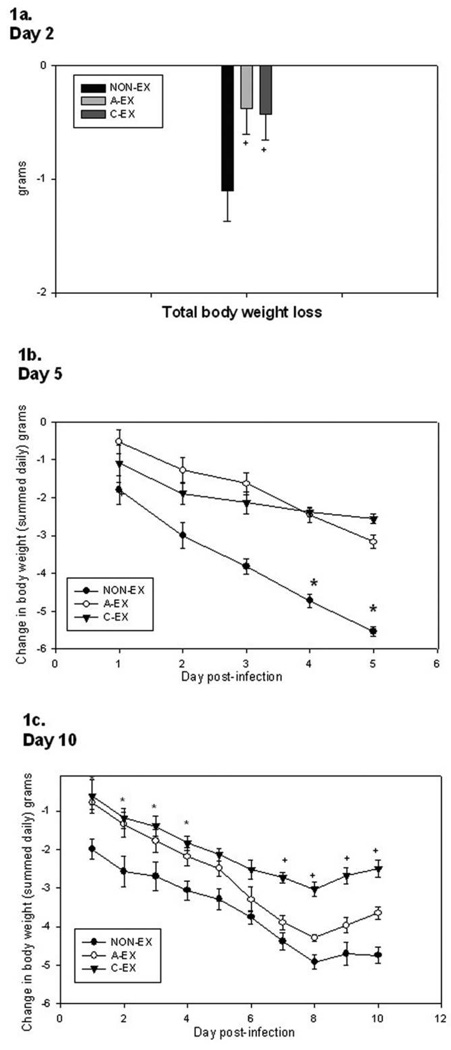
Figure 1
Figure 1
Change in body weight over the course of infection is seen in mice euthanized on day 2 (A), 5 (B), or 10 (C) after infection. For mice euthanized on day 2 after infection, the total body weight loss is summed, whereas the change in body weight for each day of infection is shown for those euthanized on day 5 or 10. (A) On day 2 after infection, there is a trend toward reduced total weight loss in the chronic exercise (C-EX) and acute exercise (A-EX) groups compared with the nonexercise (NON-EX) group; + P = .10. (B) In mice euthanized on day 5 after infection, the treatment-by-time interaction was significant (P < .05), such that the rates of weight loss over time differed in the 3 groups. In follow-up analyses, C-EX mice had less weight loss than NON-EX or A-EX mice; *P < .05.(C) Findings in mice euthanized on day 10 after infection show an early-phase (days 1–5) treatment-by-time interaction, such that the rates of weight loss differed over time for the 3 groups. In follow-up analyses, A-EX and C-EX mice had less weight loss than NON-EX mice; *P < .05. During the entire 10-day course of infection, there was a trend toward a treatment-by-time interaction such that the rate of weight loss in C-EX mice differed from that in NON-EX mice; +P = .08.
Figure 2
Figure 2
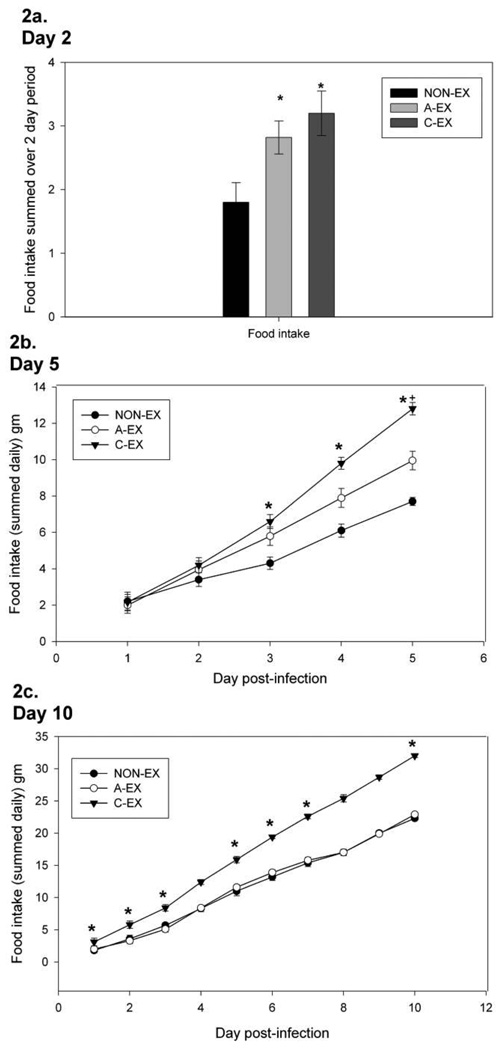
Changes in food intake over the course of infection seen in mice euthanized on day 2 (A), 5 (B), or 10 (C) after infection. For mice euthanized on day 2 after infection, the total food intake is summed, whereas the amount of food consumed daily is shown for mice euthanized on day 5 or 10. (A) In mice euthanized on day 2, total food intake was greater in the acute exercise (A-EX) and chronic exercise (C-EX) groups than in the nonexercise (NON-EX) group; *P < .05. (B) Rates of food intake over time in mice euthanized on day 5 after infection revealed a treatment-by-time interaction, such that food intake rates differed among the treatment groups (P = .025). C-EX mice consumed more food than NON-EX mice; *P < .05. (C) A treatment-by-time interaction (P = .008) was observed with respect to food intake in mice euthanized on day 10 after infection. In follow-up analyses, C-EX mice consumed more food than either A-EX or NON-EX mice; *P < .05.
Figure 3
Figure 3
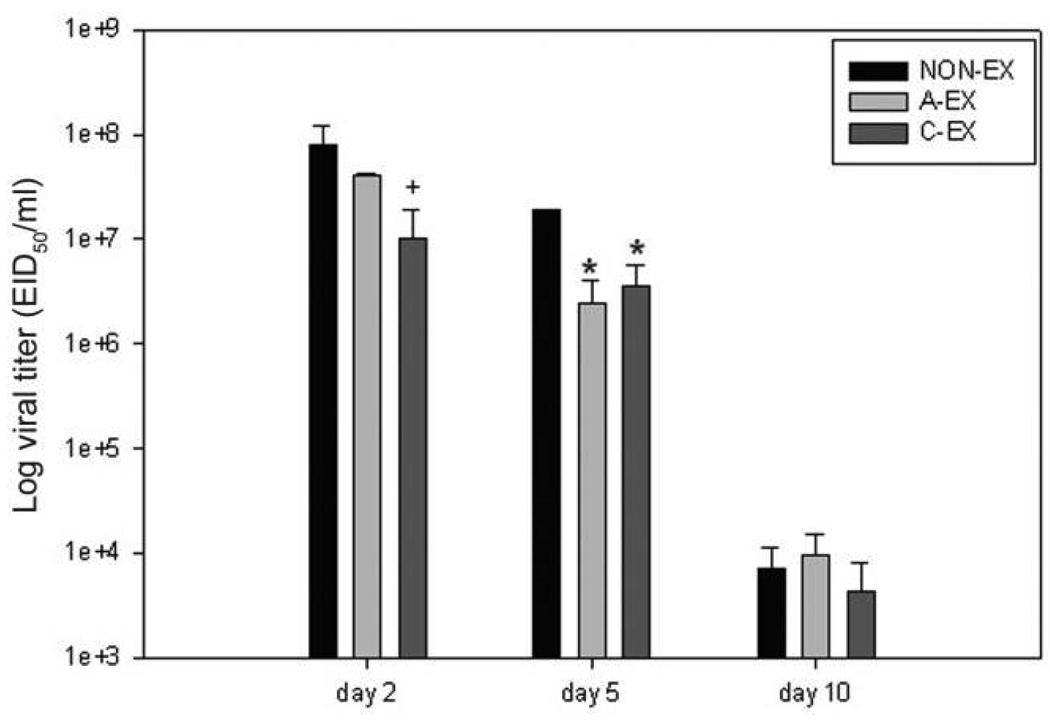
Lung viral titers assessed with polymerase chain reaction are shown for days 2, 5, and 10 after infection. On day 2 after infection, mice in the chronic exercise (C-EX) group show a trend toward less virus; +P = .07. At day 5 after infection, viral titer is lower in the acute exercise (A-EX) and C-EX groups than in the nonexercise (NON-EX) group; *P < .05. At day 10, virus is cleared or at low levels, and there were no significant differences between treatment groups. EID50, 50% egg infective dose.
Figure 4
Figure 4
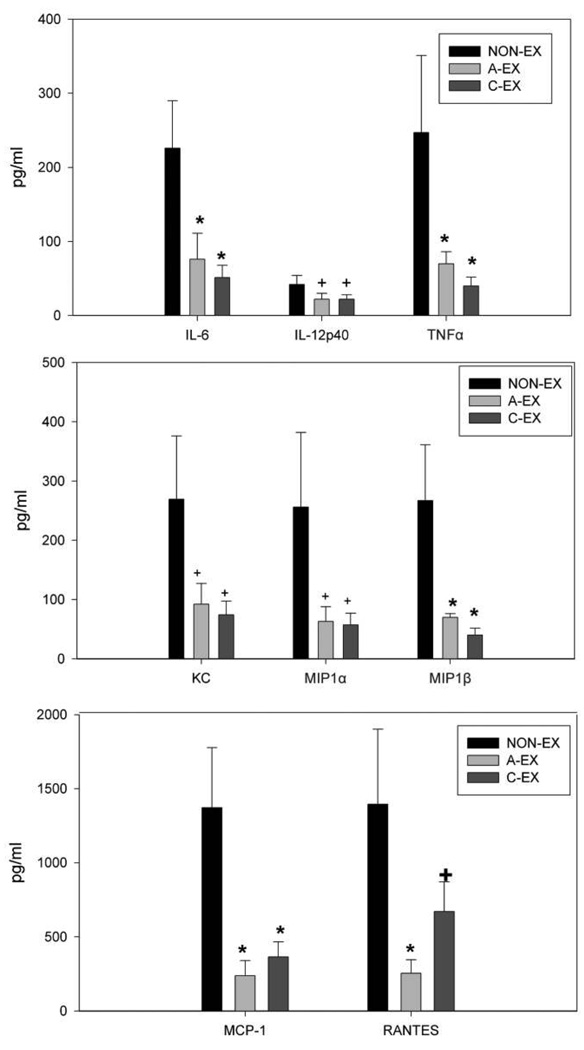
Chemokines or cytokines measured in bronchoalveolar lavage (BAL) fluid by multiplex assay at day 2 after infection. Levels of interleukin 6 (IL-6), tumor necrosis factor α (TNFα), monocyte chemoattractant protein 1 (MCP-1), and macrophage inflammatory protein 1β (MIP-1β) in BAL fluid were lower in the chronic exercise (C-EX) and acute exercise (A-EX) groups than in the nonexercise (NON-EX) group; *P < .05. There was a trend toward lower levels of keratinocyte-derived chemokine (KC), interleukin 12p40 (IL-12p40), RANTES (regulated on activation, normal T cell expressed and secreted), and MIP-1α in C-EX and A-EX mice than in NON-EX mice; +P ≤ .10.
Figure 5
Figure 5
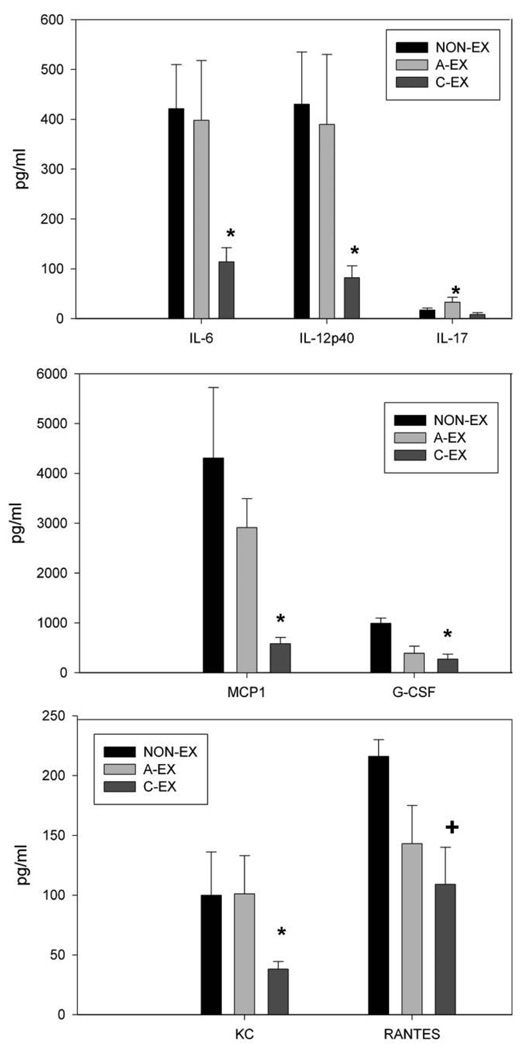
Chemokines or cytokines measured in bronchoalveolar lavage (BAL) fluid at day 5 after infection by multiplex assay. Levels of interleukin 6 (IL-6), interleukin 12p40 (IL-12p40), and keratinocyte-derived chemokine (KC) were reduced in the BAL fluid of mice in the chronic exercise (CEX) group compared with those in the acute exercise (A-EX) or nonexercise (NON-EX) group; *P < .05. Levels of monocyte chemoattractant protein 1 (MCP-1) and granulocyte colony-stimulating factor (G-CSF) were significantly lower in C-EX mice than in NON-EX mice (*P < .05), but the reduction in RANTES (regulated on activation, normal T cell expressed and secreted) in C-EX mice compared with NON-EX mice only approached statistical significance; +P = .08.
Figure 6
Figure 6
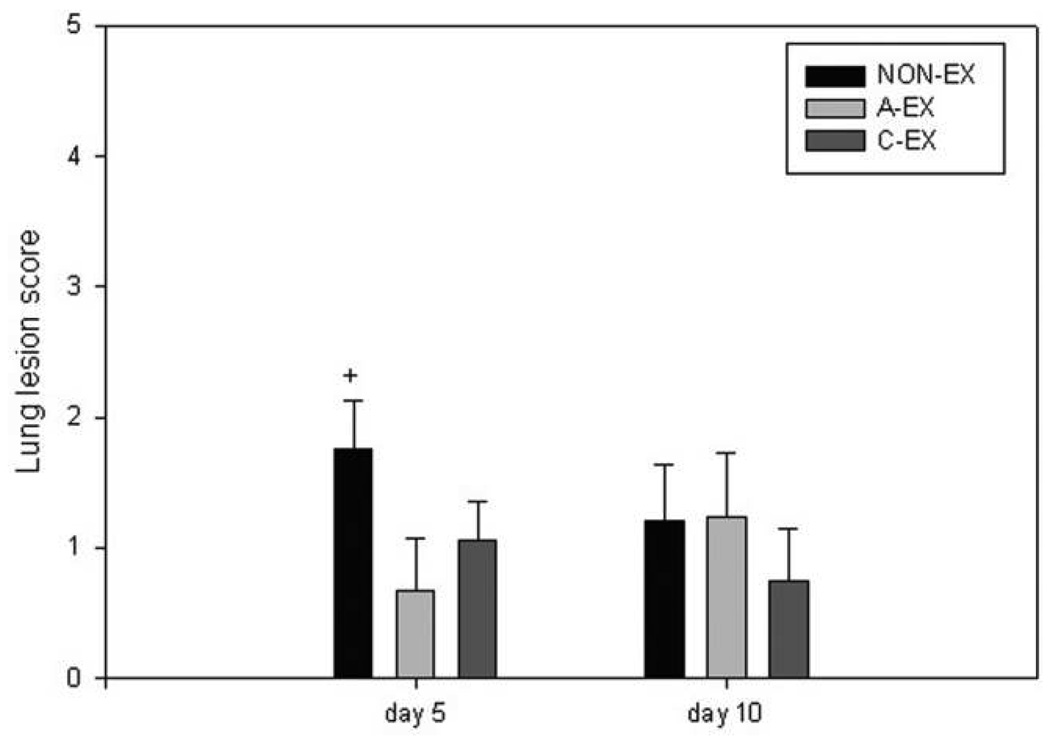
Lung lesion scores. The lesion scores from 0 to 3 were averaged across mice in each treatment group. There was a trend toward greater lesion scores in the nonexercise (NON-EX) group; +P = .07. A-EX, acute exercise; C-EX, chronic exercise.

References

    1. Matthews CE, Ockene IS, Freedson PS, Rosal MC, Merriam PA, Hebert JA. Moderate to vigorous physical activity and risk of upper-respiratory tract infection. Med Sci Sports Exerc. 2002;34:1242–1248. - PubMed
    1. Wong CM, Lai HK, Ou CQ, et al. Is exercise protective against influenza-associated mortality? PLoS ONE. 2008;3:e2108. - PMC - PubMed
    1. Nieman DC, Johanssen LM, Lee JW, Arabatzis K. Infectious episodes in runners before and after the Los Angeles Marathon. J Sports Med Phys Fitness. 1990;30:316–328. - PubMed
    1. Peters EM, Bateman ED. Ultramarathon running and upper respiratory tract infections: an epidemiological survey. S Afr Med J. 1983;64:582–584. - PubMed
    1. Davis JM, Kohut ML, Colbert LH, Jackson DA, Ghaffar A, Mayer EP. Exercise, alveolar macrophage function, and susceptibility to respiratory infection. J Appl Physiol. 1997;83:1461–1466. - PubMed

Publication types