


Assessing inattention and impulsivity in children during the Go/NoGo task
- PMID: 19812711
- PMCID: PMC2757760
- DOI: 10.1348/026151008X314919
Assessing inattention and impulsivity in children during the Go/NoGo task
Abstract
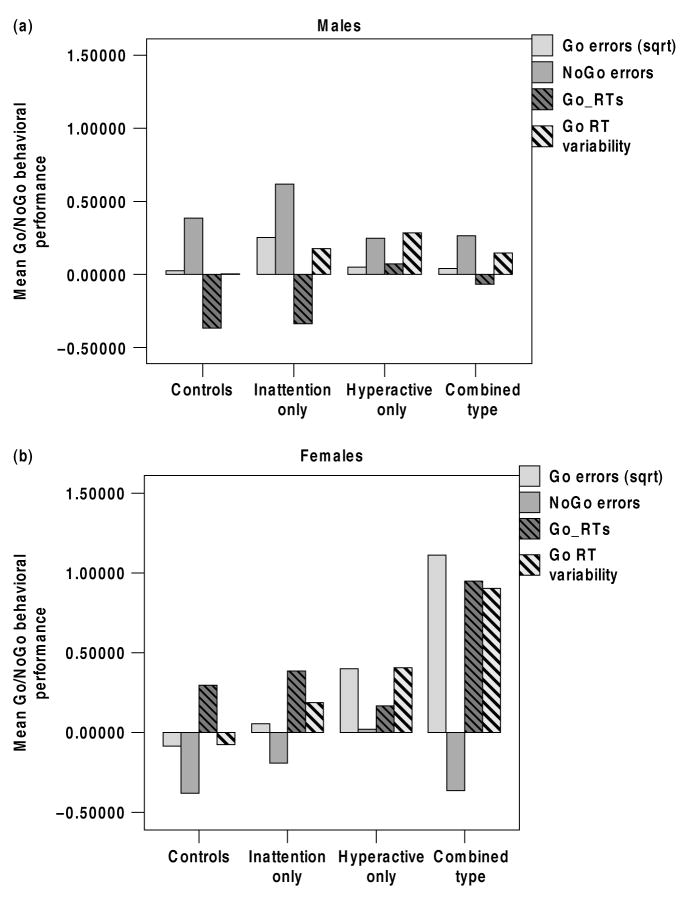
Behavioural performance in the Go/NoGo task was compared with caregiver and teacher reports of inattention and hyperactivity-impulsivity in 1,151 children (N = 557 boys; N = 594 girls) age 9- 10-years-old. Errors of commission (NoGo errors) were significantly correlated with symptom counts of hyperactivity-impulsivity, while errors of omission (Go errors) were significantly correlated with symptom counts for inattention in both caregiver and teacher reports. Cross-correlations were also evident, however, such that errors of commission were related to inattention symptoms, and errors of omission were related to hyperactivity-impulsivity. Moreover, hyperactivity-impulsivity and inattention symptoms were highly intercorrelated in both caregiver (r = .52) and teacher reports (r = .70), while errors of commission and omission were virtually uncorrelated in the Go/NoGo task (r = .06). The results highlight the difficulty in disentangling hyperactivity-impulsivity and inattention in questionnaires, and suggest that these constructs may be more clearly distinguished in laboratory measures such as the Go/NoGo task.
Figures
References
-
- Achenbach TM, McConaughy SH, Howell CT. Child/adolescent behavioral and emotional problems: Implications of cross-informant correlations for situational specificity. Psychological Bulletin. 1987;101:213–232. - PubMed
-
- August G, Realmuto GM, MacDonald AW, Nugent SM, Crosby R. Prevalence of ADHD and comorbid disorders among elementary school children screened for disruptive behavior. Journal of Abnormal Psychology. 1996;24:571–596. - PubMed
-
- Baker DB, Taylor CJ, Leyva C. Continuous performance tests: A comparison of modalities. Journal of Clinical Psychology. 1995;51:548–551. - PubMed
Publication types
MeSH terms
Grants and funding
LinkOut - more resources
Full Text Sources
Medical
