


Importance of normothermia control in investigating delayed neuronal injury in a mouse global ischemia model
- PMID: 19815029
- PMCID: PMC4696559
- DOI: 10.1016/j.jneumeth.2009.09.026
Importance of normothermia control in investigating delayed neuronal injury in a mouse global ischemia model
Abstract
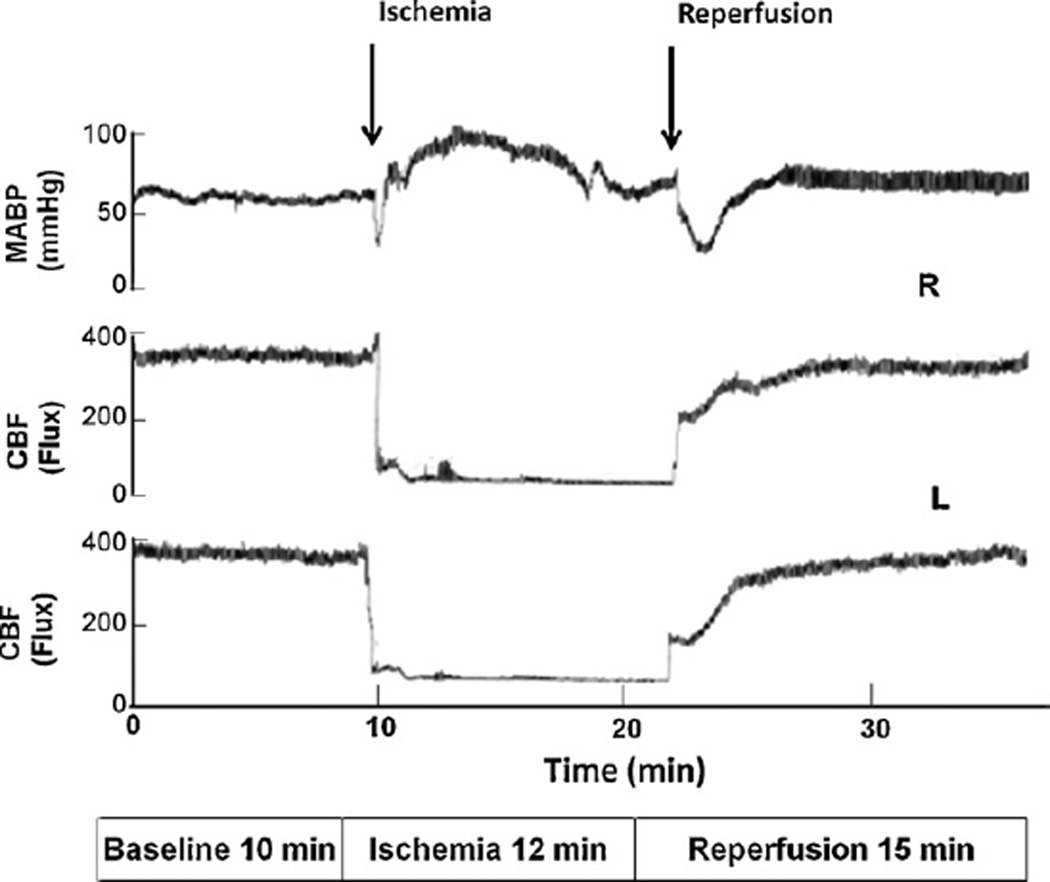
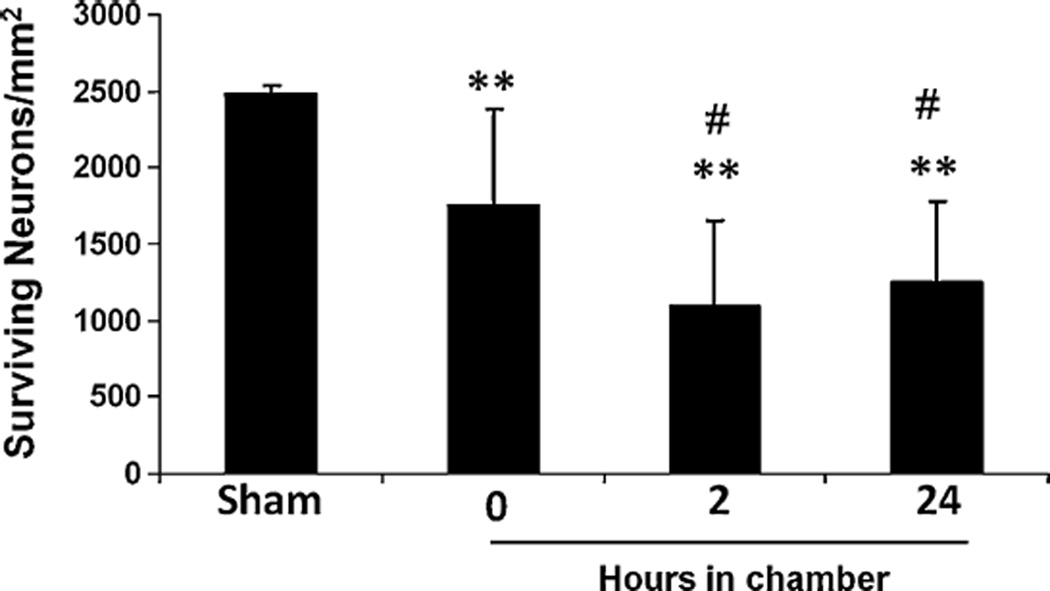
This study aims to establish a mouse global cerebral ischemia model in which the physiological parameter measurements and neuronal injury evaluations are conducted in the same group of animals and to identify the effect of post-ischemic core temperature (CT) on the outcome of neuronal injury. Global ischemia was induced by 12-min bilateral common carotid artery occlusion followed by 7 days of reperfusion in C57BL/6 mice. Immediately after occlusion, mice were randomly assigned to be kept in environments of different temperatures [25 degrees C (room temperature, group 1), 33-34 degrees C for 2h (group 2), and 33-34 degrees C for 24h (group 3)] before being returned to their home cages. We found that in group 1, CT declined to approximately 32 degrees C after ischemia and then recovered at 24h post-ischemia; in group 2, CT remained at the pre-ischemia level during the first 2h, declined after the mice were returned to room temperature, and recovered at 24h post-ischemia; and in group 3, CT remained constant at the pre-ischemia level throughout the reperfusion period. The number of surviving neurons in a sector of the hippocampal CA1 region was significantly lower in all ischemic groups than in the sham controls, but the number was significantly higher in group 1 than that in groups 2 or 3 (P<0.05). We observed that CT declines initially but recovers spontaneously at 24h post-ischemia. Early post-ischemic hypothermia impacts the delayed neuronal injury, suggesting that tight temperature control immediately following ischemia is important to obtain the most reproducible neuronal damage in mouse models of cerebral global ischemia.
Figures


References
-
- Bath P. High blood pressure as risk factor and prognostic predictor in acute ischaemic stroke: when and how to treat it? Cerebrovasc Dis. 2004;17(Suppl 1):51–57. - PubMed
-
- Carmona Suazo JA, Maas AI, van den Brink WA, van Santbrink H, Steyerberg EW, Avezaat CJ. CO2 reactivity and brain oxygen pressure monitoring in severe head injury. Crit Care Med. 2000;28:3268–3274. - PubMed
-
- Castillo J, Leira R, Garcia MM, Serena J, Blanco M, Davalos A. Blood pressure decrease during the acute phase of ischemic stroke is associated with brain injury and poor stroke outcome. Stroke. 2004;35:520–526. - PubMed
-
- Colbourne F, Corbett D. Delayed and prolonged post-ischemic hypothermia is neuroprotective in the gerbil. Brain Res. 1994;654:265–272. - PubMed
Publication types
MeSH terms
Substances
Grants and funding
LinkOut - more resources
Full Text Sources
Miscellaneous
