


Environmental triggers of autoimmune thyroiditis
- PMID: 19818584
- PMCID: PMC2790188
- DOI: 10.1016/j.jaut.2009.09.001
Environmental triggers of autoimmune thyroiditis
Abstract
Autoimmune thyroiditis is among the most prevalent of all the autoimmunities. Autoimmune thyroiditis is multifactorial with contributions from genetic and environmental factors. Much information has been published about the genetic predisposition to autoimmune thyroiditis both in experimental animals and humans. There is, in contrast, very little data on environmental agents that can serve as the trigger for autoimmunity in a genetically predisposed host. The best-established environmental factor is excess dietary iodine. Increased iodine consumption is strongly implicated as a trigger for thyroiditis, but only in genetically susceptible individuals. However, excess iodine is not the only environmental agent implicated as a trigger leading to autoimmune thyroiditis. There are a wide variety of other synthetic chemicals that affect the thyroid gland or have the ability to promote immune dysfunction in the host. These chemicals are released into the environment by design, such as in pesticides, or as a by-product of industry. Candidate pollutants include polyaromatic hydrocarbons, polybrominated biphenols, and polychlorinated biphenols, among others. Infections are also reputed to trigger autoimmunity and may act alone or in concert with environmental chemicals. We have utilized a unique animal model, the NOD.H2(h4) mouse to explore the influence of iodine and other environmental factors on autoimmune thyroiditis.
Figures
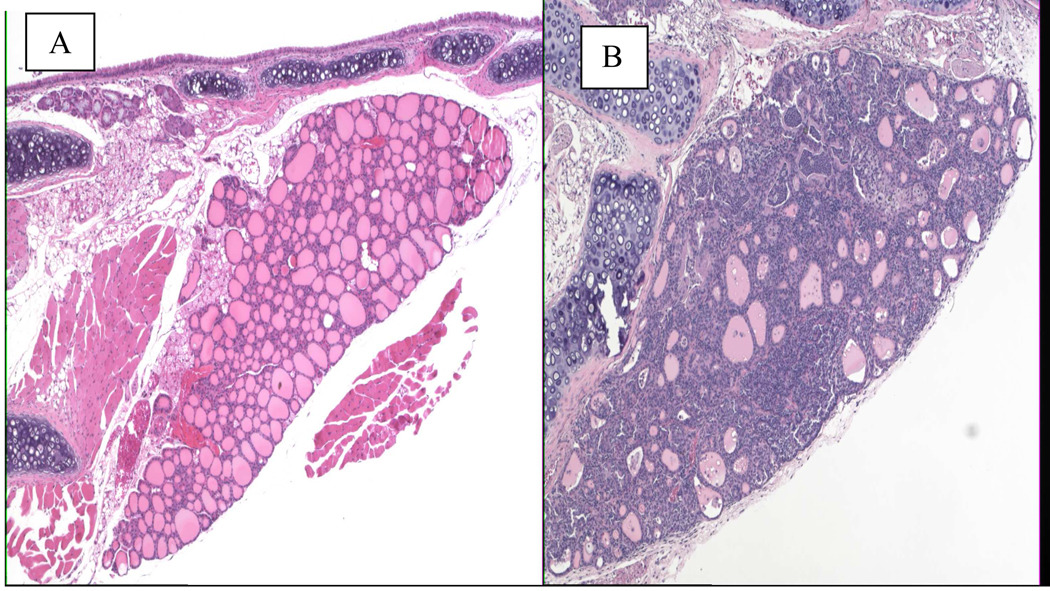
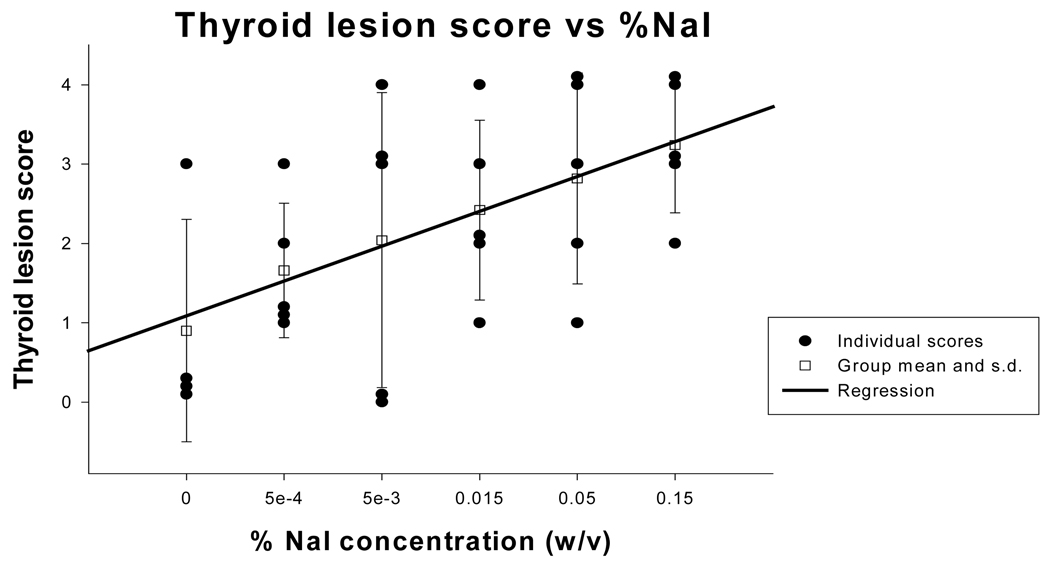
0 = no infiltration,
1+ = infiltration in <20% of the gland,
2+ = infiltration from 20–30% of the gland,
3+ = infiltration from 30–50% of gland,
4+ >50% infiltration of gland

References
-
- Jacobson DL, Gange SJ, Rose NR, Graham NM. Epidemiology and estimated population burden of selected autoimmune diseases in the United States. Clinical.Immunology &.Immunopathology. 1997;84:223–243. - PubMed
-
- Weetman AP. Autoimmune thyroid disease. Autoimmunity. 2004;37:337–340. - PubMed
-
- Burek CL, Rose NR, Najar GM, Gimelfarb A, Zmijewski CM, Polesky HF, Hoffman WH. Autoimmune Thyroid Disease. In: David C, Panayi GS, editors. Clinical Immunology, Volume 1 -Immunogenetics. Kent: Butterworth & Co., Ltd; 1984. pp. 207–233.
-
- Burek CL, Hoffman WH, Rose NR. The presence of thyroid autoantibodies in children and adolescents with autoimmune thyroid disease and in their siblings and parents. Clin.Immunol.Immunopathol. 1982;25:395–404. - PubMed
Publication types
MeSH terms
Substances
Grants and funding
LinkOut - more resources
Full Text Sources
