


Recombination in West Nile Virus: minimal contribution to genomic diversity
- PMID: 19821990
- PMCID: PMC2763871
- DOI: 10.1186/1743-422X-6-165
Recombination in West Nile Virus: minimal contribution to genomic diversity
Abstract
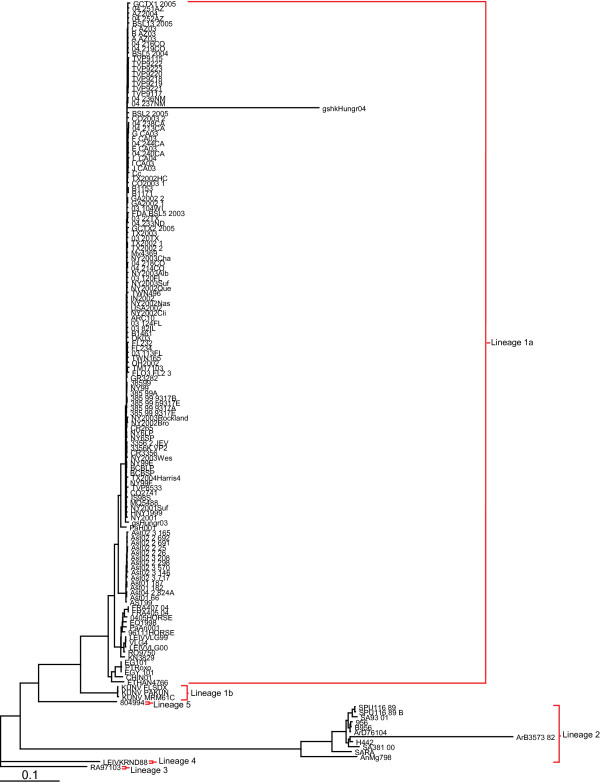
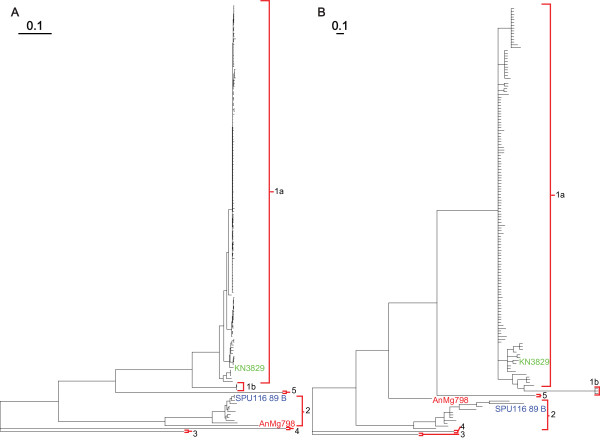
Recombination is known to play a role in the ability of various viruses to acquire sequence diversity. We consequently examined all available West Nile virus (WNV) whole genome sequences both phylogenetically and with a variety of computational recombination detection algorithms. We found that the number of distinct lineages present on a phylogenetic tree reconstruction to be identical to the 6 previously reported. Statistically-significant evidence for recombination was only observed in one whole genome sequence. This recombination event was within the NS5 polymerase coding region. All three viruses contributing to the recombination event were originally isolated in Africa at various times, with the major parent (SPU116_89_B), minor parent (KN3829), and recombinant sequence (AnMg798) belonging to WNV taxonomic lineages 2, 1a, and 2 respectively. This one isolated recombinant genome was out of a total of 154 sequences analyzed. It therefore does not seem likely that recombination contributes in any significant manner to the overall sequence variation within the WNV genome.
Figures
References
-
- Deas TS, Bennett CJ, Jones SA, Tilgner M, Ren P, Behr MJ, Stein DA, Iversen PL, Kramer LD, Bernard KA, Shi PY. In vitro resistance selection and in vivo efficacy of morpholino oligomers against West Nile virus. Antimicrob Agents Chemother. 2007;51:2470–2482. doi: 10.1128/AAC.00069-07. - DOI - PMC - PubMed
Publication types
MeSH terms
Substances
Grants and funding
LinkOut - more resources
Full Text Sources
Research Materials
