


A systematic review of randomised controlled trials of interventions promoting effective condom use
- PMID: 19822557
- PMCID: PMC3009845
- DOI: 10.1136/jech.2008.085456
A systematic review of randomised controlled trials of interventions promoting effective condom use
Abstract
Background: Effective condom use can prevent sexually transmitted infections (STIs) and unwanted pregnancy. We conducted a systematic review and methodological appraisal of randomised controlled trials (RCTs) of interventions to promote effective condom use.
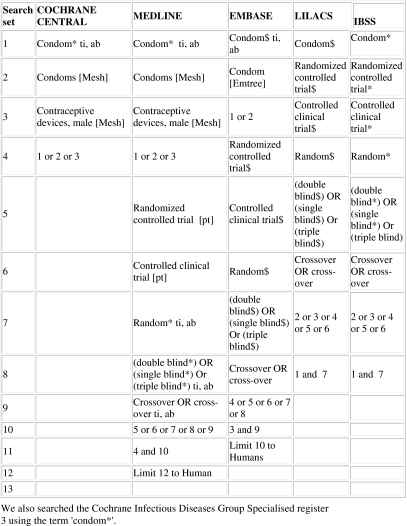
Methods: We searched for all RCTs of interventions to promote effective condom use using the Cochrane Infectious Diseases Group's trials register (Oct 2006), CENTRAL (Issue 4, 2006), MEDLINE (1966 to Oct 2006), EMBASE (1974 to Oct 2006), LILACS (1982 to Oct 2006), IBSS (1951 to Oct 2006) and Psychinfo (1996 to Oct 2006). We extracted data on allocation sequence, allocation concealment, blinding, loss to follow-up and measures of effect. Effect estimates were calculated.
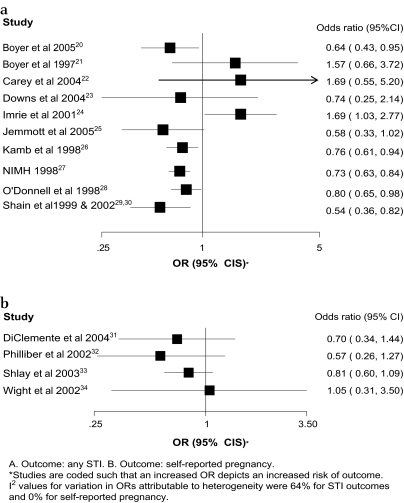
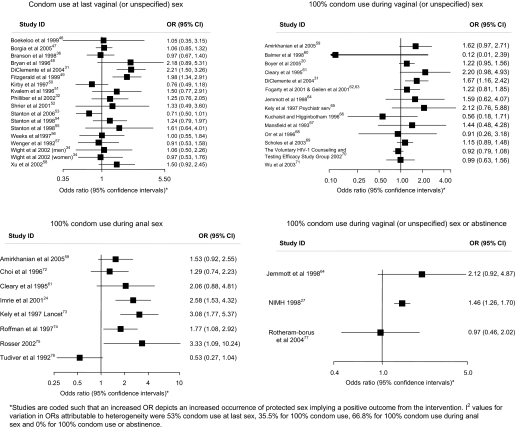
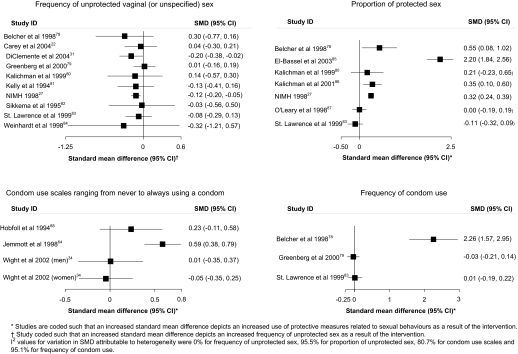
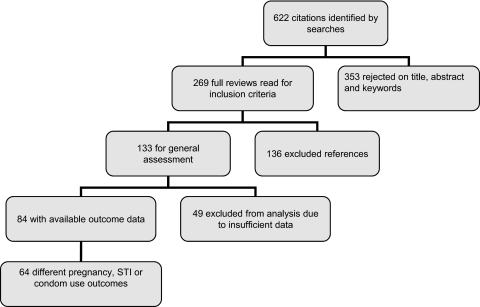
Results: We identified 139 trials. Seven out of ten trials reported reductions in 'any STI' with five statistically significant results. Three out of four trials reported reductions in pregnancy, although none was statistically significant. Only four trials met all the quality criteria. Trials reported a median of 11 (IQR 7-17) outcome measures. Few trials used the same outcome measure. Altogether, 10 trials (7%) used the outcome 'any STI', 4 (3%) self-reported pregnancy and 22 (16%) used 'condom use at last sex'.
Conclusions: The results are generally consistent with modest benefits but there is considerable potential for bias due to poor trial quality. Because of the low proportion of trials using the same outcome the potential for bias from selective reporting of outcomes is considerable. Despite the public health importance of increasing condom use there is little reliable evidence on the effectiveness of condom promotion interventions.
Conflict of interest statement
Figures
References
-
- WHO Global prevalence and incidence of selected curable sexually transmitted infections: overview and estimates. World Health Organization: Geneva, 2001
-
- Alan Guttmacher Institute Sharing responsibility: women, society and abortion. New York: Alan Guttmacher Institute, 1999
-
- UNAIDS AIDS epidemic update. Geneva: UNAIDS, 2003
Publication types
MeSH terms
LinkOut - more resources
Full Text Sources
Medical
Miscellaneous
