. 2009 Nov;44(11):1075-84.
doi: 10.1002/ppul.21099.

Combined effects of chronic nicotine and acute virus exposure on neurotrophin expression in rat lung

Affiliations

Combined effects of chronic nicotine and acute virus exposure on neurotrophin expression in rat lung

Fernando Urrego et al. Pediatr Pulmonol. 2009 Nov.

Abstract

Strong epidemiologic evidence indicates that tobacco smoke influences frequency and severity of respiratory infections. Previously, we have shown that infection with respiratory syncytial virus upregulates expression of neurotrophic factors and receptors in the lungs, but the effect of tobacco exposure on neurotrophins is unknown. Therefore, we first sought to determine the expression of neurotrophic pathways in lungs of rats chronically exposed to nicotine, and then we studied the interactions between pollution and infection by inoculating virus after nicotine exposure. Expression of the neurotrophins nerve growth factor (NGF) and brain-derived neurotrophic factor, of their high-affinity tyrosine kinase receptors (trkA and trkB, respectively), and of the low-affinity receptor p75(NTR) was measured in the lungs of nicotine-exposed rats both at the mRNA level by reverse-transcription polymerase chain reaction and at the protein level by enzyme-linked immunoassay. Nicotine increased NGF expression both at the mRNA and protein level and also created a receptor imbalance deriving from increased expression of the pro-inflammatory p75(NTR) receptor without any concomitant change in the high-affinity trkA receptor. Viral infection after chronic nicotine exposure exerted an additive effect on NGF expression, and resulted in exaggerated neurogenic airway inflammation that was abolished by selective inhibition. In conclusion, nicotine levels comparable to those found in smokers are per se able to upregulate the expression of critical neurotrophic molecules in the respiratory tract, and combination of an acute infection following chronic nicotine exposure produces more severe neurotrophic dysregulation and neurogenic-mediated inflammation compared to either infection or nicotine alone.


Figures
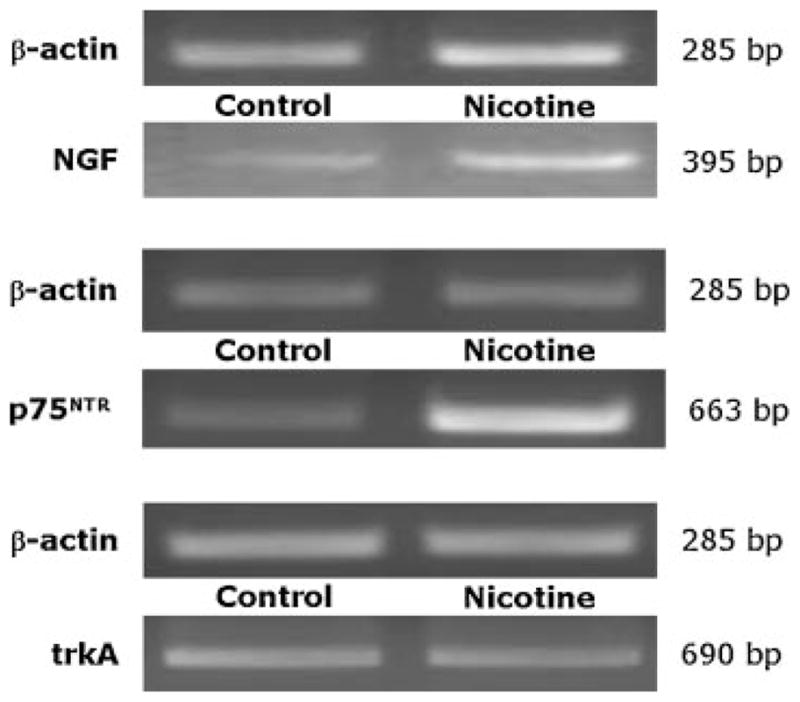
Fig. 1
Fig. 1
RT-PCR analysis of mRNA transcripts for NGF (top panel) and its p75NTR (mid panel) and trkA (bottom panel) receptors in lung tissues from a pathogen-free rat exposed to nicotine for 28 days using a subcutaneous osmotic mini-infusion pump (right bands) versus its control exposed to vehicle with the same technique (left bands). The representative electrophoresis on ethidium bromide-stained agarose gel shows increased NGF and p75NTR expression without change in trkA.
Fig. 2
Fig. 2
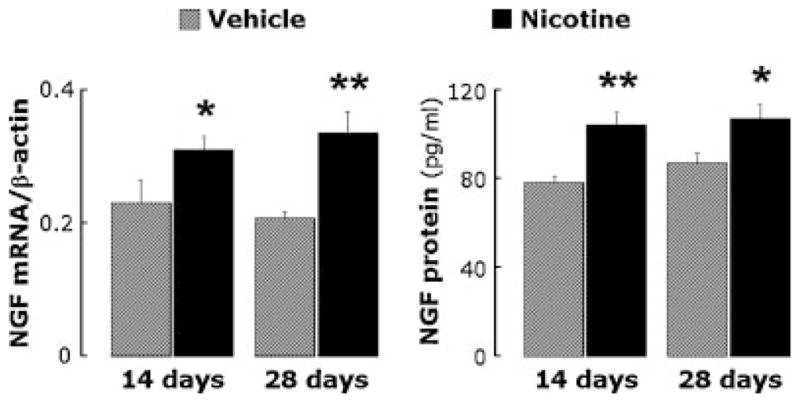
RT-PCR (left panel) and immunoassay (right panel) analysis of lung tissues from rats exposed to nicotine for 14 or 28 days. NGF expression at the mRNA and protein level increased in nicotine-exposed rats at both time points. Data are expressed as mean ± SEM, n = 6 rats per group. *P<0.05; **P<0.01, significantly different from vehicle controls.
Fig. 3
Fig. 3
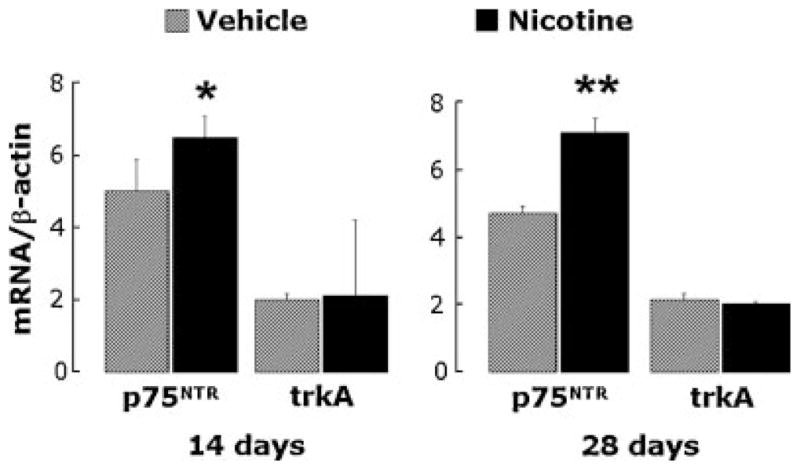
RT-PCR analysis of NGF receptors mRNA expression in lung tissues from rats exposed to nicotine for 14 (left panel) or 28 (right panel) days. Expression of the low-affinity pan-neurotrophin p75NTR receptor increased in nicotine-exposed rats at both time points, whereas the specific high-affinity trkA receptor did not change. Data are expressed as mean ± SEM, n = 6 rats per group. *P<0.05; **P<0.01, significantly different from vehicle controls.
Fig. 4
Fig. 4
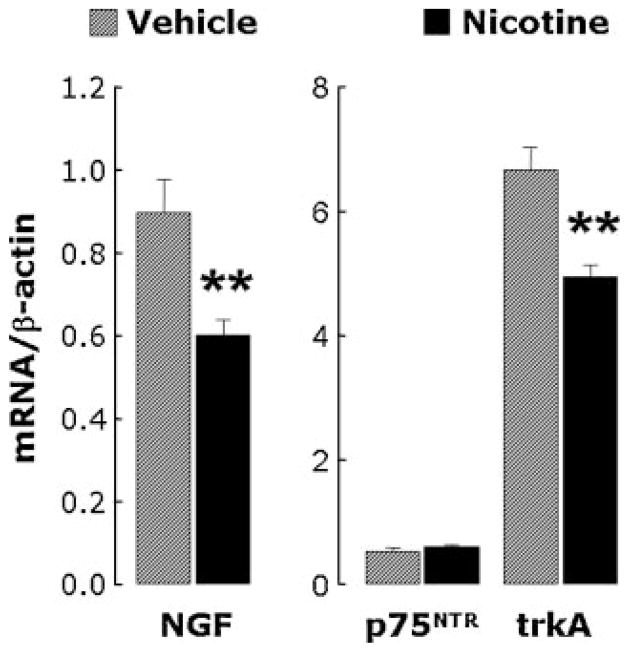
RT-PCR analysis of lung tissues from newborn rats exposed to nicotine in utero for 19 days (i.e., from day 2 of pregnancy to birth). NGF and trkA mRNA expression decreased in nicotine-exposed newborns, whereas the p75NTR receptor did not change. Data are expressed as mean ± SEM, n = 8–9 rats per group. **P<0.01, significantly different from vehicle controls.
Fig. 5
Fig. 5
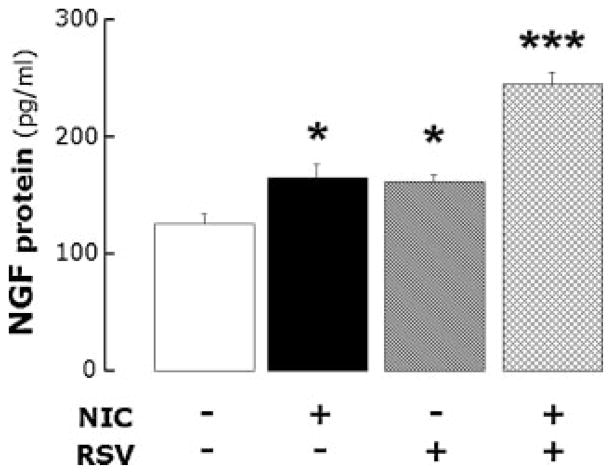
NGF protein expression in the lungs of rats infused with nicotine or its vehicle for 28 days and then inoculated with RSV or virus-free medium 5 days before sacrifice. Acute RSV infection following chronic exposure to nicotine had additive effect on NGF protein expression compared to the effects of either nicotine alone or RSV alone. Data are expressed as mean ± SEM, n = 6 rats per group. *P<0.05; ***P<0.001, significantly different from controls infused with nicotine vehicle and inoculated with virus-free medium.
Fig. 6
Fig. 6
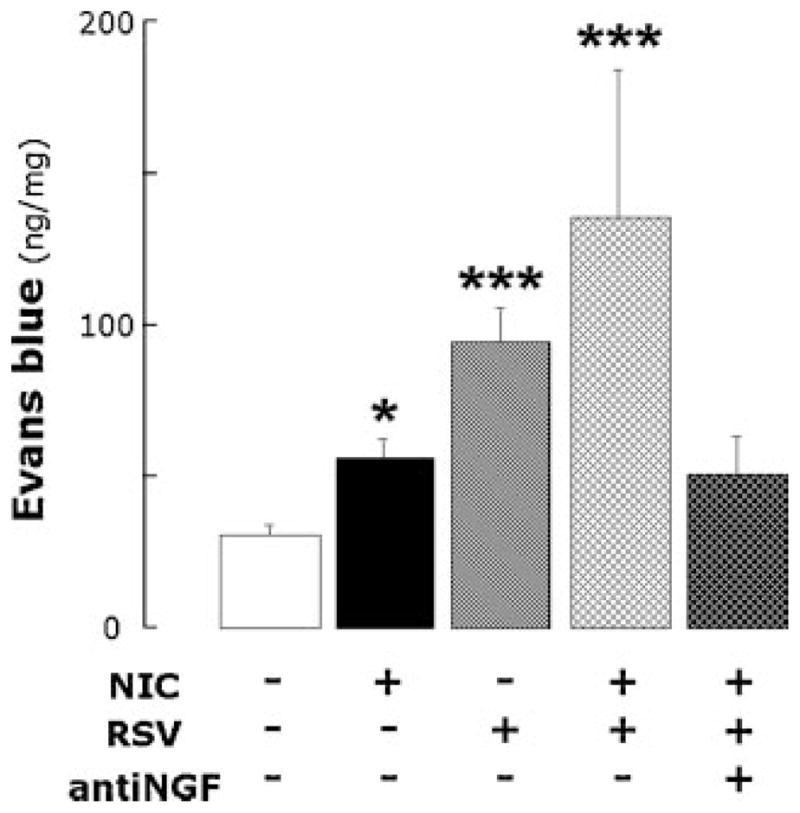
Neurogenic inflammation in the airways of rats infused with nicotine or its vehicle for 28 days and then inoculated with RSV or virus-free medium 5 days before sacrifice. Acute RSV infection following chronic exposure to nicotine had additive effect on capsaicin-induced extravasation of Evans blue-labeled albumin compared to the effects of either nicotine alone or RSV alone, and selective NGF inhibition abolished the combined inflammatory effect. Data are expressed as mean ± SEM, n = 5 rats per group. *P<0.05; ***P<0.001, significantly different from controls infused with nicotine vehicle and inoculated with virus-free medium.
Fig. 7
Fig. 7
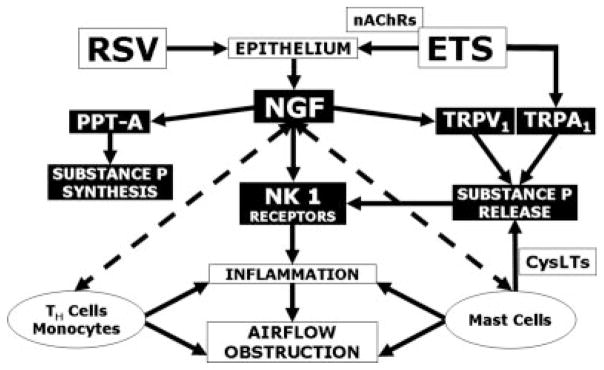
Pathways involved in the neuro-inflammatory and neuro-immunomodulatory effects of RSV infection and environmental tobacco smoke (ETS) exposure. RSV, and the nicotinic fraction of ETS (via activation of epithelial nicotinic cholinergic receptors, nAChRs) have additive stimulating effects on NGF synthesis from the bronchial epithelium. NGF increases pre-synaptically the expression of the preprotachykinin A (PPT-A) gene encoding substance P, and post-synaptically the expression of the high-affinity substance P receptor neurokinin 1 (NK1). Furthermore, NGF-trkA binding amplifies neurotransmitter release from nerve terminals by increasing expression and function of the vanilloid receptor TRPV1. ETS also contains α, β-unsaturated aldehydes stimulating the other excitatory ion channel TRPA1 co-expressed with TRPV1 on nociceptive nerves. The resulting neurogenic-mediated inflammatory response is amplified by the NGF-driven differentiation and activation of mast cells (via release of cysteinyl leukotrienes, CysLTs) and the recruitment and activation of CD4+T-helper lymphocytes and monocytes.

References

    1. Bradley JP, Bacharier LB, Bonfiglio J, Schechtman KB, Strunk R, Storch G, Castro M. Severity of respiratory syncytial virus bronchiolitis is affected by cigarette smoke exposure and atopy. Pediatrics. 2005;115:e7–e14. - PubMed
    1. Carbonell-Estrany X, Quero J IRIS Study Group. Hospitalization rates for respiratory syncytial virus (RSV) infection in premature infants born during two consecutive seasons. Pediatr Infect Dis J. 2001;20:874–879. - PubMed
    1. Gurkan F, Kiral A, Dagli E, Karakoc F. The effect of passive smoking on the development of respiratory syncytial virus bronchiolitis. Eur J Epidemiol. 2000;16:465–468. - PubMed
    1. McConnochie KM, Roghmann KJ. Parental smoking, presence of older siblings, and family history of asthma increase risk of bronchiolitis. Am J Dis Child. 1986;140:806–812. - PubMed
    1. Simoes EA. Environmental and demographic risk factors for respiratory syncytial virus lower respiratory tract disease. J Pediatr. 2003;143:S118–S126. - PubMed

Publication types

MeSH terms