


Systematic characterisation of cellular localisation and expression profiles of proteins containing MHC ligands
- PMID: 19826487
- PMCID: PMC2758592
- DOI: 10.1371/journal.pone.0007448
Systematic characterisation of cellular localisation and expression profiles of proteins containing MHC ligands
Abstract
Background: Presentation of peptides on Major Histocompatibility Complex (MHC) molecules is the cornerstone in immune system activation and increased knowledge of the characteristics of MHC ligands and their source proteins is highly desirable.
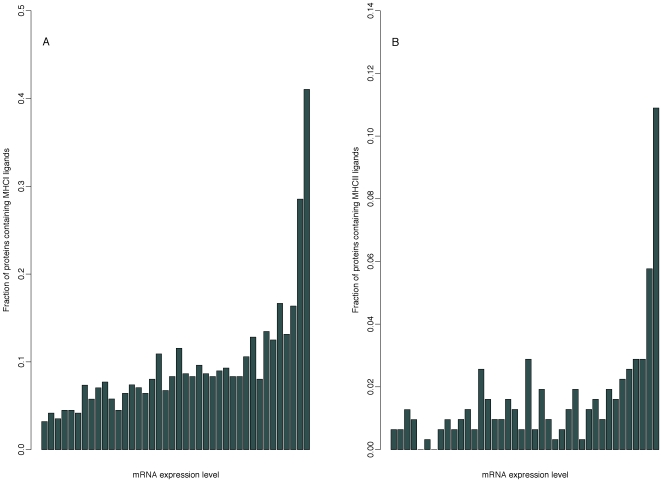
Methodology/principal finding: In the present large-scale study, we used a large data set of proteins containing experimentally identified MHC class I or II ligands and examined the proteins according to their expression profiles at the mRNA level and their Gene Ontology (GO) classification within the cellular component ontology. Proteins encoded by highly abundant mRNA were found to be much more likely to be the source of MHC ligands. Of the 2.5% most abundant mRNAs as much as 41% of the proteins encoded by these mRNAs contained MHC class I ligands. For proteins containing MHC class II ligands, the corresponding percentage was 11%. Furthermore, we found that most proteins containing MHC class I ligands were localised to the intracellular parts of the cell including the cytoplasm and nucleus. MHC class II ligand donors were, on the other hand, mostly membrane proteins.
Conclusions/significance: The results contribute to the ongoing debate concerning the nature of MHC ligand-containing proteins and can be used to extend the existing methods for MHC ligand predictions by including the source protein's localisation and expression profile. Improving the current methods is important in the growing quest for epitopes that can be used for vaccine or diagnostic purposes, especially when it comes to large DNA viruses and cancer.
Conflict of interest statement
Figures

References
-
- Engelhard VH, Brickner AG, Zarling AL. Insights into antigen processing gained by direct analysis of the naturally processed class I MHC associated peptide repertoire. Mol Immunol. 2002;39:127–137. - PubMed
Publication types
MeSH terms
Substances
Grants and funding
LinkOut - more resources
Full Text Sources
Research Materials
