. 2009 Oct 15;4(10):e7436.
doi: 10.1371/journal.pone.0007436.

The Imd pathway is involved in antiviral immune responses in Drosophila

Affiliations

The Imd pathway is involved in antiviral immune responses in Drosophila

Alexandre Costa et al. PLoS One. .

Abstract

Cricket Paralysis virus (CrPV) is a member of the Dicistroviridae family of RNA viruses, which infect a broad range of insect hosts, including the fruit fly Drosophila melanogaster. Drosophila has emerged as an effective system for studying innate immunity because of its powerful genetic techniques and the high degree of gene and pathway conservation. Intra-abdominal injection of CrPV into adult flies causes a lethal infection that provides a robust assay for the identification of mutants with altered sensitivity to viral infection. To gain insight into the interactions between viruses and the innate immune system, we injected wild type flies with CrPV and observed that antimicrobial peptides (AMPs) were not induced and hemocytes were depleted in the course of infection. To investigate the contribution of conserved immune signaling pathways to antiviral innate immune responses, CrPV was injected into isogenic mutants of the Immune Deficiency (Imd) pathway, which resembles the mammalian Tumor Necrosis Factor Receptor (TNFR) pathway. Loss-of-function mutations in several Imd pathway genes displayed increased sensitivity to CrPV infection and higher CrPV loads. Our data show that antiviral innate immune responses in flies infected with CrPV depend upon hemocytes and signaling through the Imd pathway.


Conflict of interest statement

Competing Interests: The authors have declared that no competing interests exist.

Figures

Figure 1
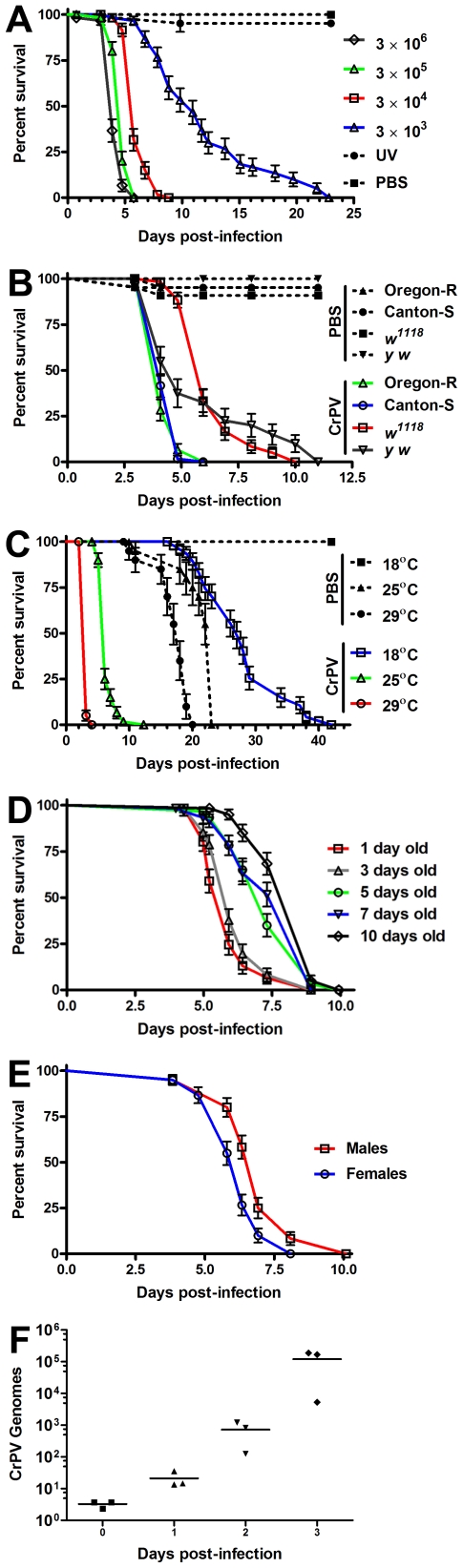
Figure 1. Characterization of CrPV infection in Drosophila.
Three sets of 20 flies were injected intra-abdominally with CrPV and survival was monitored daily. (A) Dose-Response. Survival of 1-4 days old w1118 male flies injected with 10-fold dilutions of a 3×10⁶ TCID50 CrPV suspension and incubated at 25°C. PBS and UV-inactivated CrPV were injected as negative controls. (p<0.0001, Logrank test for trend). (B) Genetic Background. Survival of 1–4 days old male flies of distinct genetic backgrounds injected with 3×10⁴ TCID50 CrPV and incubated at 25°C. (p<0.0001, Logrank). (C) Temperature. Survival of 3–4 days old w1118 male flies injected with 3×10⁴ TCID50 CrPV and incubated at 18, 25 and 29°C. (p<0.0001, Logrank). (D) Age. Survival of w1118 male flies spanning 1–10 days old injected with 3×10⁴ TCID50 CrPV and incubated at 25°C. (p<0.0001, Logrank test for trend). (E) Sex. Survival of 3–4 days old w1118 male and female flies injected with 3×10⁴ TCID50 CrPV and incubated at 25°C. (p = 0.0002, Logrank). (F) CrPV titers. Five 1–4 days old w1118 male flies injected with 3×10⁴ TCID50 CrPV and incubated at 25°C were homogenized at the indicated time points and the number of CrPV genomes determined by quantitative RT-PCR. Bars (A–E) represent mean values with standard error.
Figure 2
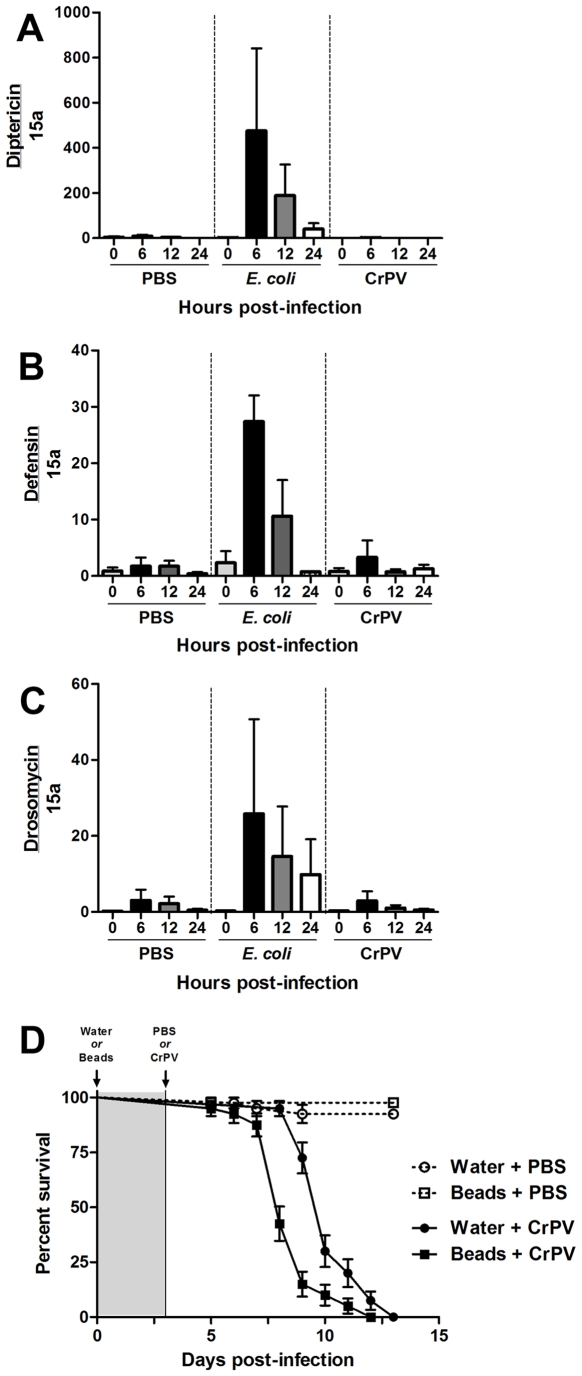
Figure 2. Humoral and cellular responses against CrPV.
(A–C) AMPs are not induced by CrPV infection. Diptericin (A), Defensin (B), and Drosomycin (C) transcript levels in groups of five CrPV-infected flies were measured by quantitative RT-PCR at 6, 12 and 24 hours post-infection (hpi). AMP transcript concentrations were normalized to the levels of the ribosomal protein 15a transcript in each sample. PBS and E. coli were injected as negative and positive controls, respectively. Bars represent mean values with standard error. (D) Phagocytosis is involved in the immune response against CrPV. Three sets of twenty 1–4 days old males were injected intra-abdominally on day 0 with water (circles) or polystyrene beads (squares) to inhibit phagocytosis. Three days later, flies were injected with PBS (open symbols) or 3×10⁴ TCID50 CrPV (solid symbols) and survival monitored daily. Bars represent mean values with standard error. CrPV-infected flies die significantly faster when phagocytosis is inhibited (p<0.0001, Log-rank test).
Figure 3
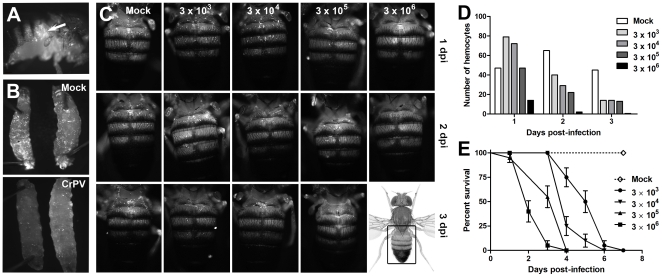
Figure 3. Hemocytes are depleted in the course of CrPV infection.
Fluorescence microscopy of hemocytes in adult males (A and C) and larvae (B) infected with CrPV. Hemocytes were labeled with GFP whose expression was under the control of the Hemolectin (Hml) marker . (A) Lateral view of 1–4 day old male fly infected with 50 nl of 3×10⁶ TCID50 CrPV and examined at 12 hpi. The arrow indicates the approximate injection site at the dorso-anterior abdomen. Note that hemocytes concentrate at the injection site. (B) Third instar larvae were injected with 50 nl of 3×10⁶ TCID50 CrPV and hemocytes found to be depleted 24 hpi. (C) Dorsal view of 1–4 days old male flies infected with 50 nl of 10-fold dilutions of 3×10⁶ TCID50 CrPV at day 0 and examined at 1, 2 and 3 dpi. The rectangle in the picture of a whole fly at the lower right corner indicates the approximate area shown in all other panels. (D) Quantitation of hemocyte numbers in CrPV-infected flies. Hemocyte depletion was estimated by counting the number of GFP spots visible under the dorsal cuticle of the first three abdominal segments. The results are representative of three independent experiments. (E) Survival of HmlΔ-Gal4 UAS-GFP males after injection of 50 nl of 10-fold dilutions of 3×10⁶ TCID50 CrPV. Note that hemocyte depletion precedes fly death. Bars represent mean values with standard error. (p<0.0001, Log-rank test for trend).
Figure 4
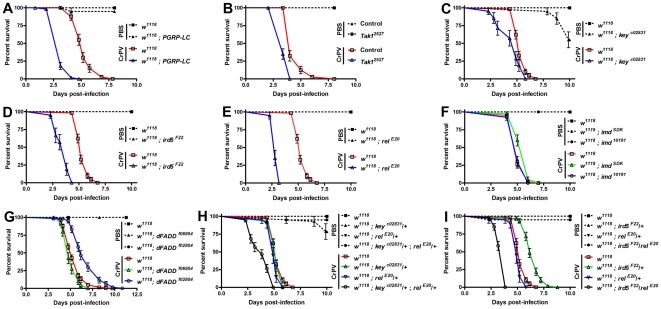
Figure 4. Imd pathway mutants are sensitive to CrPV infection.
Homozygous (A–G) and transheterozygous (H–J) isogenic Imd pathway mutant males aged 1–4 days old were injected with 3×10⁴ TCID50 CrPV and incubated at 25°C while survival was monitored daily. (A) PGRP-LC, (B) Tak1, (C) ird5, (D) kenny, (E) relish, (F) imd, (G) dFADD, (H) kenny/+; relish/+, and (I) ird5/+; relish/+. All mutations (except Tak1, see methods) were maintained in an isogenic background after the crosses described in the Figure S1. Bars represent mean values with standard error.
Figure 5
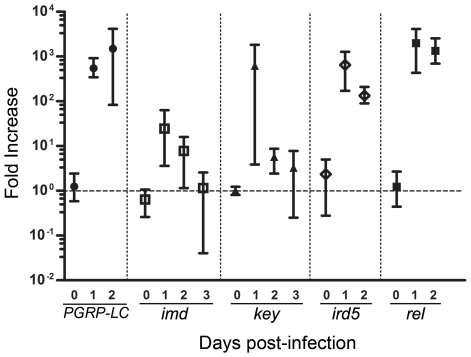
Figure 5. CrPV loads are increased in Imd pathway mutants.
Viral RNA levels in Imd pathway mutants were measured by quantitative RT-PCR. Twenty 1–4 days old males were injected intra-abdominally on day 0 with 3×10⁴ TCID50 CrPV and incubated at 25°C. Groups of five flies were randomly selected and frozen immediately after injection (0) and after 1, 2, and 3 dpi (days post infection). To reduce experimental imprecision, only flies from vials in which all flies were still alive were analyzed. Bars represent mean values with experimental range from three independent experiments.

References

    1. Ferrandon D, Imler JL, Hetru C, Hoffmann JA. The Drosophila systemic immune response: sensing and signalling during bacterial and fungal infections. Nat Rev Immunol. 2007;7:862–874. - PubMed
    1. Rosetto M, Engstrom Y, Baldari CT, Telford JL, Hultmark D. Signals from the IL-1 receptor homolog, Toll, can activate an immune response in a Drosophila hemocyte cell line. Biochem Biophys Res Commun. 1995;209:111–116. - PubMed
    1. Lemaitre B, Nicolas E, Michaut L, Reichhart JM, Hoffmann JA. The dorsoventral regulatory gene cassette spatzle/Toll/cactus controls the potent antifungal response in Drosophila adults. Cell. 1996;86:973–983. - PubMed
    1. Medzhitov R, Preston-Hurlburt P, Janeway CA., Jr A human homologue of the Drosophila Toll protein signals activation of adaptive immunity. Nature. 1997;388:394–397. - PubMed
    1. Leulier F, Rodriguez A, Khush RS, Abrams JM, Lemaitre B. The Drosophila caspase Dredd is required to resist gram-negative bacterial infection. EMBO Rep. 2000;1:353–358. - PMC - PubMed

Publication types

LinkOut - more resources