


Review
doi: 10.1007/s00430-009-0123-8.
Epub 2009 Sep 22.
Survival of the fittest: how Brucella strains adapt to their intracellular niche in the host
Affiliations
- PMID: 19830453
- PMCID: PMC3814008
- DOI: 10.1007/s00430-009-0123-8
Item in Clipboard
Review
Survival of the fittest: how Brucella strains adapt to their intracellular niche in the host
Med Microbiol Immunol.
2009 Nov.
Abstract
Brucella strains produce abortion and infertility in their natural hosts and a zoonotic disease in humans known as undulant fever. These bacteria do not produce classical virulence factors, and their capacity to successfully survive and replicate within a variety of host cells underlies their pathogenicity. Extensive replication of the brucellae in placental trophoblasts is associated with reproductive tract pathology in natural hosts, and prolonged persistence in macrophages leads to the chronic infections that are a hallmark of brucellosis in both natural hosts and humans. This review describes how Brucella strains have efficiently adapted to their intracellular lifestyle in the host.
Figures
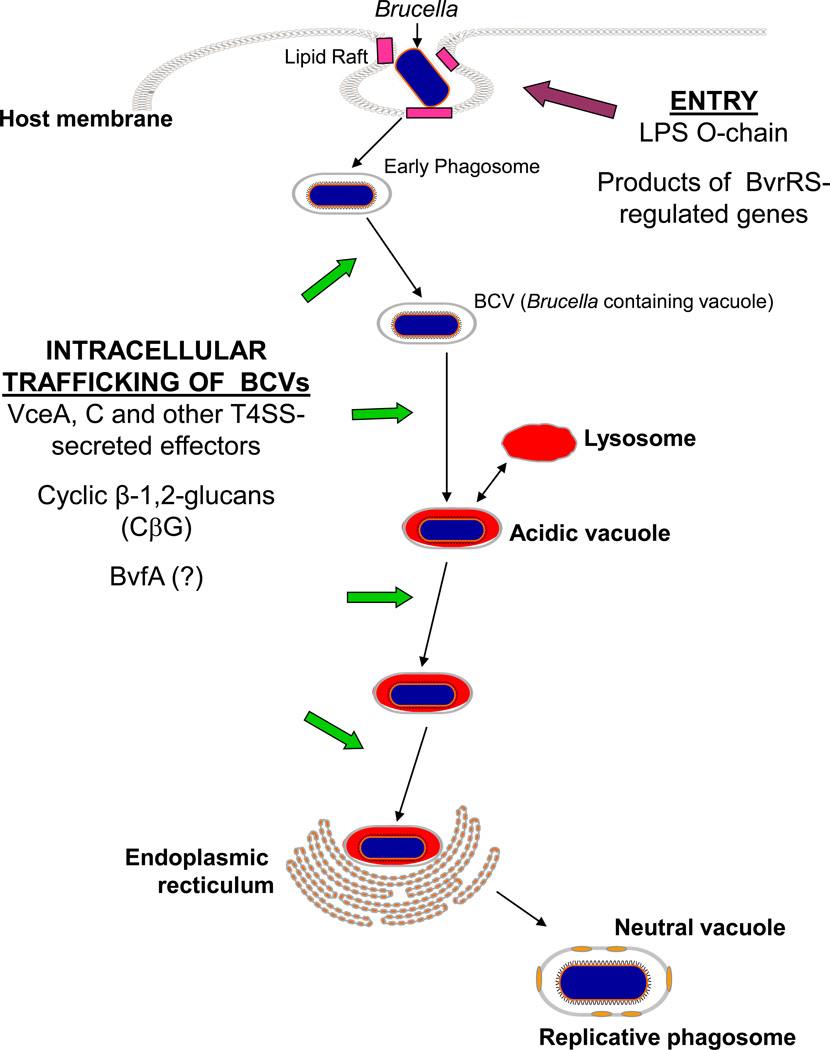
Gene products that influence their intracellular trafficking of Brucella strains in host cells.
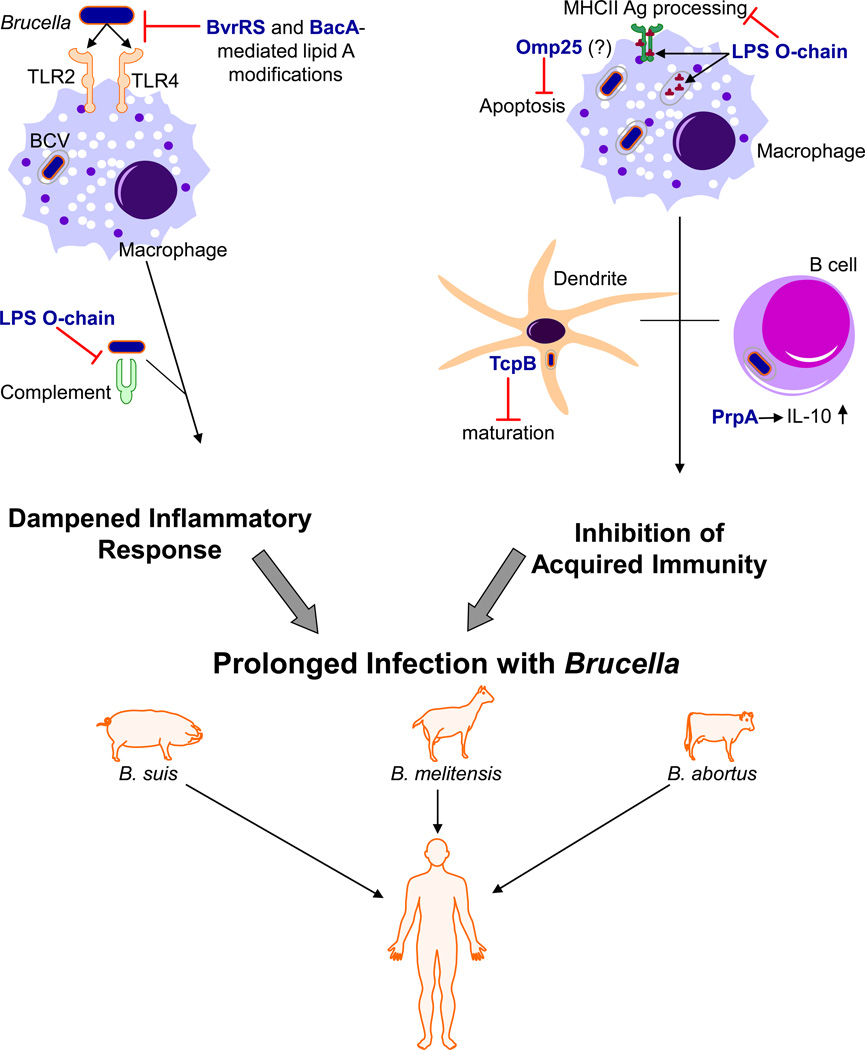
Subversion of host immune defenses allows Brucella strains to establish and maintain chronic infections in their hosts. Brucella gene products linked to immune evasion are shown in blue font.
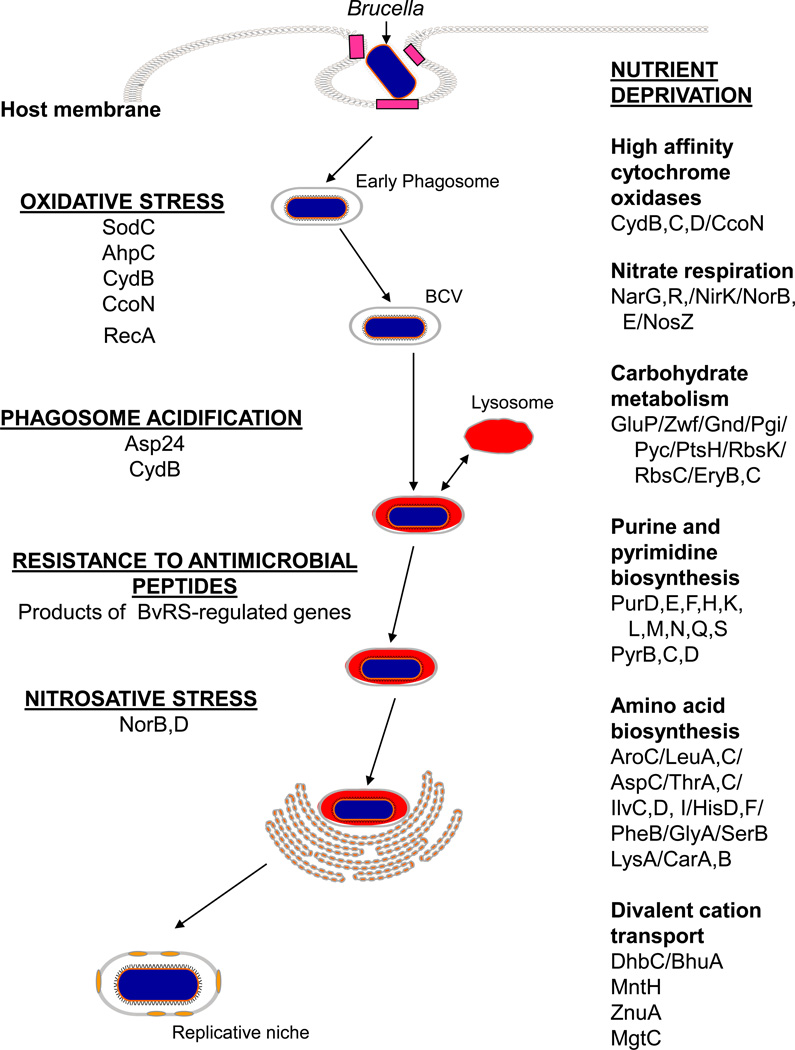
Gene products that play important roles in allowing Brucella strains to resist the environmental stresses they encounter during intracellular replication in the host.
References
-
- Alexander B, Schnurrenberger PR, Brown RR. Numbers of Brucella abortus in the placenta, umbilicus and fetal fluid of two naturally infected cows. Vet. Rec. 1981;108:500. - PubMed
-
- Alton GG. Brucella melitensis. In: Nielsen K, Duncan JR, editors. Animal brucellosis. Boca Raton, FL: CRC Press; 1990. pp. 383–409.
Publication types
MeSH terms
Substances
Grants and funding
LinkOut - more resources
Full Text Sources
