Explaining the rise in antidepressant prescribing: a descriptive study using the general practice research database
- PMID: 19833707
- PMCID: PMC2762496
- DOI: 10.1136/bmj.b3999
Explaining the rise in antidepressant prescribing: a descriptive study using the general practice research database
Erratum in
- BMJ. 2009;339:b4361
Abstract
Objective: To explore the reasons behind the recent increase in antidepressant prescribing in the United Kingdom. Design Detailed retrospective analysis of data on general practitioner consultations and antidepressant prescribing. Data source Data were obtained from the general practice research database, which contains linked anonymised records of over 3 million patients registered in the UK. Data were extracted for all new incident cases of depression between 1993 and 2005. Review methods Detailed analysis of general practitioner consultations and antidepressant prescribing was restricted to 170 practices that were contributing data for the full duration of the study.
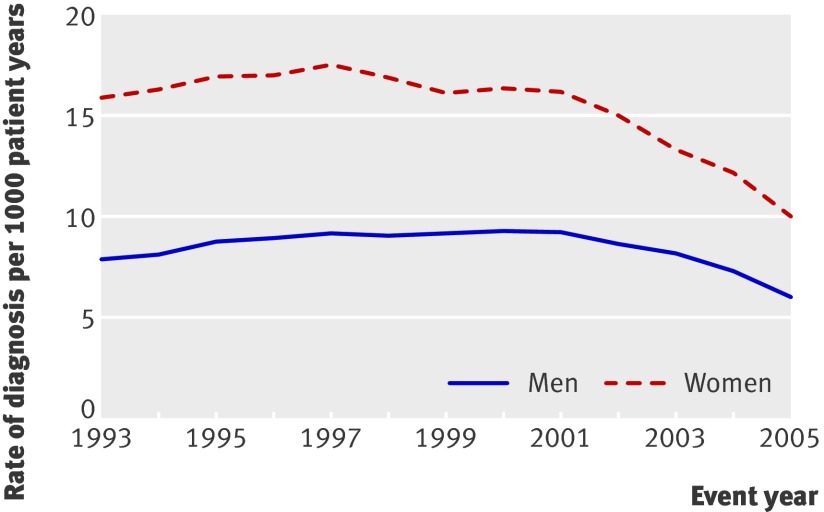
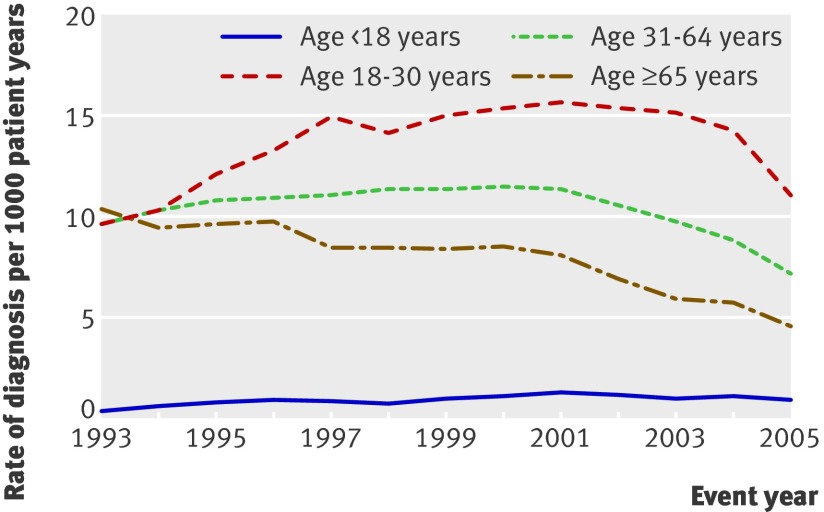
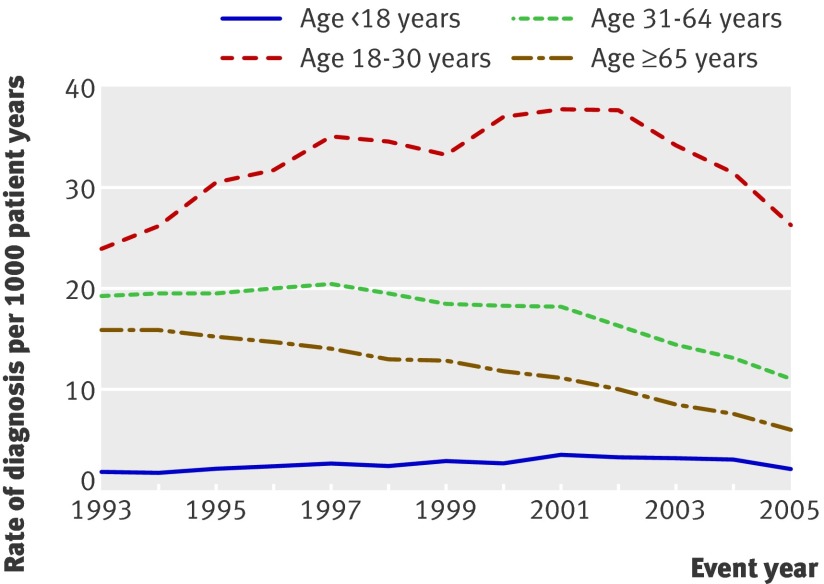
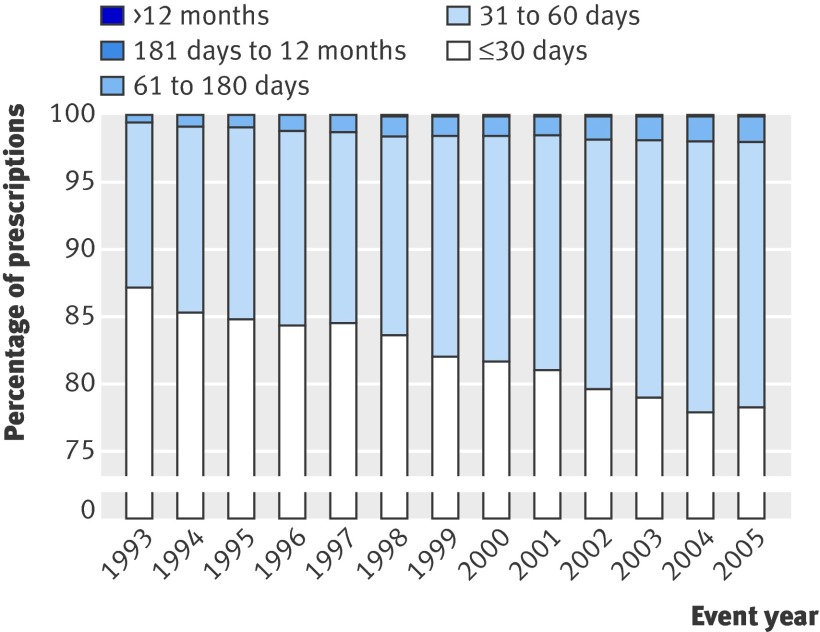
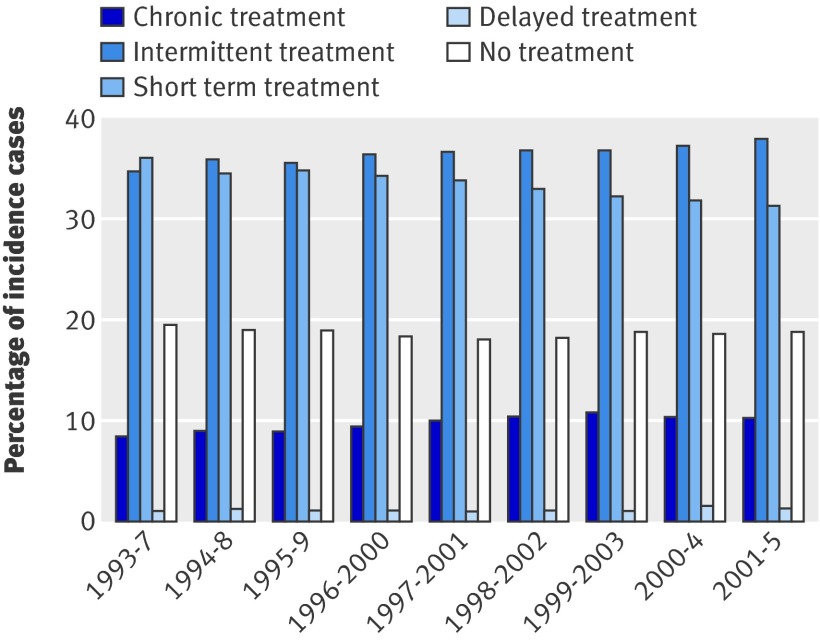
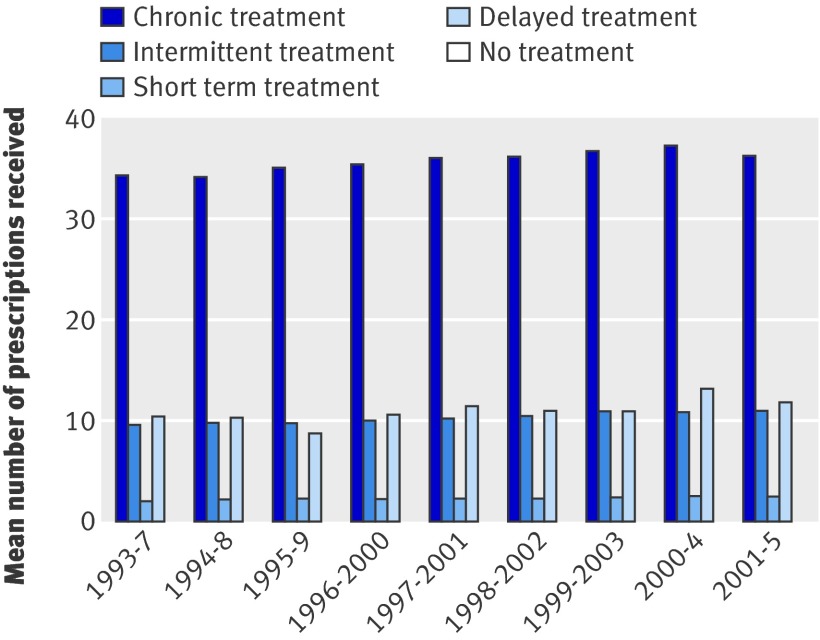
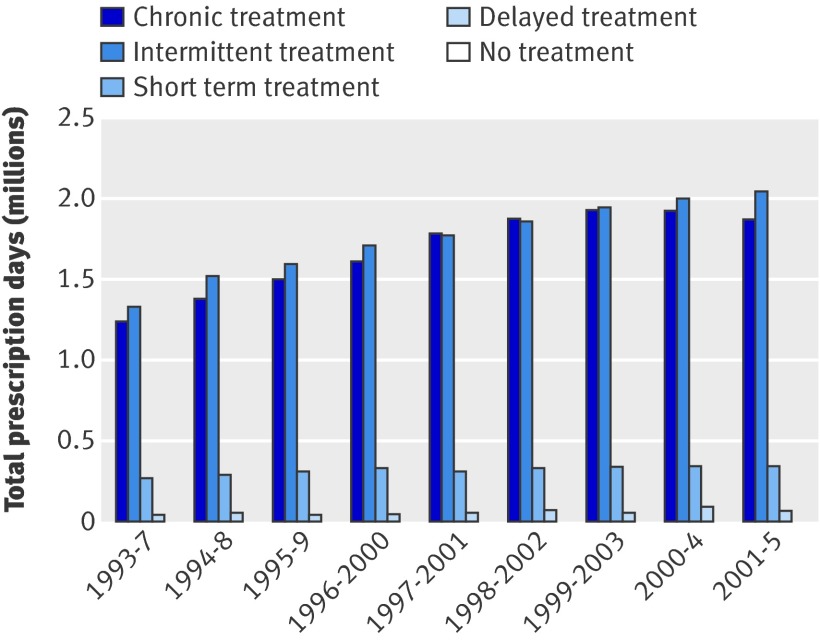
Results: In total, 189 851 people within the general practice research database experienced their first episode of depression between 1993 and 2005, of whom 150,825 (79.4%) received a prescription for antidepressants in the first year of diagnosis. This proportion remained stable across all the years examined. The incidence of new cases of depression rose in young women but fell slightly in other groups such that overall incidence increased then declined slightly (men: 7.83 cases per 1000 patient years in 1993 to 5.97 in 2005, women: 15.83 cases per 1000 patient years in 1993 to 10.06 in 2005). Antidepressant prescribing nearly doubled during the study period-the average number of prescriptions issued per patient increased from 2.8 in 1993 to 5.6 in 2004. The majority of antidepressant prescriptions were given as long term treatment or as intermittent treatment to patients with multiple episodes of depression.
Conclusions: The rise in antidepressant prescribing is mainly explained by small changes in the proportion of patients receiving long term treatment. Previous clinical guidelines have focused on antidepressant initiation and appropriate targeting of antidepressants. To address the costly rise in antidepressant prescribing, future research and guidance needs to concentrate on appropriate long term prescribing for depression and regular review of medication.
Conflict of interest statement
Competing interests: The data were purchased from the GPRD by the University of Southampton, which employs all the researchers. MM and TK have received research funding from Lilly, Lundbeck, Servier, and Wyeth Pharmaceuticals. The remaining authors declare no competing interests.
Figures
Comment in
-
Increase in proportion of patients on long-term medication accounts for increase in antidepressant prescribing in UK.Evid Based Ment Health. 2010 May;13(2):61. doi: 10.1136/ebmh.13.2.61. Evid Based Ment Health. 2010. PMID: 21856624 No abstract available.
References
-
- Prescription Pricing Authority. Prescribing review—drugs used in mental health. 2007. http://www.nhsbsa.nhs.uk/PrescriptionServices/Documents/PPDPCTReports/pc....
-
- Reid I, Cameron I. Depression: current approaches to management in primary care. Prescriber 2009;20:18-40.
-
- Middleton N, Gunnell D, Whitley E, Dorling D, Frankel S. Secular trends in antidepressant prescribing in the UK, 1975-1998. J Public Health 2001;23:262-7. - PubMed
-
- McManus P, Mant A, Mitchell PB, Montgomery WS, Marley J, Auland ME. Recent trends in the use of antidepressant drugs in Australia, 1990-1998. Med J Aust 2000;173:458-61. - PubMed
-
- Helgason T, Tomasson H, Zoega T. Antidepressants and public health in Iceland: time series analysis of national data. Br J Psychiatry 2004;184:157-62. - PubMed
MeSH terms
Substances
LinkOut - more resources
Full Text Sources
Medical