


EBNA1-mediated recruitment of a histone H2B deubiquitylating complex to the Epstein-Barr virus latent origin of DNA replication
- PMID: 19834552
- PMCID: PMC2757719
- DOI: 10.1371/journal.ppat.1000624
EBNA1-mediated recruitment of a histone H2B deubiquitylating complex to the Epstein-Barr virus latent origin of DNA replication
Abstract
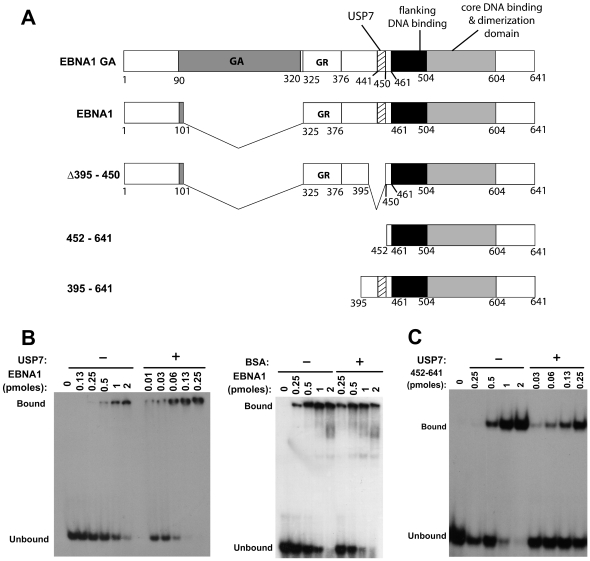
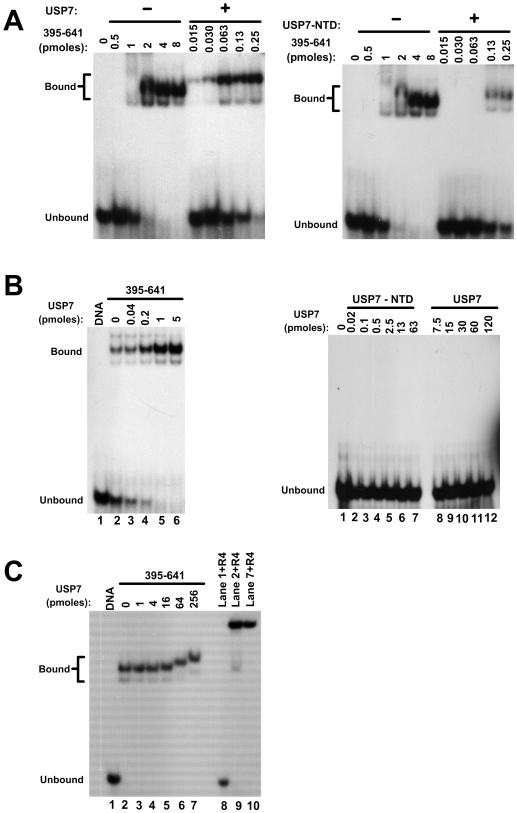
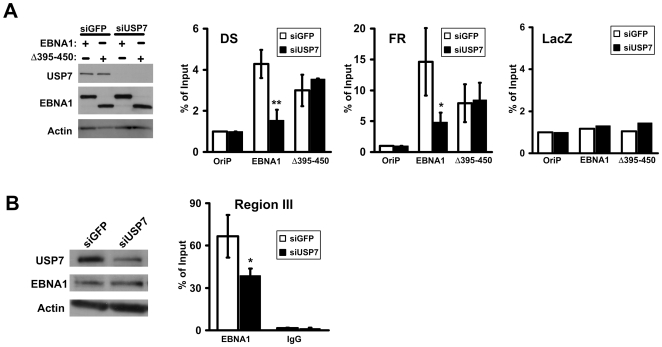
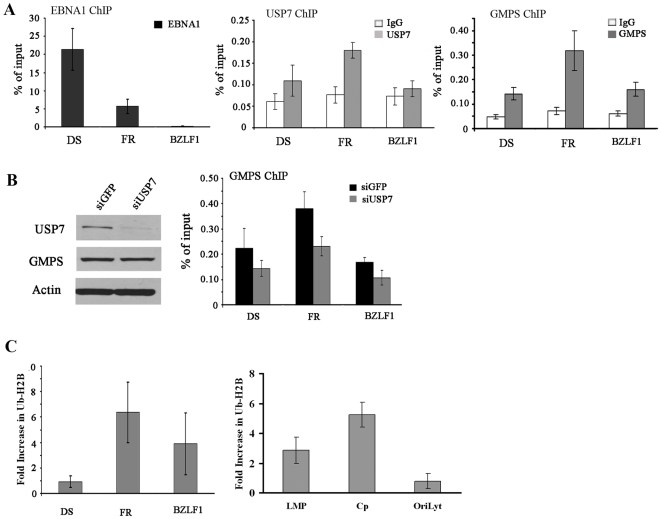
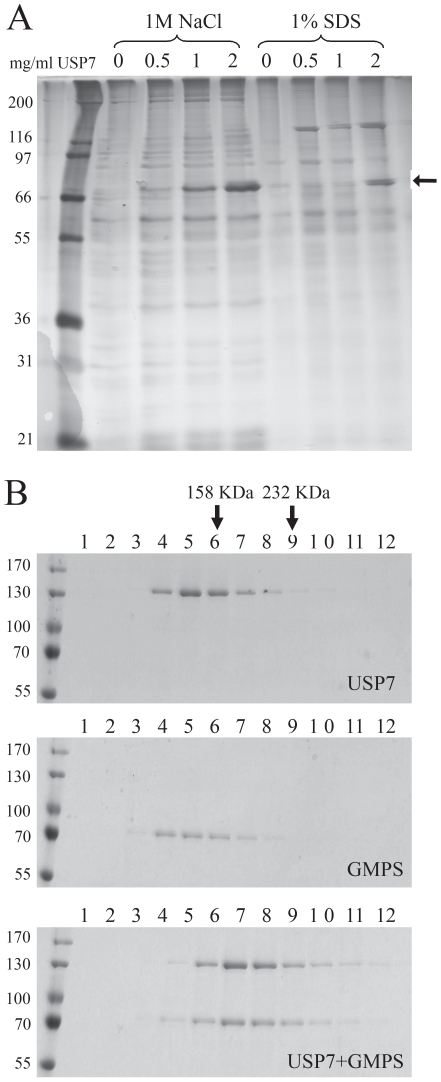
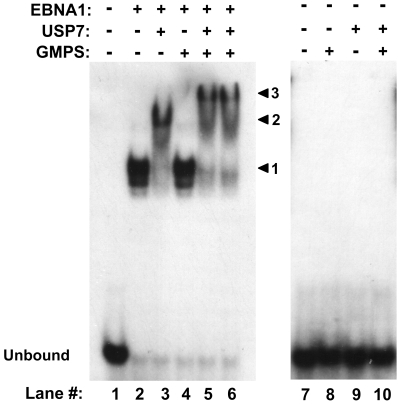
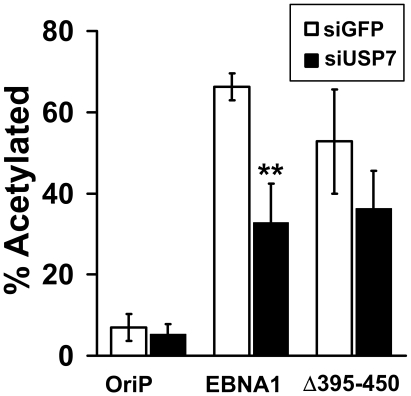
The EBNA1 protein of Epstein-Barr virus (EBV) plays essential roles in enabling the replication and persistence of EBV genomes in latently infected cells and activating EBV latent gene expression, in all cases by binding to specific recognition sites in the latent origin of replication, oriP. Here we show that EBNA1 binding to its recognition sites in vitro is greatly stimulated by binding to the cellular deubiquitylating enzyme, USP7, and that USP7 can form a ternary complex with DNA-bound EBNA1. Consistent with the in vitro effects, the assembly of EBNA1 on oriP elements in human cells was decreased by USP7 silencing, whereas assembly of an EBNA1 mutant defective in USP7 binding was unaffected. USP7 affinity column profiling identified a complex between USP7 and human GMP synthetase (GMPS), which was shown to stimulate the ability of USP7 to cleave monoubiquitin from histone H2B in vitro. Accordingly, silencing of USP7 in human cells resulted in a consistent increase in the level of monoubquitylated H2B. The USP7-GMPS complex formed a quaternary complex with DNA-bound EBNA1 in vitro and, in EBV infected cells, was preferentially detected at the oriP functional element, FR, along with EBNA1. Down-regulation of USP7 reduced the level of GMPS at the FR, increased the level of monoubiquitylated H2B in this region of the origin and decreased the ability of EBNA1, but not an EBNA1 USP7-binding mutant, to activate transcription from the FR. The results indicate that USP7 can stimulate EBNA1-DNA interactions and that EBNA1 can alter histone modification at oriP through recruitment of USP7.
Conflict of interest statement
The authors have declared that no competing interests exist.
Figures

References
-
- Rickinson AB, Kieff E. Epstein-Barr virus. In: Knipe DM, Howley PM, editors. Fields Virology. fourth ed. Philadelphia: Lippincott Williams and Wilkins; 2001. pp. 2575–2627.
-
- Rawlins DR, Milman G, Hayward SD, Hayward GS. Sequence-specific DNA binding of the Epstein-Barr virus nuclear antigen (EBNA1) to clustered sites in the plasmid maintenance region. Cell. 1985;42:859–868. - PubMed
-
- Gahn TA, Schildkraut CL. The Epstein-Barr virus origin of plasmid replication, oriP, contains both the initiation and termination sites of DNA replication. Cell. 1989;58:527–535. - PubMed
Publication types
MeSH terms
Substances
LinkOut - more resources
Full Text Sources
Other Literature Sources
Molecular Biology Databases
