


The role of face shape and pigmentation in other-race face perception: an electrophysiological study
- PMID: 19836406
- PMCID: PMC2947201
- DOI: 10.1016/j.neuropsychologia.2009.10.007
The role of face shape and pigmentation in other-race face perception: an electrophysiological study
Abstract
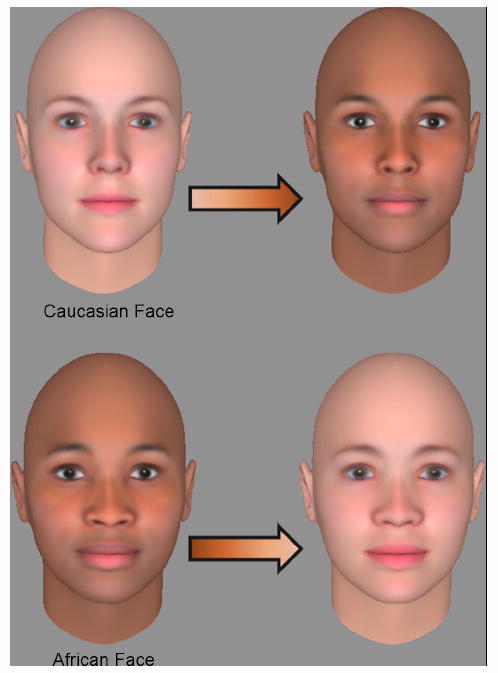
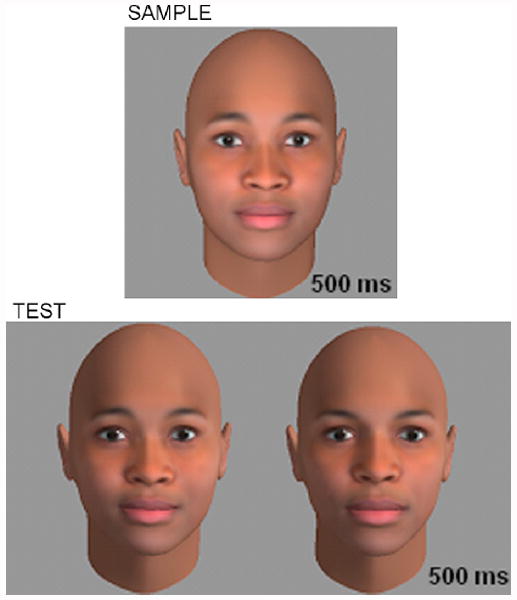
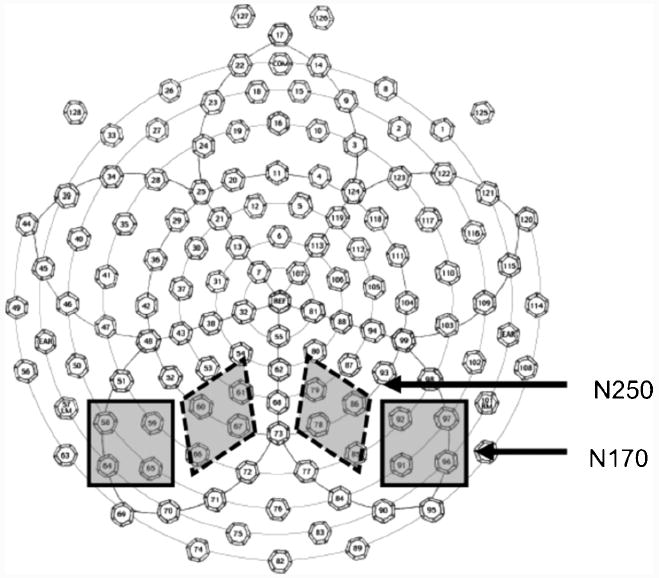
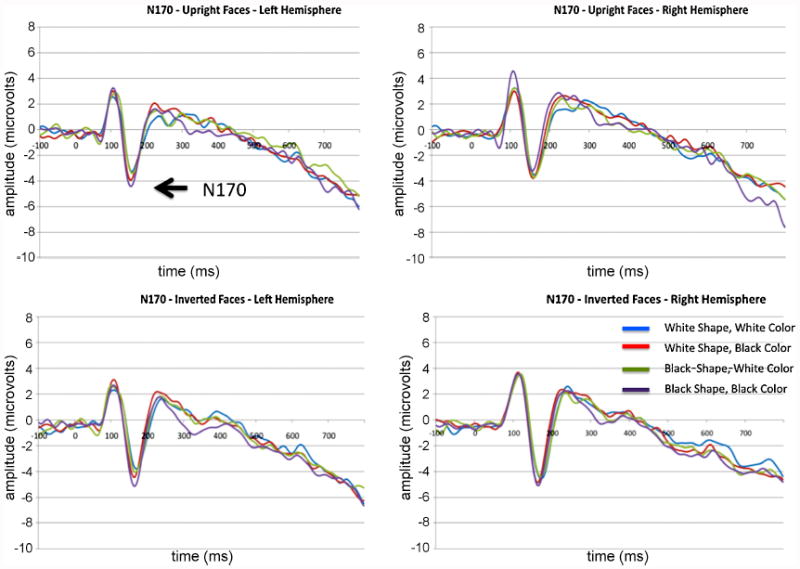
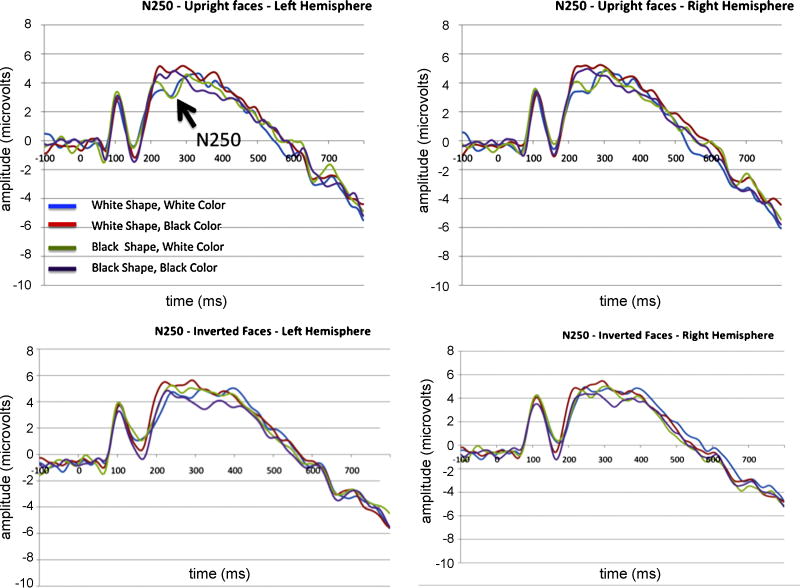
Adult observers generally find it difficult to recognize and distinguish faces that belong to categories with which they have limited visual experience. One aspect of this phenomenon is commonly known as the "Other-Race Effect" (ORE) since this behavior is typically highly evident in the perception of faces belonging to ethnic or racial groups other than that of the observer. This acquired disadvantage in face recognition likely results from highly specific "tuning" of the underlying representation of facial appearance, leading to efficient processing of commonly seen faces at the expense of poor generalization to other face categories. In the current study we used electrophysiological (event-related potentials or ERPs) and behavioral measures of performance to characterize face processing in racial categories defined by dissociable shape and pigmentation information. Our goal was to examine the specificity of the representation of facial appearance in more detail by investigating how race-specific face shape and pigmentation separately modulated neural responses previously implicated in face processing, the N170 and N250 components. We found that both components were modulated by skin color, independent of face shape, but that only the N250 exhibited sensitivity to face shape. Moreover, the N250 appears to only respond differentially to the skin color of upright faces, showing a lack of color sensitivity for inverted faces.
2009 Elsevier Ltd. All rights reserved.
Figures
References
-
- Bar-Haim Y, Seidel T, Yovel G. The role of skin colour in face recognition. Perception. 2009;38:145–148. - PubMed
-
- Beigleiter H, Porjesz B, Wang WY. Event-related brain potentials differentiate priming and recognition to familiar and unfamiliar faces. Electroencephalography and Clinical Neurophysiology. 1995;94:41–49. - PubMed
-
- Bernstein MJ, Young SG, Hugenberg K. The cross-category effect: Mere social categorization is sufficient to elicit an own-group bias in face recognition. Psychological Science. 2007;18:706–712. - PubMed
Publication types
MeSH terms
Grants and funding
LinkOut - more resources
Full Text Sources
