


Influenza vaccines
- PMID: 19837290
- PMCID: PMC2900784
- DOI: 10.1016/j.vaccine.2009.08.038
Influenza vaccines
Abstract
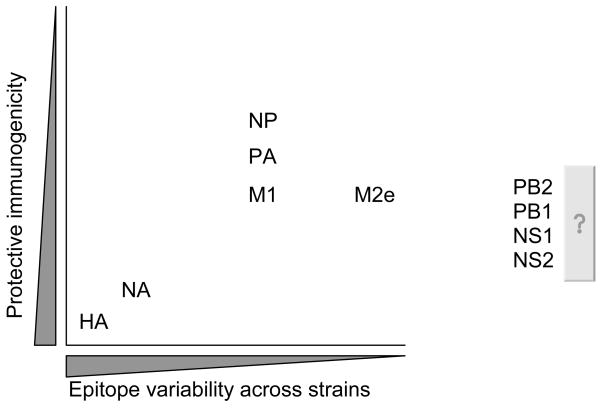
Influenza A viruses pose a substantial threat to the human population whether by purposeful manipulation and release or by the natural process of interspecies transmissions from animal reservoirs. The challenge with preparing for these events with vaccination strategies is that the best forms of protective immunity target the most variable of the viral proteins, hemagglutinin. Add to this even just the natural extent of variation in this protein and the challenges to vaccinologists become great. Progress must be made in the area of streamlining the conventional vaccine approaches, but also in further defining and testing more conserved protective antigens. Within the context of biodefense, the issue will be to reach a balance where some of the diversity of influenza viruses can be encompassed within a vaccine while maintaining an acceptable level of efficacy.
Figures
References
-
- Krug RM. The potential use of influenza virus as an agent for bioterrorism. Antiviral Res. 2003 Jan;57(1–2):147–50. - PubMed
-
- Potter CW. A history of influenza. J Appl Microbiol. 2001 Oct;91(4):572–9. - PubMed
-
- Skehel JJ, Wiley DC. Receptor binding and membrane fusion in virus entry: the influenza hemagglutinin. Annu Rev Biochem. 2000;69:531–69. - PubMed
-
- Demicheli V, Rivetti D, Deeks JJ, Jefferson TO. Vaccines for preventing influenza in healthy adults. Cochrane Database Syst Rev. 2000;(2):CD001269. - PubMed
-
- Jefferson T, Rivetti D, Rivetti A, Rudin M, Di Pietrantonj C, Demicheli V. Efficacy and effectiveness of influenza vaccines in elderly people: a systematic review. Lancet. 2005 Oct 1;366(9492):1165–74. - PubMed
Publication types
MeSH terms
Substances
Grants and funding
LinkOut - more resources
Full Text Sources
Other Literature Sources
Medical
