Review
. 2009 Oct 15;64(1):28-32.
doi: 10.1016/j.neuron.2009.09.039.

The neurology of the immune system: neural reflexes regulate immunity

Affiliations
Review

The neurology of the immune system: neural reflexes regulate immunity

Mauricio Rosas-Ballina et al. Neuron. .

Abstract

Parallel advances in neuroscience and immunology established the anatomical and cellular basis for bidirectional interactions between the nervous and immune systems. Like other physiological systems, the immune system--and the development of immunity--is modulated by neural reflexes. A prototypical example is the inflammatory reflex, comprised of an afferent arm that senses inflammation and an efferent arm, the cholinergic anti-inflammatory pathway, that inhibits innate immune responses. This mechanism is dependent on the alpha7 subunit of the nicotinic acetylcholine receptor, which inhibits NF-kappaB nuclear translocation and suppresses cytokine release by monocytes and macrophages. Here we summarize evidence showing that innate immunity is reflexive. Future advances will come from applying an integrative physiology approach that utilizes methods adapted from neuroscience and immunology.


Figures
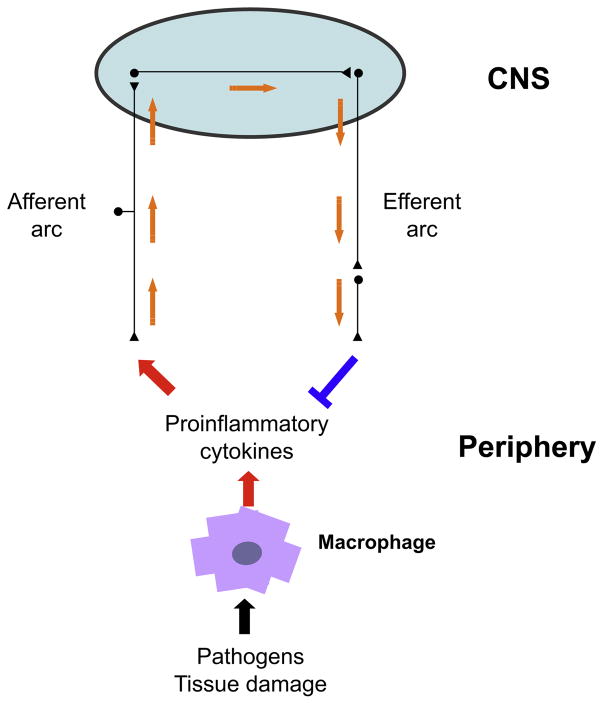
Figure 1
Figure 1. The Inflammatory Reflex
Control systems orchestrated by the autonomic nervous system (e.g., heart rate control) integrate input signals and deliver responses that modify bodily function according to changing physiologic demands. Similarly, cytokines produced by immune cells in response to endogenous and exogenous stimuli activate afferent neurons of the vagus nerve that conveys this information to the brain where signal integration occurs. A response is elicited through the cholinergic anti-inflammatory pathway, the efferent arc of this inflammatory reflex, which modifies immune function and maintains homeostasis. The cholinergic anti-inflammatory pathway conveys signals from the brain to the spleen via the vagus nerve and the splenic nerve and is dependent on the α7 subunit of the nicotinic acetylcholine receptor.
Figure 2
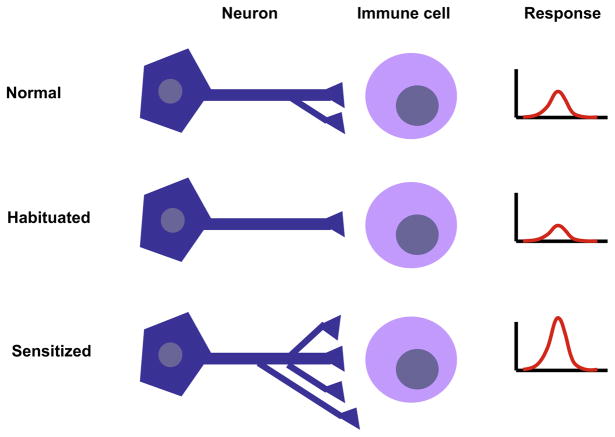
Figure 2. Experimental Model for Studying Neuroimmune Plasticity
Transmission of neural signals to immune cells in lymphoid organs is a dynamic process involving remodeling of nerve fibers. Cells of the immune system are likely exposed to constant fluctuation in neurotransmitter concentration in their microenvironment as a result of second-to-second changes in nerve firing rate. Studying the effects of nerve firing frequency on immune cell function using electrophysiology together with assessment of immune function could reveal habituation and sensitization phenomena underlying nerve-to-immune cell interactions. The figure depicts a hypothetical two-cell culture system showing different activity states of a neuroimmune synapse. The number and frequency of synapses and the magnitude of the immune response would vary depending on whether the system is at rest, habituated, or under sensitization.

References

    1. Antonica A, Ayroldi E, Magni F, Paolocci N. J Neuroimmunol. 1996;64:115–122. - PubMed
    1. Bailey CH, Chen M. Science. 1983;220:91–93. - PubMed
    1. Beeton C, Wulff H, Barbaria J, Clot-Faybesse O, Pennington M, Bernard D, Cahalan MD, Chandy KG, Beraud E. Proc Natl Acad Sci USA. 2001;98:13942–13947. - PMC - PubMed
    1. Bellinger DL, Lorton D, Hamill RW, Felten SY, Felten DL. Brain Behav Immun. 1993;7:191–204. - PubMed
    1. Beresford L, Orange O, Bell EB, Miyan JA. Immunology. 2004;111:118–125. - PMC - PubMed

MeSH terms

LinkOut - more resources