


Formulation and coating of microneedles with inactivated influenza virus to improve vaccine stability and immunogenicity
- PMID: 19840825
- PMCID: PMC2823933
- DOI: 10.1016/j.jconrel.2009.10.013
Formulation and coating of microneedles with inactivated influenza virus to improve vaccine stability and immunogenicity
Abstract
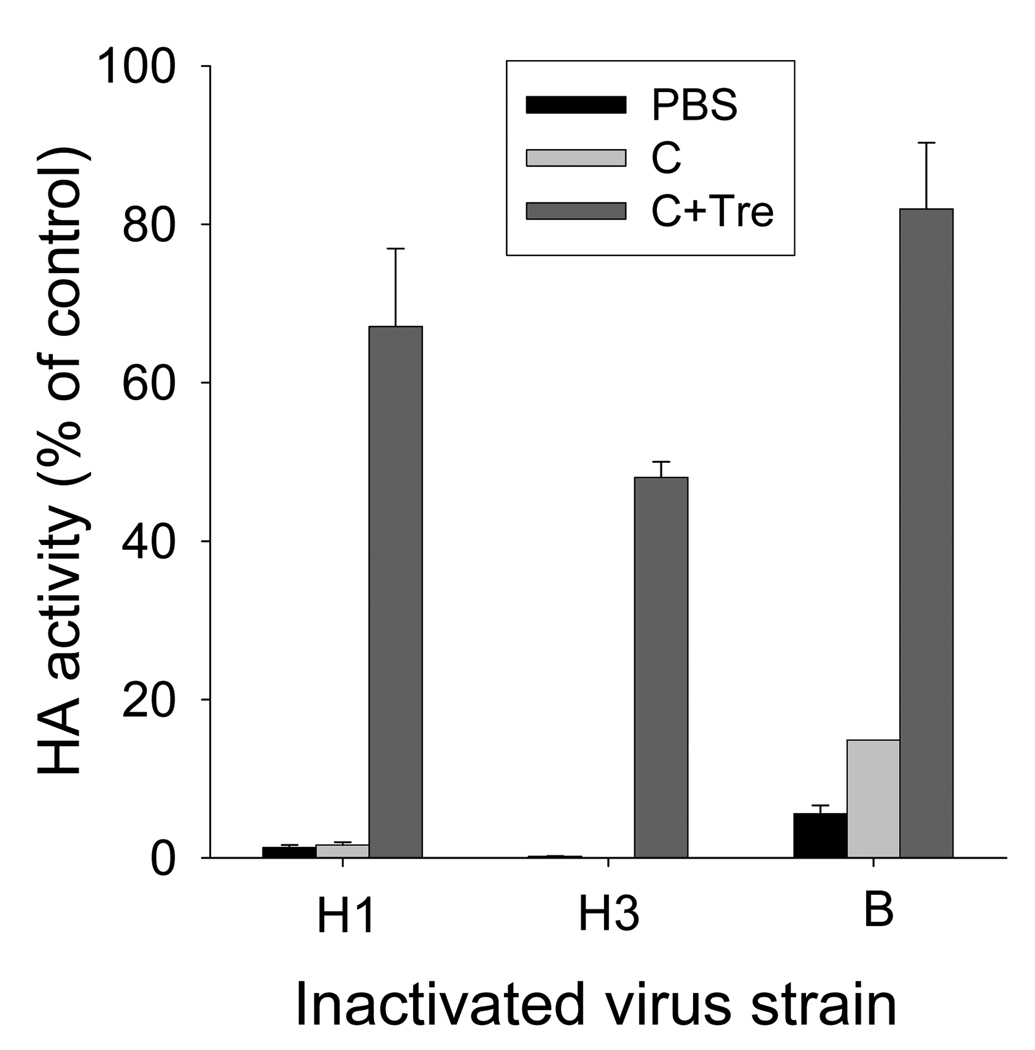
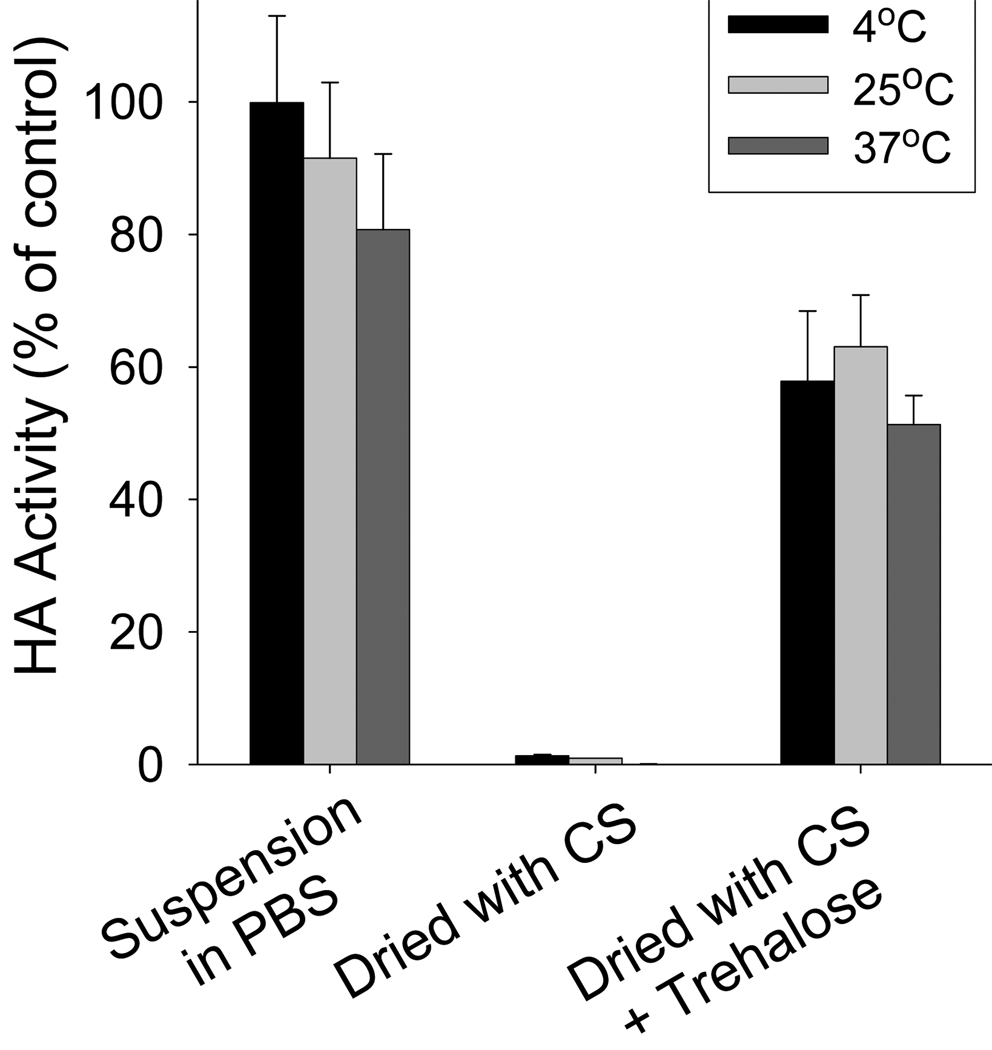
Microneedle patches coated with solid-state influenza vaccine have been developed to improve vaccine efficacy and patient coverage. However, dip coating microneedles with influenza vaccine can reduce antigen activity. In this study, we sought to determine the experimental factors and mechanistic pathways by which inactivated influenza vaccine can lose activity, as well as develop and assess improved microneedle coating formulations that protect the antigen from activity loss. After coating microneedles using a standard vaccine formulation, the stability of influenza vaccine was reduced to just 2%, as measured by hemagglutination activity. The presence of carboxymethylcellulose, which was added to increase viscosity of the coating formulation, was shown to contribute to vaccine activity loss. After screening a panel of candidate stabilizers, the addition of trehalose to the coating formulation was found to protect the antigen and retain 48-82% antigen activity for all three major strains of seasonal influenza: H1N1, H3N2 and B. Influenza vaccine coated in this way also exhibited thermal stability, such that activity loss was independent of temperature over the range of 4-37 degrees C for 24h. Dynamic light scattering measurements showed that antigen activity loss was associated with virus particle aggregation, and that stabilization using trehalose largely blocked this aggregation. Finally, microneedles using an optimized vaccine coating formulation were applied to the skin to vaccinate mice. Microneedle vaccination induced robust systemic and functional antibodies and provided complete protection against lethal challenge infection similar to conventional intramuscular injection. Overall, these results show that antigen activity loss during microneedle coating can be largely prevented through optimized formulation and that stabilized microneedle patches can be used for effective vaccination.
Copyright 2009 Elsevier B.V. All rights reserved.
Figures
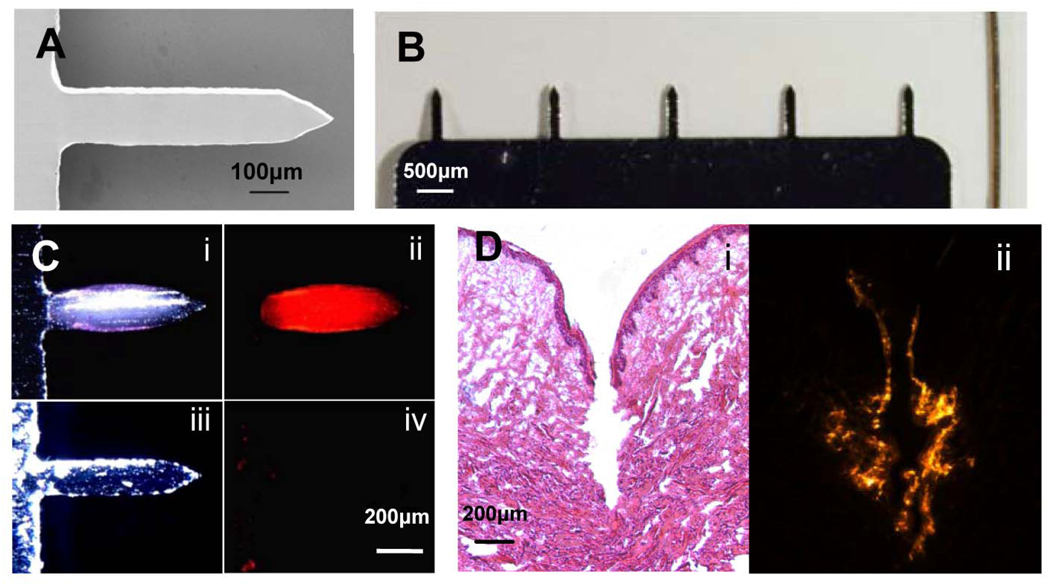
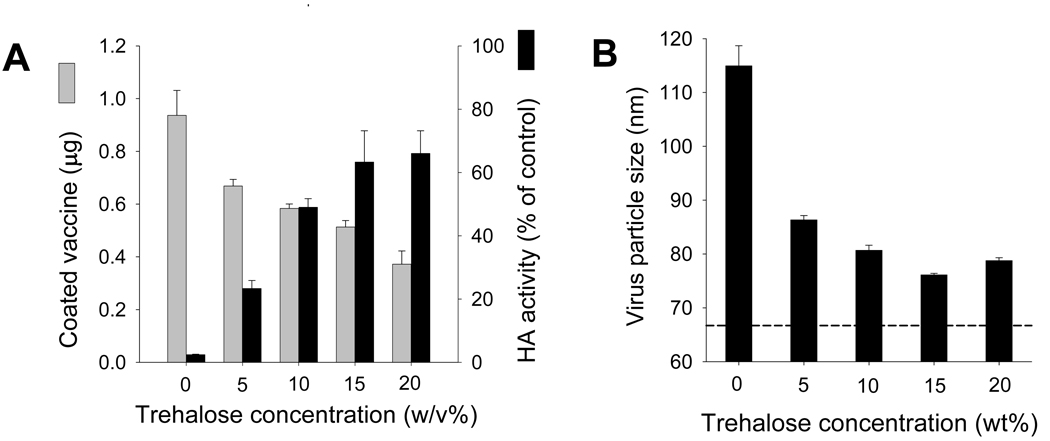
 ) mass (per 5 microneedles) and (
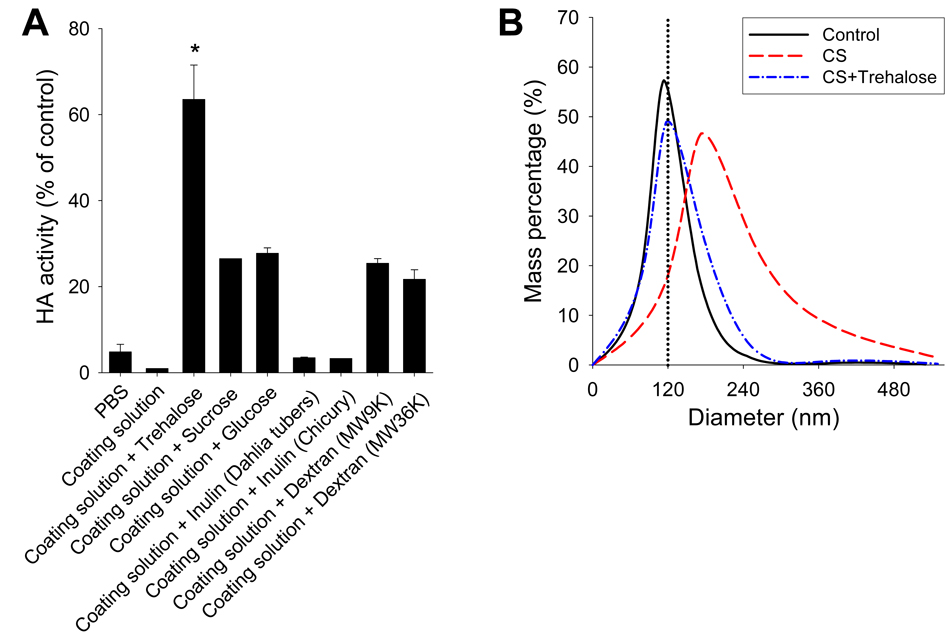
 ) HA activity of coated inactivated influenza virus after reconstitution (n=4). (B) Effect of trehalose concentration in coating solution on the size of coated inactivated influenza virus particles after reconstitution (n=4).
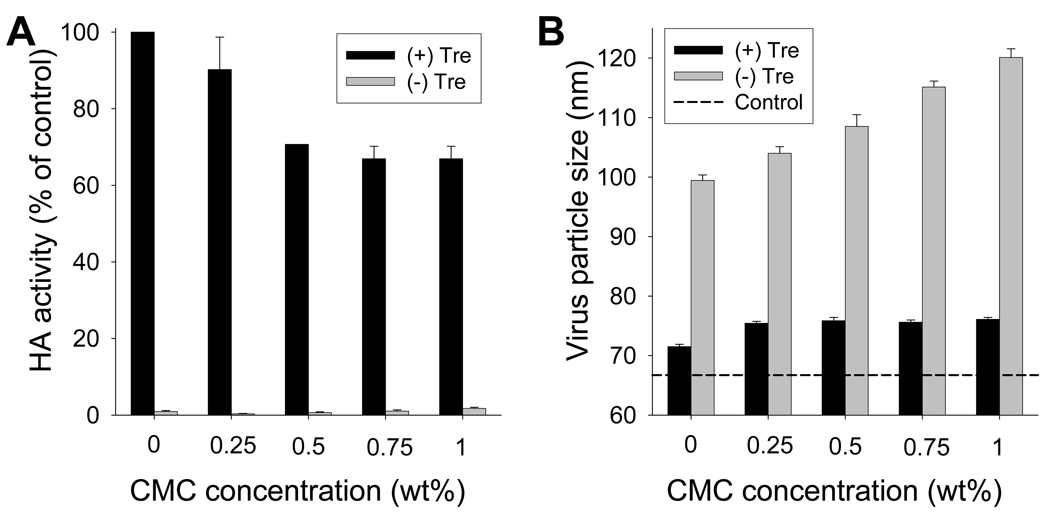 ) with or () without 15% trehalose on (A) HA activity and (B) size of coated inactivated influenza virus particles after reconstitution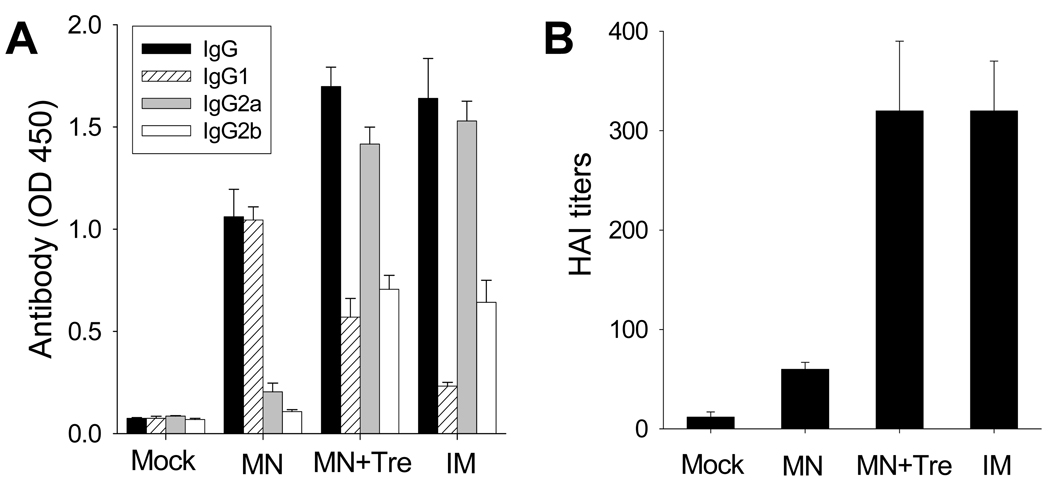
References
-
- Centers for Disease Control and Prevention. ACIP. Prevention and control of influenza, recommendations of the Advisory Committee on Immunization Practices. Morbidity and Mortality Weekly Report (MMWR) 2008;57:1–60. - PubMed
-
- Thompson WW, Shay DK, Weintraub E, Brammer I, Bridges CB, Cox NJ, Fukuda K. Influenza-associated hospitalizations in the United States. J.Ameri.Med.Assoc. 2004;292:1333–1340. - PubMed
-
- Palese P. Influenza: old and new threats. Nat.Med. 2004;10:S82–S87. - PubMed
-
- Hoelscher M, Gangappa S, Zhong WM, Jayashankar L, Sambhara S. Vaccines against epidemic and pandemic influenza. Expert Opin. Drug Deliv. 2008;5:1139–1157. - PubMed
-
- Belshe RB, Newman FK, Cannon J, Duane C, Treanor J, Van Hoecke C, Howe BJ, Dubin G. Serum antibody responses after intradermal vaccination against influenza. New Engl J Med. 2004;351:2286–2294. - PubMed
Publication types
MeSH terms
Substances
Grants and funding
LinkOut - more resources
Full Text Sources
Other Literature Sources
Medical
