


A coming-of-age story: activation-induced cytidine deaminase turns 10
- PMID: 19841648
- PMCID: PMC2810190
- DOI: 10.1038/ni.1799
A coming-of-age story: activation-induced cytidine deaminase turns 10
Abstract
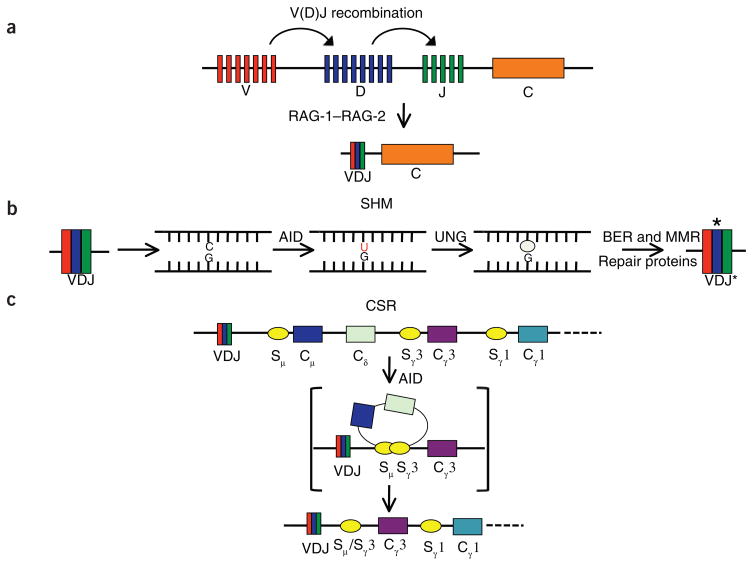
The discovery and characterization of activation-induced cytidine deaminase (AID) 10 years ago provided the basis for a mechanistic understanding of secondary antibody diversification and the subsequent generation and maintenance of cellular memory in B lymphocytes, which signified a major advance in the field of B cell immunology. Here we celebrate and review the triumphs in the mission to understand the mechanisms through which AID influences antibody diversification, as well as the implications of AID function on human physiology. We also take time to point out important ongoing controversies and outstanding questions in the field and highlight key experiments and techniques that hold the potential to elucidate the remaining mysteries surrounding this vital protein.
Figures

References
-
- Burnet FM. A modification of Jerne’s theory of antibody production using the concept of clonal selection. CA Cancer J Clin. 1976;26:119–121. - PubMed
-
- Lederberg J. Genes and antibodies. Science. 1959;129:1649–1653. - PubMed
-
- Weigert MG, Cesari IM, Yonkovich SJ, Cohn M. Variability in the λ light chain sequences of mouse antibody. Nature. 1970;228:1045–1047. - PubMed
-
- Crews S, Griffin J, Huang H, Calame K, Hood L. A single VH gene segment encodes the immune response to phosphorylcholine: somatic mutation is correlated with the class of the antibody. Cell. 1981;25:59–66. - PubMed
-
- Selsing E, Storb U. Somatic mutation of immunoglobulin light-chain variable-region genes. Cell. 1981;25:47–58. - PubMed
Publication types
MeSH terms
Substances
Grants and funding
LinkOut - more resources
Full Text Sources
Other Literature Sources
