


The FGF23-Klotho axis: endocrine regulation of phosphate homeostasis
- PMID: 19844248
- PMCID: PMC3107967
- DOI: 10.1038/nrendo.2009.196
The FGF23-Klotho axis: endocrine regulation of phosphate homeostasis
Abstract
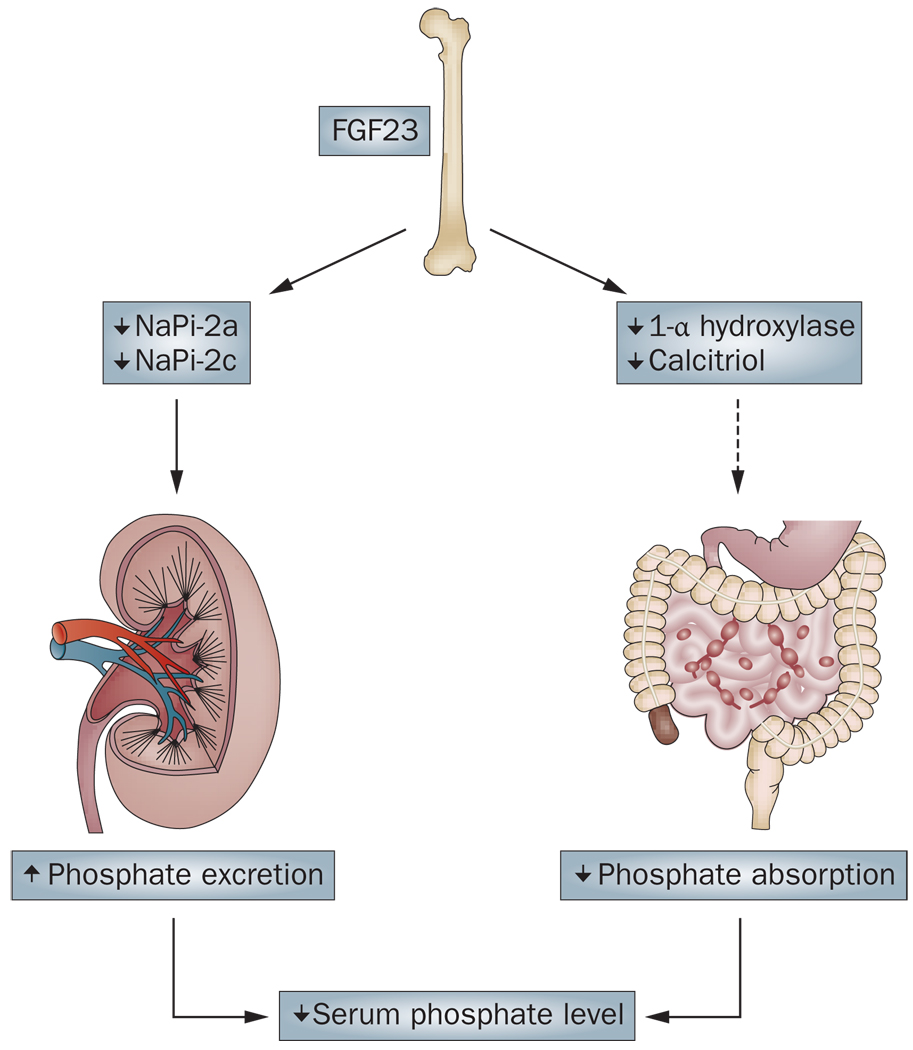
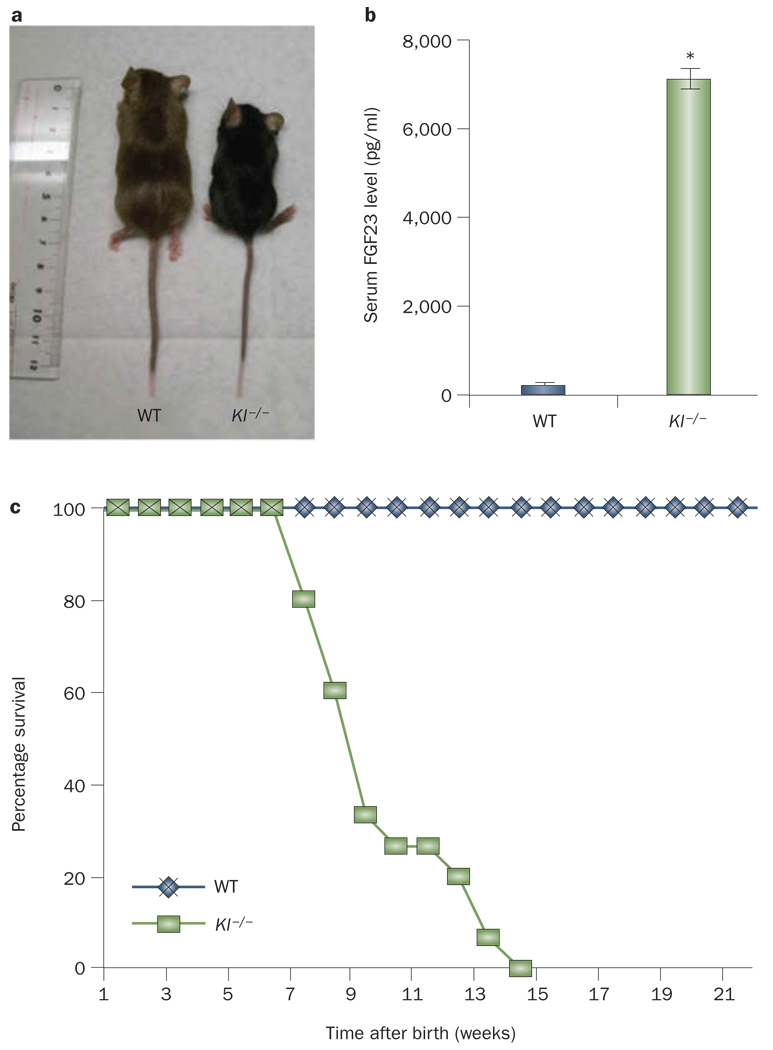
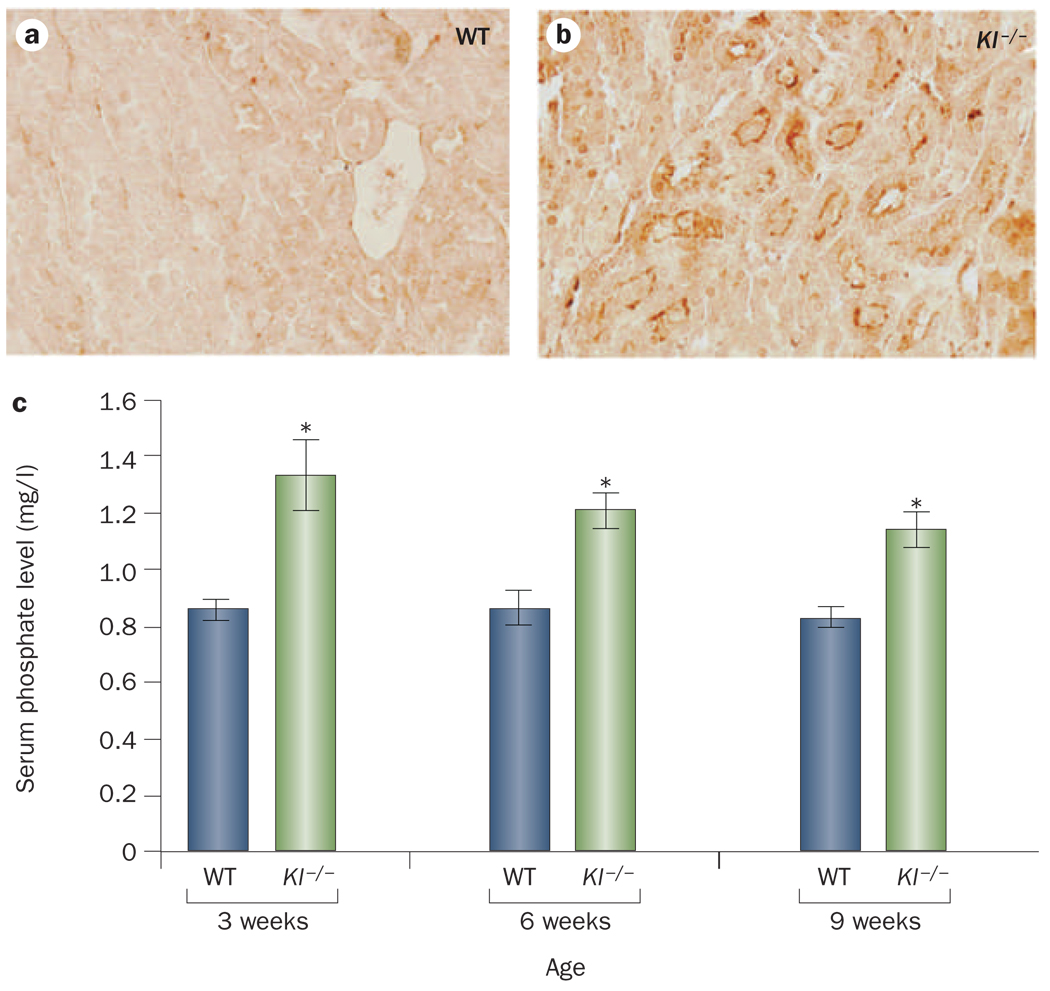
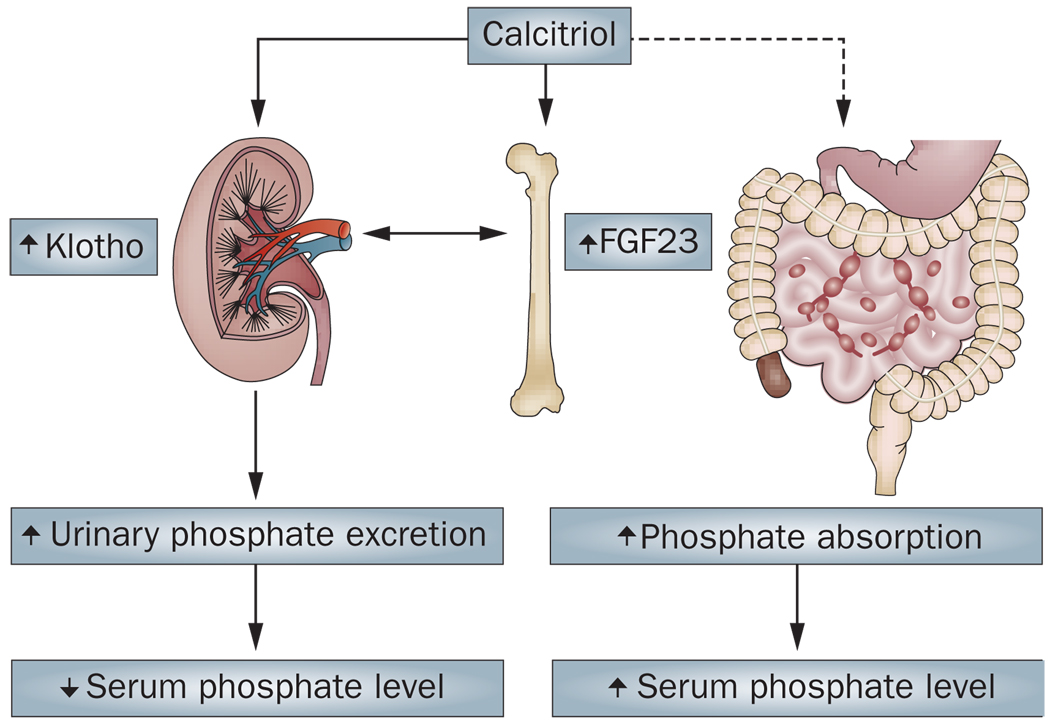
Appropriate levels of phosphate in the body are maintained by the coordinated regulation of the bone-derived growth factor FGF23 and the membrane-bound protein Klotho. The endocrine actions of FGF23, in association with parathyroid hormone and vitamin D, mobilize sodium-phosphate cotransporters that control renal phosphate transport in proximal tubular epithelial cells. The availability of an adequate amount of Klotho is essential for FGF23 to exert its phosphaturic effects in the kidney. In the presence of Klotho, FGF23 activates downstream signaling components that influence the homeostasis of phosphate, whereas in the absence of this membrane protein, it is unable to exert such regulatory effects, as demonstrated convincingly in animal models. Several factors, including phosphate and vitamin D, can regulate the production of both FGF23 and Klotho and influence their functions. In various acquired and genetic human diseases, dysregulation of FGF23 and Klotho is associated with vascular and skeletal anomalies owing to altered phosphate turnover. In this Review, I summarize how the endocrine effects of bone-derived FGF23, in coordination with Klotho, can regulate systemic phosphate homeostasis, and how an inadequate balance of these molecules can lead to complications that are caused by abnormal mineral ion metabolism.
Figures
References
-
- Rastegar A. New concepts in pathogenesis of renal hypophosphatemic syndromes. Iran J. Kidney Dis. 2009;3:1–6. - PubMed
-
- Gaasbeek A, Meinders AE. Hypophosphatemia: an update on its etiology and treatment. Am. J. Med. 2005;118:1094–1101. - PubMed
-
- Berndt T, Kumar R. Phosphatonins and the regulation of phosphate homeostasis. Annu. Rev. Physiol. 2007;69:341–359. - PubMed
-
- Imel EA, Econs MJ. Fibroblast growth factor 23: roles in health and disease. J. Am. Soc. Nephrol. 2005;16:2565–2575. - PubMed
Publication types
MeSH terms
Substances
Grants and funding
LinkOut - more resources
Full Text Sources
Other Literature Sources
Medical
