


Review
doi: 10.1039/b817078a.
Epub 2009 Sep 16.
Metagenomic approaches to natural products from free-living and symbiotic organisms
Affiliations
- PMID: 19844642
- PMCID: PMC2919151
- DOI: 10.1039/b817078a
Item in Clipboard
Review
Metagenomic approaches to natural products from free-living and symbiotic organisms
Nat Prod Rep.
2009 Nov.
Abstract
Bacterial cultivation has been a mainstay of natural products discovery for the past 80 years. However, the majority of bacteria are recalcitrant to culture, providing an untapped source for new natural products. Metagenomic analysis provides an alternative method to directly access the uncultivated genome for natural products research and for the discovery of novel, bioactive substances. Applications of metagenomics to diverse habitats, such as soils and the interior of animals, are described.
Figures
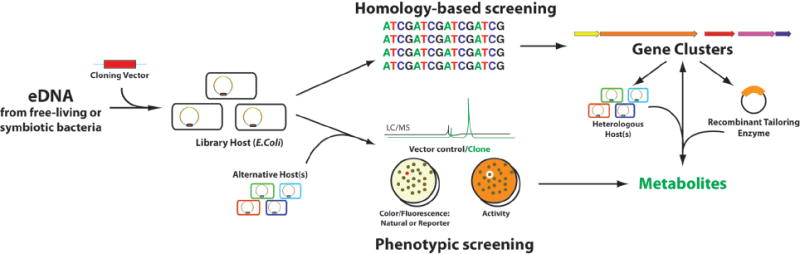
Overview of culture independent strategies used for the discovery of natural products and natural product gene clusters from eDNA libraries.

The terragines (1-5) and norcardamine (6) were characterized from S. lividans transformed with soil eDNA cosmids.

Families of N-acyl amino acid antibiotics characterized from eDNA clones. In each case a collection of metabolites with both saturated and monounsaturated side chains of various lengths are produced by the antibacterially active eDNA clone.
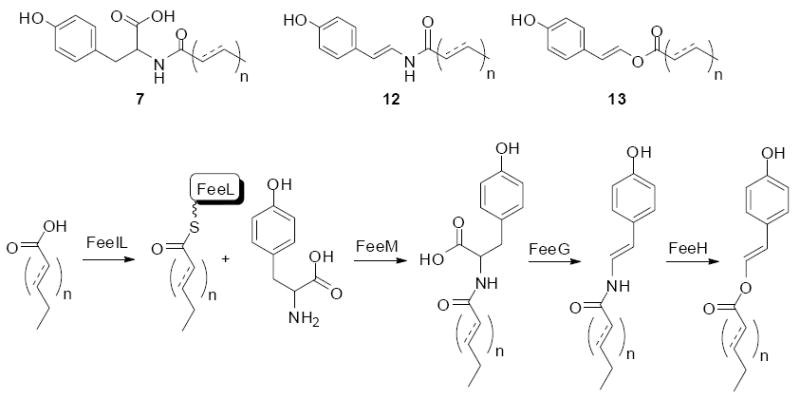
Long chain N-acyltyrosine antibiotics (7) have been characterized from a number of different antibacterially active eDNA clones. One of these clones was found to produce additional families of metabolites (8 and 9). In this clone the fee gene cluster is responsible for the biosynthesis of all three families of compounds.
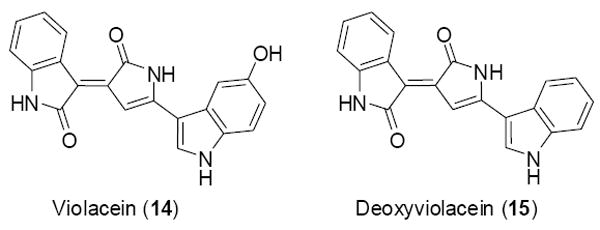
The previously reported metabolites violacein (14) and deoxyviolacein (15) are produced by a purple eDNA cosmid clone.

Turbomycin A and B are tri-aryl cations that accumulate in the acid precipitate of melanin producing eDNA clones at a higher level than is observed in acid precipitates from vector control cultures.

The isonitrile functionalized indole derivative 18 (a) is produced in E. coli from tryptophan and a five-carbon sugar using the eDNA-derived enzymes IsnA and IsnB (b).

Three different metagenomic studies have identified eDNA clones that produce indigo and indirubin.
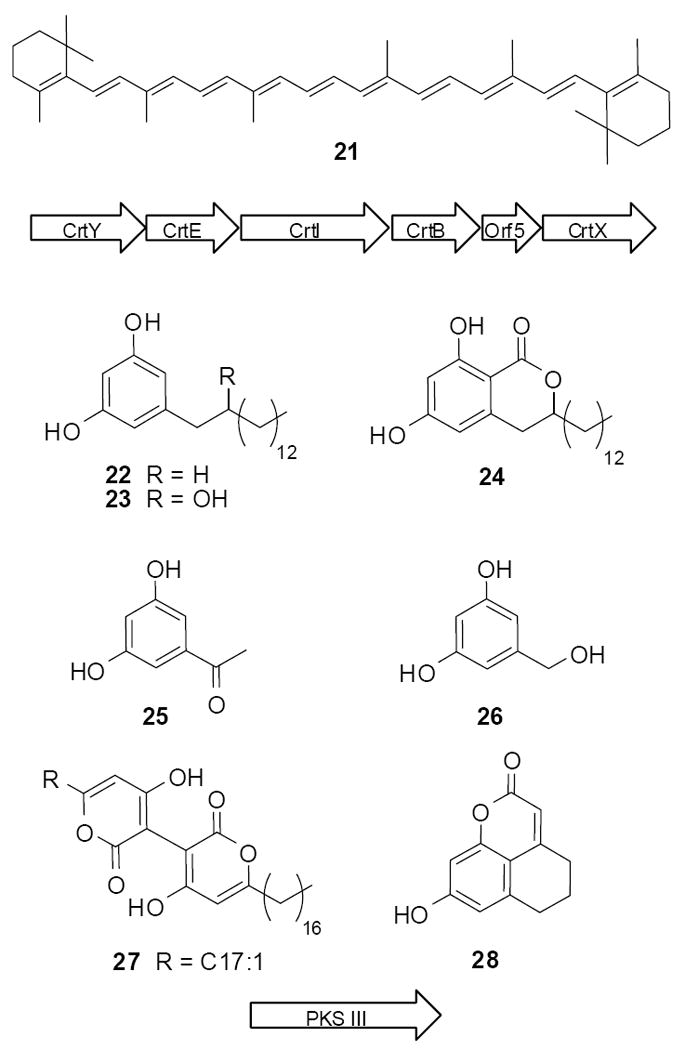
Both known (21-26) and novel (27 and 28) small molecules were characterized from clones found in phenotypic screens of R. metallidurans based libraries.
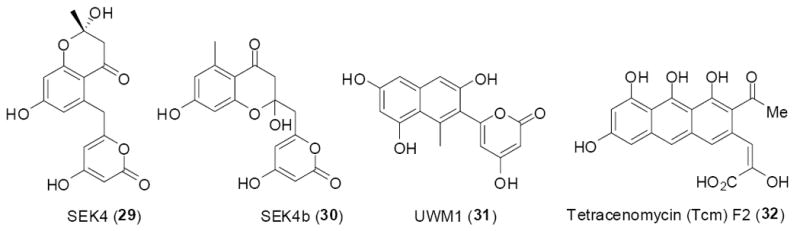
KSβ sequences were PCR amplified from eDNA and these eDNA derived KSβ sequences were used to construct hybrid minimal PKSs. The resulting hybrid minimal PKS cassettes were then shuttled into Streptomyces and found to produce compounds 29-32.
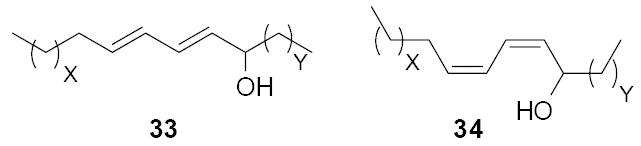
Diene alcohols (33, 34) found during the analysis of culture broth extracts from cultures of S. lividans transformed with a soil eDNA cosmid clone (X+Y=12).
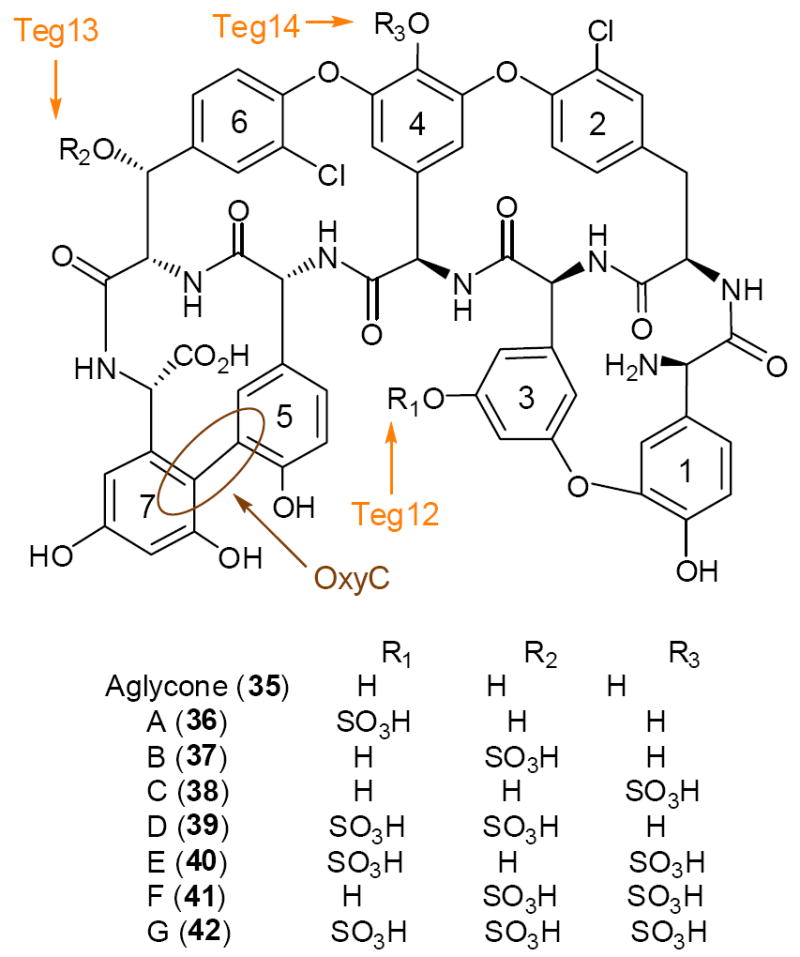
The VEG and TEG glycopeptide gene clusters were cloned from a soil eDNA mega library. Sulfo-teicoplanins A-G (36-42) were produced from the teicoplanin aglycone (35) using three sulfotransferases (Teg 13, 14, and 15) found in the eDNA-derived TEG gene cluster. Gene cluster color coding: nonribosomal peptide synthetase (green), amino acid biosynthesis (green hashed arrows), glycosyl transferase (red), sugar biosynthesis (red hashed arrows), oxidative coupling (brown), methyl transferase (blue), sulfotransferase (orange), halogenase (yellow).
Genes for the biosynthesis of two polyketides were more readily obtained because of guiding microbiology that simplified the problem.

Cyanobactin biosynthetic genes were cloned from enriched samples of Prochloron symbiotic bacteria living in ascidian animals.
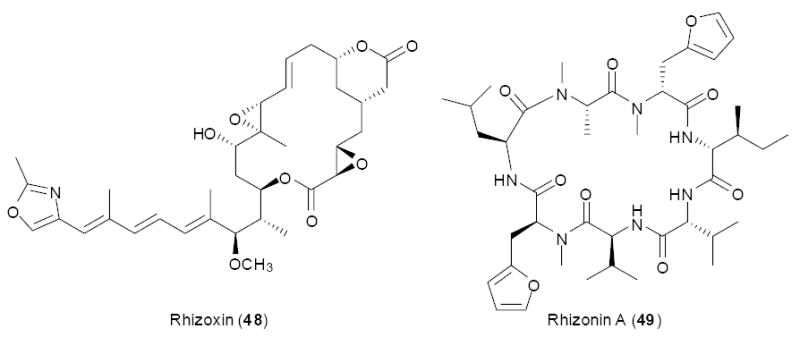
Two metabolites originally isolated from fungi were later shown to originate in endosymbiotic bacteria.

Polyketides from ant symbionts (50) and, putatively, a sponge symbiont (51).

Compounds that helped with enabling technologies.
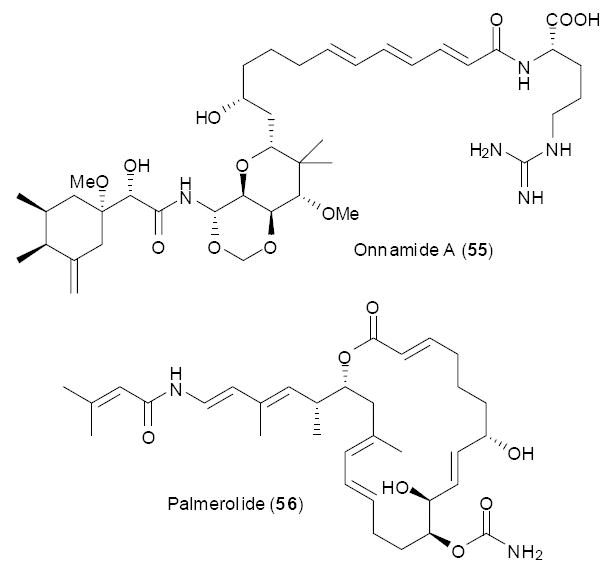
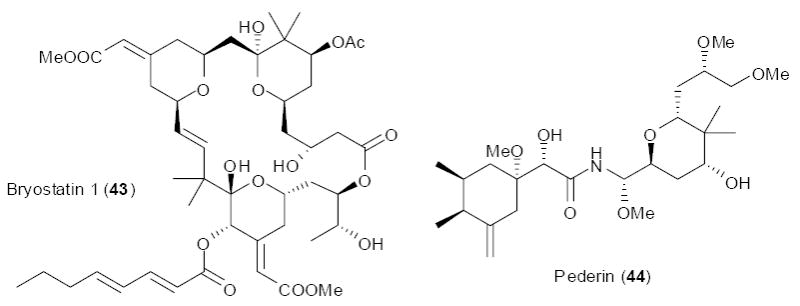
Some polyketides from sponges and ascidians.
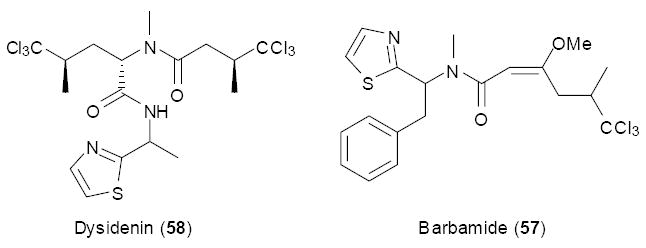
Halogenated peptides, putatively from sponge symbionts.

Further probable trans-AT products from sponges.
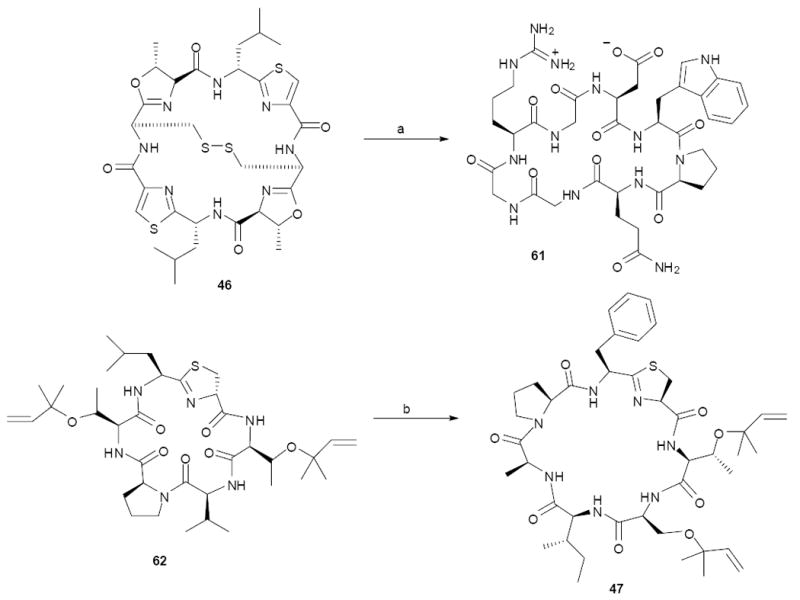
Use of metagenomics in engineering. Top: The natural product ulithiacyclamide (46) was “converted” to the wholly unnatural compound eptidemnamide (61) by (a) one-step PCR mutagenesis and synthesized in E. coli. Bottom: The natural product patellin 2 was converted to the rare natural product trunkamide (47) by (b) one-step recombination in yeast, followed by production in E. coli. These results and the natural selectivity of the enzymes indicate that large libraries of products can be synthesized by identical enzymes.
References
Publication types
MeSH terms
Substances
Grants and funding
LinkOut - more resources
Full Text Sources
Other Literature Sources
Molecular Biology Databases
Miscellaneous
