


Obesity and urinary incontinence: epidemiology and clinical research update
- PMID: 19846133
- PMCID: PMC2866035
- DOI: 10.1016/j.juro.2009.08.071
Obesity and urinary incontinence: epidemiology and clinical research update
Abstract
Purpose: We reviewed the epidemiological literature on the association of obesity and urinary incontinence, and summarized clinical trial data on the effect of weight loss on urinary incontinence.
Materials and methods: We systematically searched for published community based prevalence studies with bivariate or multivariate analysis of the association of urinary incontinence and overweight/obesity in women. Case series and randomized controlled trials of the effect of surgical, behavioral and pharmacological weight loss on urinary incontinence are summarized.
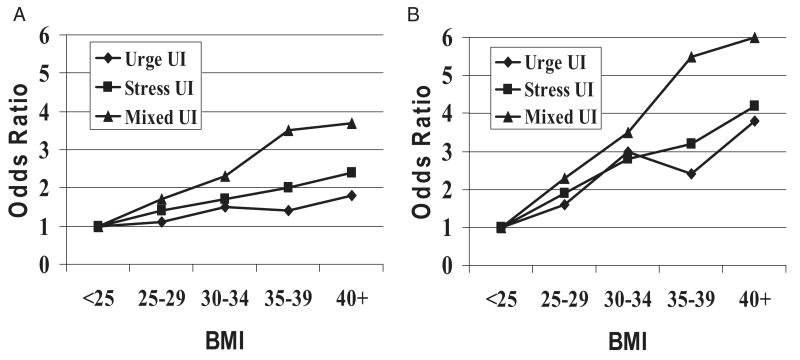
Results: Epidemiological studies showed that obesity is a strong independent risk factor for prevalent and incident urinary incontinence. There was a clear dose-response effect of weight on urinary incontinence with each 5-unit increase in body mass index associated with about a 20% to 70% increase in the urinary incontinence risk, and the maximum effect of weight rarely exceeded an OR of greater than 4 to 5 on well controlled analyses. The odds of incident urinary incontinence during 5 to 10 years increased by approximately 30% to 60% for each 5-unit increase in body mass index. There may be a stronger association of increasing weight with prevalent and incident stress incontinence, including mixed incontinence, than with urge incontinence and overactive bladder syndrome. Weight loss studies indicated that surgical and nonsurgical weight loss led to significant improvements in urinary incontinence symptoms.
Conclusions: Epidemiological studies document overweight and obesity as important risk factors for urinary incontinence. Weight loss by surgical and more conservative approaches is effective to decrease urinary incontinence symptoms and should be strongly considered a first line treatment in this patient population.
Figures
References
-
- Mokdad AH, Ford ES, Bowman BA, et al. Prevalence of obesity, diabetes, and obesity-related health risk factors, 2001. JAMA. 2003;289:76. - PubMed
-
- Allison DB, Fontaine KR, Manson JE, et al. Annual deaths attributable to obesity in the United States. JAMA. 1999;282:1530. - PubMed
-
- Frigg A, Peterli R, Peters T, et al. Reduction in co-morbidities 4 years after laparoscopic adjustable gastric banding. Obes Surg. 2004;14:216. - PubMed
-
- Wetle T, Scherr P, Branch LG, et al. Difficulty with holding urine among older persons in a geographically defined community: prevalence and correlates. J Am Geriatr Soc. 1995;43:349. - PubMed
