


MicroRNA signature in massive macronodular adrenocortical disease and implications for adrenocortical tumourigenesis
- PMID: 19849700
- PMCID: PMC3003432
- DOI: 10.1111/j.1365-2265.2009.03725.x
MicroRNA signature in massive macronodular adrenocortical disease and implications for adrenocortical tumourigenesis
Abstract
Purpose: Massive macronodular adrenocortical disease (MMAD) may be caused by aberrant microRNA expression. To determine the microRNA profile in MMAD and identify putative microRNA-gene target pairs involved in adrenal tumourigenesis.
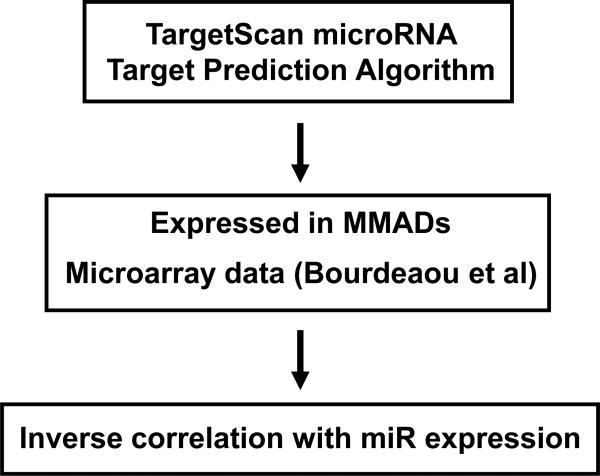
Experimental design: We performed microRNA microarray analysis in 10 patients with ACTH-independent Cushing syndrome caused by MMAD (ages 39-60 years) and four normal adrenal cortex samples were used as controls. Microarray data were validated by real-time polymerase chain reaction (qRT-PCR). Identification of potential microRNA-gene target pairs implicated in MMAD pathogenesis has been performed by integrating our microRNA data with previously obtained cDNA microarray data. Experimental validation of specific microRNA gene targets was performed by transfection experiments and luciferase assay.
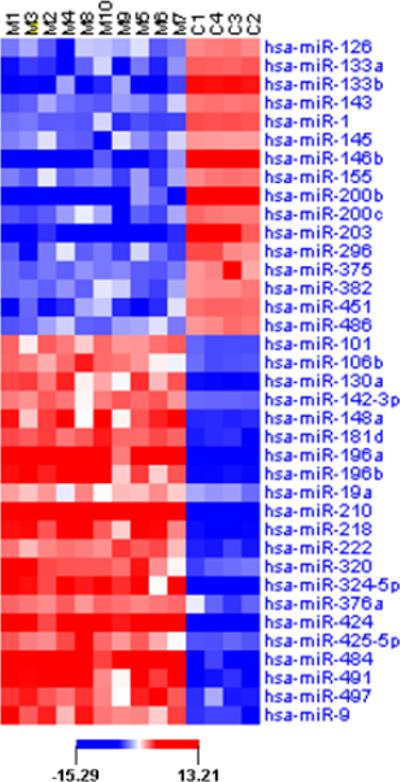
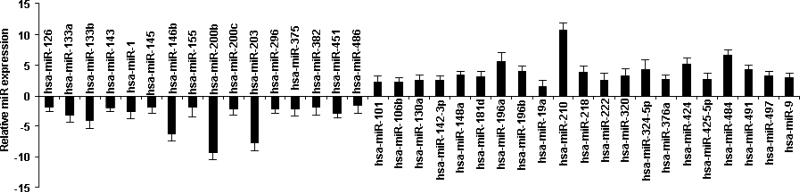
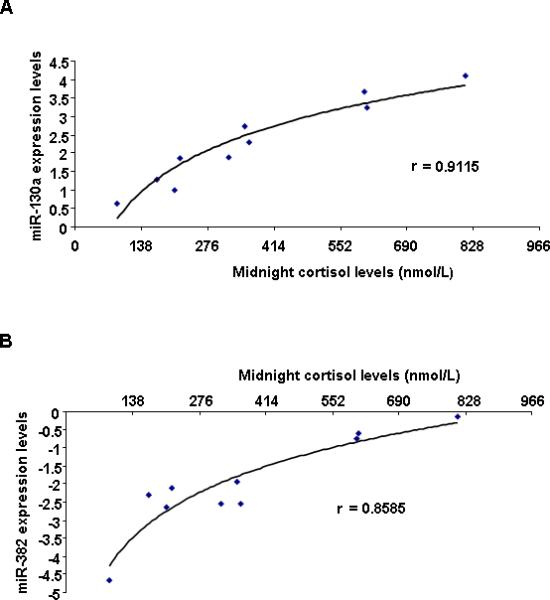
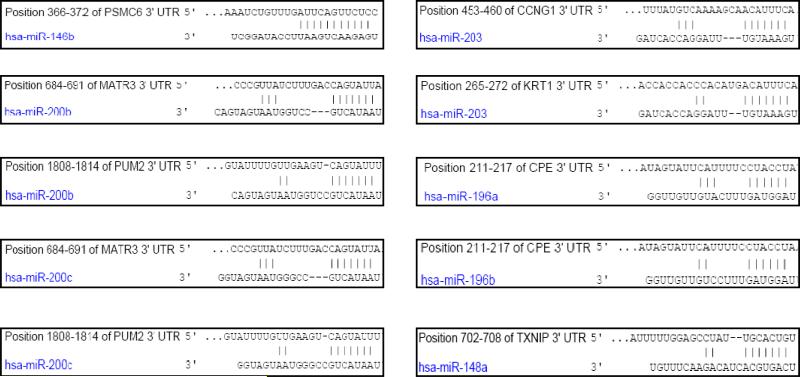
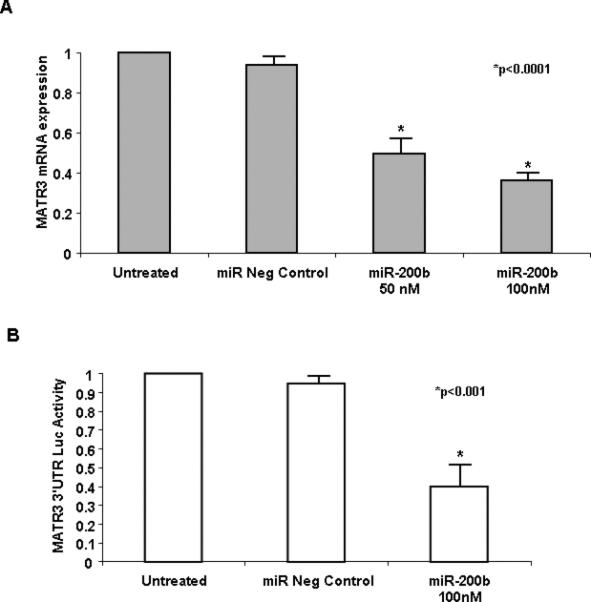
Results: A total of 37 microRNAs were differentially expressed between MMAD and normal tissues; 16 microRNAs were down-regulated, including miR-200b and miR-203, whereas 21 microRNAs were up-regulated, miR-210 and miR-484 among them. Comparison of microRNA data with different clinicopathological parameters revealed miR-130a and miR-382 as putative diagnostic MMAD markers. Interestingly, we detected miR-200b targeting directly Matrin 3 (MATR3) expression in an adrenocortical cancer cell line (H295R).
Conclusions: MicroRNAs appear to have distinct regulatory effects in MMAD, including an association with clinical presentation and severity of the disease, expressed by the degree of hypercortisolism. This is the first investigation of microRNAs in MMAD, a disease with complex pathogenesis; the data indicate that specific microRNAs such as miR-200b may play a significant role in MMAD formation and/or progression.
Figures
References
-
- Stratakis CA, Boikos SA. Genetics of adrenal tumors associated with Cushing's syndrome: a new classification for bilateral adrenocortical hyperplasias. Nature Clinical Practice Endocrinology and Metabolism. 2007;3:748–757. - PubMed
-
- Bourdeau I, Stratakis CA. Cyclic AMP-dependent signaling aberrations in macronodular adrenal disease. Annals of the New York Academy of Sciences. 2002;968:240–55. - PubMed
-
- Lacroix A, Ndiaye N, Tremblay J, Hamet P. Ectopic and abnormal hormone receptors in adrenal Cushing's syndrome. Endocrine Reviews. 2001;22:75–110. - PubMed
-
- Kirk JM, Brain CE, Carson DJ, Hyde JC, Grant DB. Cushing's syndrome caused by nodular adrenal hyperplasia in children with McCune-Albright syndrome. The journal of pediatrics. 1999;134:789–92. - PubMed
-
- Fragoso MC, Domenice S, Latronico AC, Martin RM, Pereira MA, Zerbini MC, Lucon AM, Mendonca BB. Cushing's syndrome secondary to adrenocorticotropin - independent macronodular adrenocortical hyperplasia due to activating mutations of GNAS1 gene. The journal of clinical endocrinology and metabolism. 2003;88:2147–51. - PubMed
Publication types
MeSH terms
Substances
Grants and funding
LinkOut - more resources
Full Text Sources
