


Mitochondria: a therapeutic target in neurodegeneration
- PMID: 19853657
- PMCID: PMC2790540
- DOI: 10.1016/j.bbadis.2009.10.007
Mitochondria: a therapeutic target in neurodegeneration
Abstract
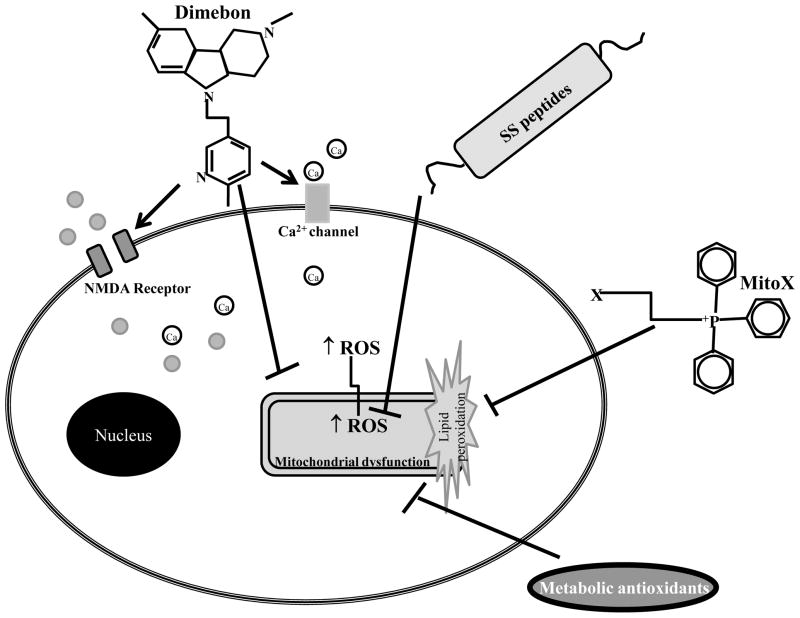
Mitochondrial dysfunction has long been associated with neurodegenerative disease. Therefore, mitochondrial protective agents represent a unique direction for the development of drug candidates that can modify the pathogenesis of neurodegeneration. This review discusses evidence showing that mitochondrial dysfunction has a central role in the pathogenesis of Alzheimer's, Parkinson's and Huntington's diseases and amyotrophic lateral sclerosis. We also debate the potential therapeutic efficacy of metabolic antioxidants, mitochondria-directed antioxidants and Szeto-Schiller (SS) peptides. Since these compounds preferentially target mitochondria, a major source of oxidative damage, they are promising therapeutic candidates for neurodegenerative diseases. Furthermore, we will briefly discuss the novel action of the antihistamine drug Dimebon on mitochondria.
Figures
References
-
- Moreira PI, Santos MS, Oliveira CR. Alzheimer’s disease: a lesson from mitochondrial dysfunction. Antioxid Redox Signal. 2007;9:1621–1630. - PubMed
-
- Budd SL, Nicholls DG. Mitochondria in the life and death of neurons. Essays Biochem. 1998;33:43–52. - PubMed
-
- Finkel T. Radical medicine: treating ageing to cure disease. Nat Rev Mol Cell Biol. 2005;6:971–976. - PubMed
-
- Fiskum G. Mitochondrial participation in ischemic and traumatic neural cell death. J Neurotrauma. 2000;17:843–855. - PubMed
-
- Sullivan PG, Keller JN, Mattson MP, Scheff SW. Traumatic brain injury alters synaptic homeostasis: implications for impaired mitochondrial and transport function. J Neurotrauma. 1998;15:789–798. - PubMed
Publication types
MeSH terms
Substances
Grants and funding
LinkOut - more resources
Full Text Sources
Other Literature Sources
Medical
