


Trunk muscle attributes are associated with balance and mobility in older adults: a pilot study
- PMID: 19854420
- PMCID: PMC2964353
- DOI: 10.1016/j.pmrj.2009.09.009
Trunk muscle attributes are associated with balance and mobility in older adults: a pilot study
Abstract
Objective: To determine whether trunk muscle attributes are associated with balance and mobility performance among mobility-limited older adults.
Design: Cross-sectional analysis of data from a randomized clinical trial.
Setting: Outpatient rehabilitation research center.
Participants: Community-dwelling older adults (N = 70; mean age 75.9 years) with mobility limitations as defined by the Short Physical Performance Battery (SPPB).
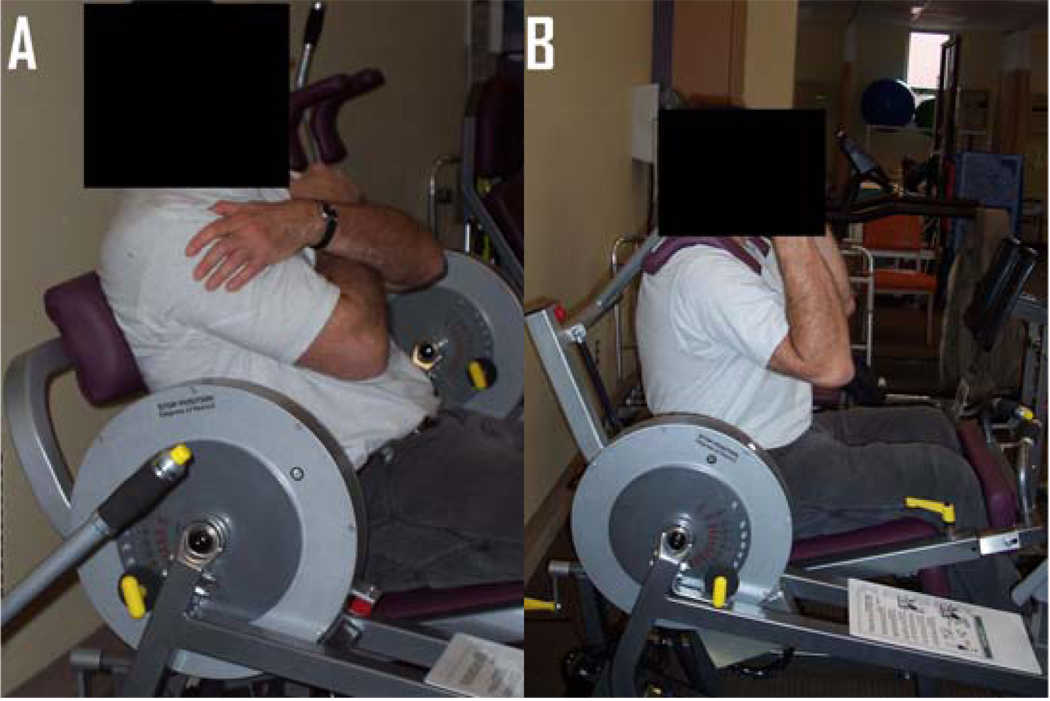
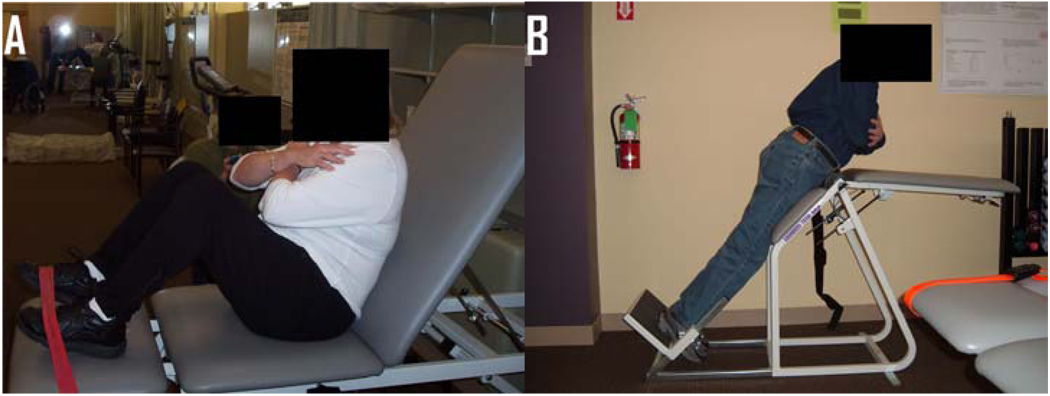
Methods: Independent variables included physiologic measures of trunk extension strength, trunk flexion strength, trunk extension endurance, trunk extension endurance, and leg press strength. All measures were well tolerated by the study subjects without the occurrence of any associated injuries or adverse events. The association of each physiologic measure with each outcome was examined by the use of separate multivariate models to calculate the partial variance (R(2)) of each trunk and extremity measure.
Main outcome measurements: Balance measured by the Berg Balance Scale and Unipedal Stance Test and mobility performance as measured by the SPPB.
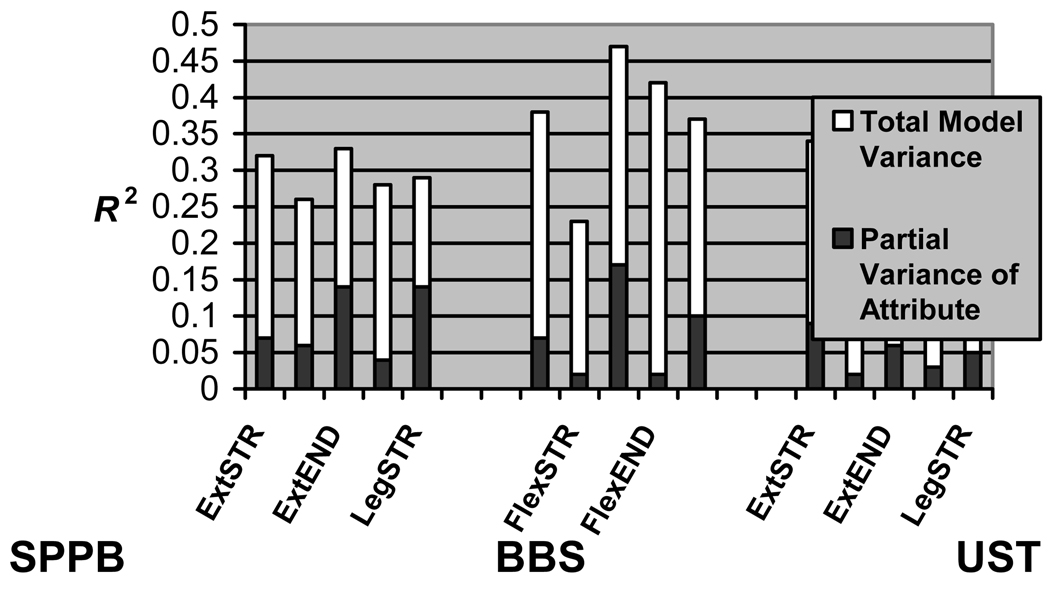
Results: Trunk extension endurance (partial R(2) = .14, P = .02), and leg press strength (partial R(2) = .14, P = .003) accounted for the greatest amount of the variance in SPPB performance. Trunk extension endurance (partial R(2) = .17, P = .007), accounted for the greatest amount of the variance in BBS performance. Trunk extension strength (R(2) = .09, P = .03), accounted for the greatest amount of the variance in UST performance. The variance explained by trunk extension endurance equaled or exceeded the variance explained by limb strength across all three performance outcomes.
Conclusions: Trunk endurance and strength can be safely measured in mobility-limited older adults and are associated with both balance and mobility performance. Trunk endurance and trunk strength are physiologic attributes worthy of targeting in the rehabilitative care of mobility-limited older adults.
Trial registration: ClinicalTrials.gov NCT00158119.
Figures
References
-
- Fried LP, Bandeen-Roche K, Chaves PH, Johnson BA. Preclinical mobility disability predicts incident mobility disability in older women. J Gerontol A Biol Sci Med Sci. 2000;55:M43–M52. - PubMed
-
- Liao Y, McGee DL, Cao G, Cooper RS. Recent changes in the health status of the older U.S. population: findings from the 1984 and 1994 supplement on aging. J Am Geriatr Soc. 2001;49:443–449. - PubMed
-
- Berg KO, Wood-Dauphinee SL, Williams JI, Maki B. Measuring balance in the elderly: validation of an instrument. Can J Public Health. 1992;83 Suppl 2:S7–S11. - PubMed
Publication types
MeSH terms
Associated data
Grants and funding
LinkOut - more resources
Full Text Sources
Medical
