


Adherence is a multi-dimensional construct in the POUNDS LOST trial
- PMID: 19856202
- PMCID: PMC3153914
- DOI: 10.1007/s10865-009-9230-7
Adherence is a multi-dimensional construct in the POUNDS LOST trial
Abstract
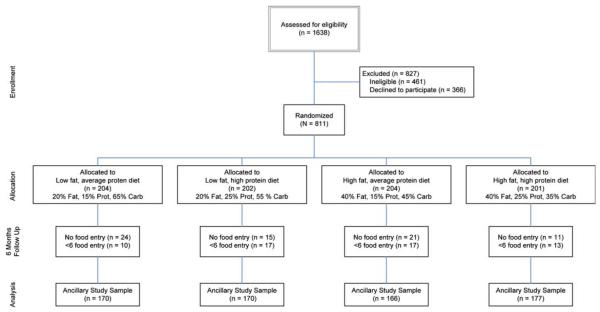
Research on the conceptualization of adherence to treatment has not addressed a key question: Is adherence best defined as being a uni-dimensional or multi-dimensional behavioral construct? The primary aim of this study was to test which of these conceptual models best described adherence to a weight management program. This ancillary study was conducted as a part of the POUNDS LOST trial that tested the efficacy of four dietary macronutrient compositions for promoting weight loss. A sample of 811 overweight/obese adults was recruited across two clinical sites, and each participant was randomly assigned to one of four macronutrient prescriptions: (1) Low fat (20% of energy), average protein (15% of energy); (2) High fat (40%), average protein (15%); (3) Low fat (20%), high protein (25%); (4) High fat (40%), high protein (25%). Throughout the first 6 months of the study, a computer tracking system collected data on eight indicators of adherence. Computer tracking data from the initial 6 months of the intervention were analyzed using exploratory and confirmatory analyses. Two factors (accounting for 66% of the variance) were identified and confirmed: (1) behavioral adherence and (2) dietary adherence. Behavioral adherence did not differ across the four interventions, but prescription of a high fat diet (vs. a low fat diet) was found to be associated with higher levels of dietary adherence. The findings of this study indicated that adherence to a weight management program was best conceptualized as being multi-dimensional, with two dimensions: behavioral and dietary adherence.
Figures
References
-
- Baecke JA, Burema J, Frijters JE. A short questionnaire for the measurement of habitual physical activity in epidemiological studies. American Journal of Clinical Nutrition. 1982;36(5):936–942. - PubMed
-
- Cohen J. Statistical power analysis for the behavioral sciences. Lawrence Erlbaum Associates, Inc.; Hillsdale, NJ: 1977.
-
- Evans IM. Response structure and the triple-response-mode concept. In: Nelson RO, Hayes SC, editors. Conceptual foundations of behavioral assessment. The Guilford Press; New York: 1986. pp. 131–155.
-
- Haynes RB, McDonald H, Garg AX, Montague P. Interventions for helping patients to follow prescriptions for medications. The Cochrane Database of Systematic Reviews. 2002;(2) doi:10.1002/14651858.CD000011. - PubMed
Publication types
MeSH terms
Grants and funding
LinkOut - more resources
Full Text Sources
Medical
