


Relapse after allogeneic hematopoietic cell therapy
- PMID: 19857588
- PMCID: PMC3637945
- DOI: 10.1016/j.bbmt.2009.10.023
Relapse after allogeneic hematopoietic cell therapy
Abstract
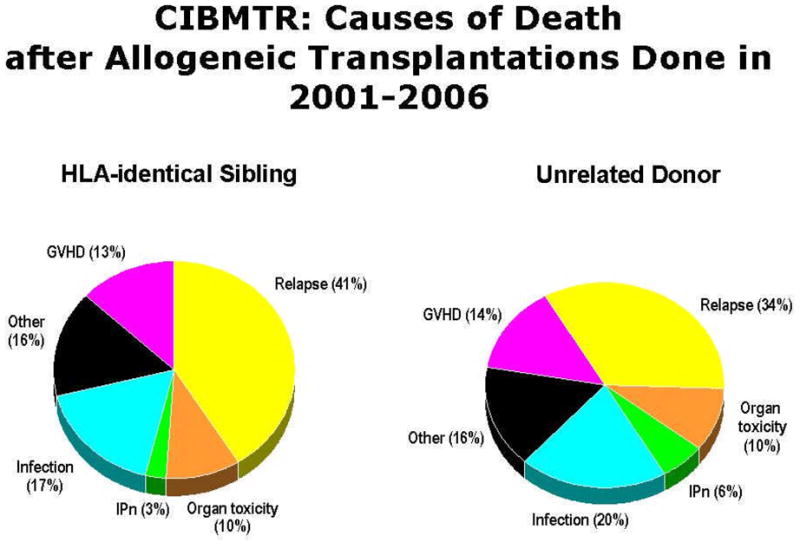
Disease relapse remains a major cause of mortality following allogeneic hematopoietic cell transplantation (HCT). Over the past decade, our understanding of the biology underlying the graft-versus-tumor/leukemia (GVT) effect has increased greatly; however, several other factors affect the occurrence and outcome of relapse, including conditioning regimen, type of allograft, and the histology, status, and sensitivity to chemotherapy of the disease being treated. The mainstay of relapse treatment is donor lymphocyte infusion (DLI), but the efficacy of DLI is quite variable depending on disease histology and state. As such, there is a significant need for novel therapies and strategies for relapse following allogeneic HCT, particularly in patients for whom DLI is not an option. The National Cancer Institute is sponsoring an international workshop to address issues and research questions relative to the biology, natural history, prevention, and treatment of relapse following allogeneic HCT.
Copyright 2010. Published by Elsevier Inc.
Figures
References
-
- Thomas ED, Storb R, Clift RA, et al. Bone-marrow transplantation. N Engl J Med. 1975;292:832–843. 292, 895–902. - PubMed
-
- Copelan EA. Hematopoietic stem-cell transplantation. N Engl J Med. 2006;354:1813–1826. - PubMed
-
- Diaconescu R, Flowers CR, Storer B, et al. Morbidity and mortality with nonmyeloablative compared with myeloablative conditioning before hematopoietic cell transplantation from HLA-matched related donors. Blood. 2004;104:1550–1558. - PubMed
-
- Aoudjhane M, Labopin M, Gorin NC, et al. Acute Leukemia Working Party (ALWP) of the European group for Blood and Marrow Transplantation (EBMT). Comparative outcome of reduced intensity and myeloablative conditioning regimen in HLA identical sibling allogeneic haematopoietic stem cell transplantation for patients older than 50 years of age with acute myeloblastic leukaemia: a retrospective survey from the Acute Leukemia Working Party (ALWP) of the European group for Blood and Marrow Transplantation (EBMT) Leukemia. 2005;19:2304–2312. - PubMed
-
- Kolb HJ. Graft-versus-leukemia effects of transplantation and donor lymphocytes. Blood. 2008;112:4371–4383. - PubMed
Publication types
MeSH terms
Grants and funding
LinkOut - more resources
Full Text Sources
Other Literature Sources
Research Materials
Miscellaneous
