


Community-associated methicillin-resistant Staphylococcus aureus, Iowa, USA
- PMID: 19861049
- PMCID: PMC2866377
- DOI: 10.3201/eid1510.080877
Community-associated methicillin-resistant Staphylococcus aureus, Iowa, USA
Abstract
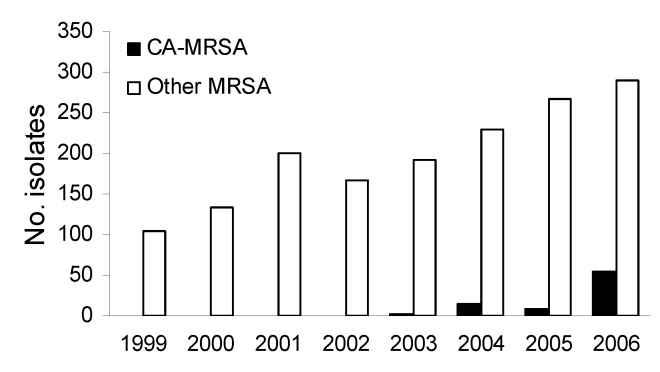
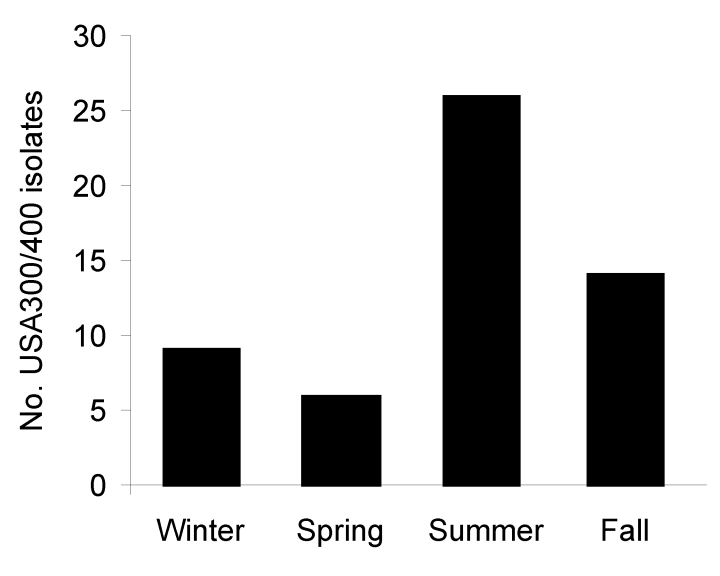
We performed antimicrobial drug susceptibility testing and molecular typing on invasive methicillin-resistant Staphylococcus aureus (MRSA) isolates (n = 1,666) submitted to the University of Iowa Hygienic Laboratory during 1999-2006 as part of a statewide surveillance system. All USA300 and USA400 isolates were resistant to <or=3 non-beta-lactam antimicrobial drug classes. The proportion of MRSA isolates from invasive infections that were either USA300 or USA400 increased significantly from 1999-2005 through 2006 (p<0.0001). During 2006, the incidence of invasive community-associated (CA)-MRSA infections was highest in the summer (p = 0.0004). Age <69 years was associated with an increased risk for invasive CA-MRSA infection (odds ratio [OR] 5.1, 95% confidence interval [CI] 2.06-12.64), and hospital exposure was associated with decreased risk (OR 0.07, 95% CI 0.01-0.51).
Figures
References
-
- Diekema DJ, Pfaller MA, Schmitz FJ, Smayevsky J, Bell J, Jones RN, et al. Survey of infections due to Staphylococcus species: frequency of occurrence and antimicrobial susceptibility of isolates collected in the United States, Canada, Latin America, Europe, and the western Pacific region for the SENTRY antimicrobial surveillance program, 1997–1999. Clin Infect Dis. 2001;32(Suppl 2):S114–32. 10.1086/320184 - DOI - PubMed
Publication types
MeSH terms
LinkOut - more resources
Full Text Sources
Medical
Molecular Biology Databases