


Comparative Study
doi: 10.4103/0301-4738.57158.
Combination 20 and 23-gauge transconjunctival vitrectomy: a new approach
Affiliations
- PMID: 19861749
- PMCID: PMC2812766
- DOI: 10.4103/0301-4738.57158
Item in Clipboard
Comparative Study
Combination 20 and 23-gauge transconjunctival vitrectomy: a new approach
Indian J Ophthalmol.
2009 Nov-Dec.
Abstract
The advent of smaller gauge instrumentation allows for minimally invasive vitreoretinal surgery (MIVS) as compared to conventional pars plana vitrectomy. Sutureless posterior segment surgery has the advantages of faster wound healing, minimal surgical trauma, decreased convalescence period besides reduced postoperative astigmatism; however, slower gel removal and limited peripheral vitreous dissection are disadvantages with smaller gauge systems. We herein describe a new technique combining 23-gauge and 20-gauge vitrectomy to improve the effectiveness and outcomes of vitreoretinal surgery.
Figures
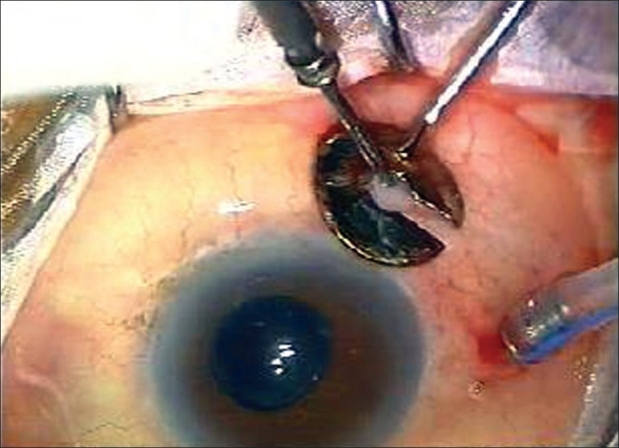
23G infusion sleeve in place (inferotemporal quadrant) while 23G trocar cannula being inserted in the superotemporal port
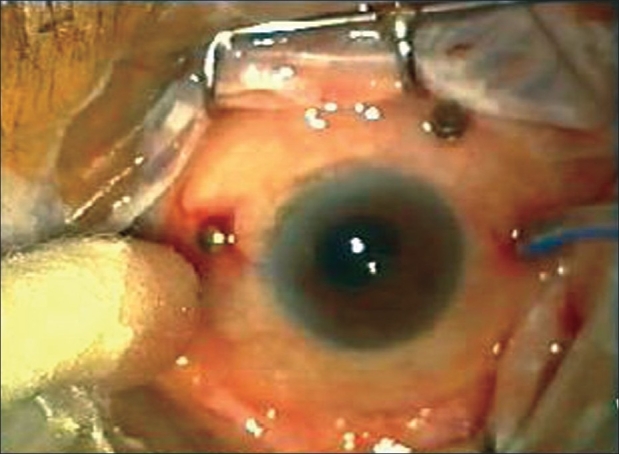
Two 23G openings, namely infusion port and superotemporal cannula visible, along with a single superonasal 20G port visible with a scleral plug in place
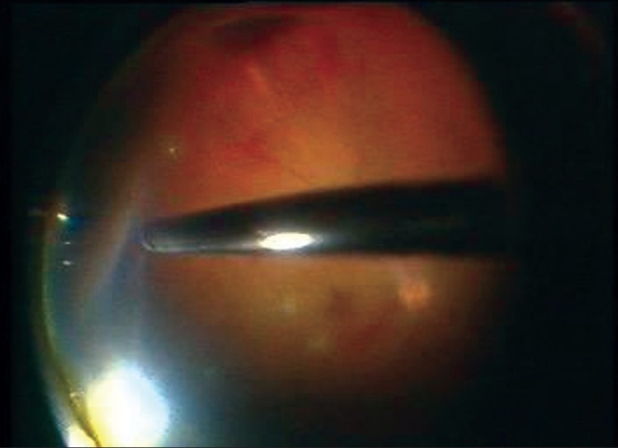
Combined (23+20G) vitrectomy in progress showing the 20G cutter effortlessly trimming the vitreous base in the periphery
References
-
- Chen JC. Sutureless pars plana vitrectomy through self- sealing sclerotomies. Arch Ophthalmol. 1996;114:1273–5. - PubMed
-
- Eckardt C. Transconjuctival sutureless 23 gauge vitrectomy. Retina. 2005;25:208–11. - PubMed
-
- Fine HF, Iranmanesh R, Iturralde D, Spaide RF. outcomes of 77 consecutive cases of 23 gauge transconjuntial vitrectomy surgery for posterior segment. Ophthalmology. 2007;114:1197–200. - PubMed
-
- Shimada H, Nakashi Zuka H, Mori R, Mizutani Y. Expanded indications for 25G tranconjunctival vitrectomy. Jap J Ophthalmol. 2005;49:397–401. - PubMed
-
- Scott IU, Flynn HW, Dev S, Saad S, Mittra RA, Arevalo JF, et al. Endophthalmitis after 25 Gauge and 20 Gauge pars plana vitrectomy. Retina. 2008;28:138–42. - PubMed
Publication types
MeSH terms
LinkOut - more resources
Full Text Sources
Medical
Miscellaneous
