


Human papillomavirus infection in Beijing, People's Republic of China: a population-based study
- PMID: 19862002
- PMCID: PMC2778508
- DOI: 10.1038/sj.bjc.6605351
Human papillomavirus infection in Beijing, People's Republic of China: a population-based study
Abstract
Background: No recent data exist on human papillomavirus (HPV) infection in Beijing, People's Republic of China.
Materials and method: We interviewed and examined a representative, randomly selected sample of 5552 sexually active women aged 25-54 years. Cervical cell samples were analysed for HPV DNA by a MY09/11-based PCR assay.
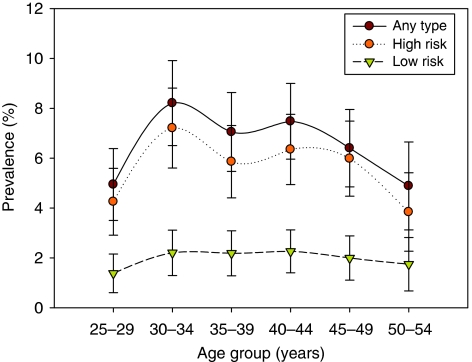
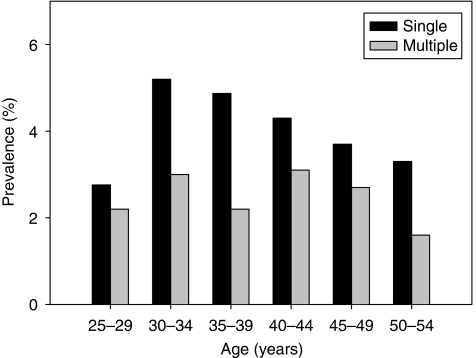
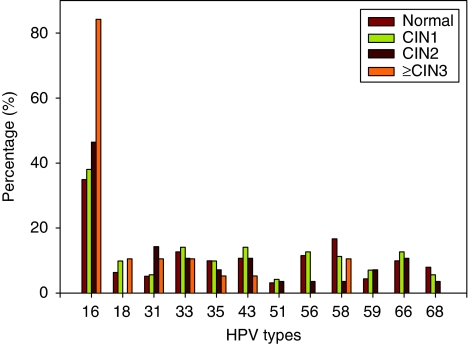
Results: Human papillomavirus prevalence was 6.7% overall and 4.8% among women without cervical abnormalities. Of the 21 subtypes identified, HPV16 was the commonest type (2.6% overall; 39.1% of HPV-positive women), followed by HPV 58 (1.0%), 33 (0.8%), 43 (0.7%) and 56 (0.7%). High-risk HPV types predominated in all age groups. Human papillomavirus prevalence was highest in young to middle-aged women. Marital status, number of husband's sexual partners, age at sexual debut and nulligravidity were all associated with being HPV positive.
Conclusions: In our survey, HPV 16, HPV 58 and HPV 33 were the most prevalent HPV types in Beijing, indicating the potential for the prophylactic HPV 16/18 vaccine in China.
Figures
References
-
- Bao YP, Li N, Smith JS, Qiao YL (2008a) Human papillomavirus type-distribution in the cervix of Chinese women: a meta-analysis. Int J STD AIDS 19: 106–111 - PubMed
-
- Bao YP, Li N, Smith JS, Qiao YL (2008b) Human papillomavirus type distribution in women from Asia: a meta-analysis. Int J Gynecol Cancer 18: 71–79 - PubMed
-
- Bosch FX, Burchell AN, Schiffman M, Giuliano AR, de Sanjose S, Bruni L, Tortolero-Luna G, Kjaer SK, Munoz N (2008) Epidemiology and natural history of human papillomavirus infections and type-specific implications in cervical neoplasia. Vaccine 26(Suppl 10): K1–K16 - PubMed
-
- Cai HB, Ding XH, Chen CC (2009) Prevalence of single and multiple human papillomavirus types in cervical cancer and precursor lesions in Hubei, China. Oncology 76: 157–161 - PubMed
Publication types
MeSH terms
LinkOut - more resources
Full Text Sources
